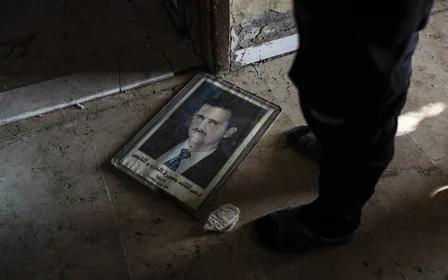
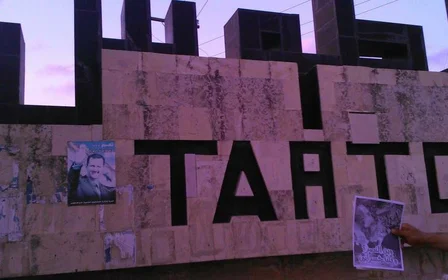
Deadly clashes erupt in Tartous and Latakia as hundreds take to the streets

Violent clashes erupted in Syria's coastal cities of Latakia and Tartous on Sunday, resulting in at least three deaths and more than 60 injuries after former supporters of the Assad regime attacked security forces and civilians amid widespread protests.
Sunday's protest was mobilised by Alawite sheikh Ghazal Ghazal, head of the Supreme Alawite Islamic Council, who urged fellow Alawites to demonstrate peacefully, demanding a federal government system in Syria, and denouncing what Ghazal claimed was ongoing sectarian violations after the recent attack on a Mosque in Homs.
In a statement on Telegram, the Syrian Ministry of Interior said that security forces who were on duty to protect demonstrators and maintain public order were directly attacked today in the city of Latakia by armed groups associated with the remnants of the Bashar al-Assad regime.
“The expression of opinion is a guaranteed right for all the Syrian people within peaceful frameworks, and security forces have been directed to secure the protests and protect the participants. Some of the movements went beyond peaceful, which led to attacks on security forces,” the statement read.
The Ministry of Interior also confirmed that targeting security personnel is a crime punishable by law, and that those involved will be prosecuted, and that the necessary legal measures will be taken against them.
New MEE newsletter: Jerusalem Dispatch
Sign up to get the latest insights and analysis on Israel-Palestine, alongside Turkey Unpacked and other MEE newsletters
Several armed members were arrested on Sunday according to the statement.
Syrian security forces deployed
Security forces were deployed at key locations, including al-Azhari and al-Zira’a roundabouts in Lattakia and in Jableh, to ensure the safety of participants and protect public order.
In Tartous, a hand grenade was thrown at a police station in Banias, injuring two officers.
Citing the health directorate in Latakia, Syrian state media SANA reported that many of those hospitalised sustained wounds from bladed weapons, stones, and gunfire, all allegedly fired by remnants of the regime at security forces and citizens.
Two ambulances were put out of service after being damaged in the attacks while responding to the violence.
The Syrian Defence Ministry said that groups of the Syrian Arab Army, supported by armoured vehicles, entered the cities of Latakia and Tartus, after the latest escalations, to help maintain security and restore stability in Latakia and Tartus.
Syria's Interior Ministry also announced the arrest of Basel Issa Ali Jamahiri, a member of an armed group known as "Saraya al-Jawad” - described as an extremist group linked to Suhail al-Hassan, a former senior commander in the ousted Bashar al-Assad's military forces, in the village of Dwaer Baabda in the Jableh countryside, Latakia province.
During interrogation, Jamahiri confessed to hiding weapons and ordnance used to target internal security forces and the army. Specialised teams subsequently raided the indicated sites, seizing machine guns and various munitions, according to the ministry's statement.
According to reports, the demonstrations, which drew hundreds of participants in Tartous, Latakia, and surrounding areas, were called in response to a bombing at a mosque in Homs on Friday that killed eight people and wounded more than 18 others during prayers.
A little-known armed group, Saraya Ansar al-Sunna, claimed responsibility for the mosque attack on Telegram, describing it as targeting members of the Alawite sect.
Sectarian tensions in Syria have surged since the fall of President Bashar al-Assad in December 2024. Members of the Alawite religious minority, to which Assad and his inner circle belong, report feeling increasingly targeted due to their perceived loyalty to the ousted regime.
Middle East Eye delivers independent and unrivalled coverage and analysis of the Middle East, North Africa and beyond. To learn more about republishing this content and the associated fees, please fill out this form. More about MEE can be found here.