
Ethiopia pushes to secure Red Sea access as Tigray war raises regional tensions

Ethiopian Prime Minister Abiy Ahmed has renewed his call for access to the Red Sea, saying his landlocked country will work to secure an outlet to the sea as fighting in the north threatens to deepen tensions with its neighbours.
Abiy made the remarks on Monday as he was sworn in for another five-year term, with Ethiopian government forces having retaken Mekele, the capital of the Tigray region, after a renewed offensive by an opposition alliance led by the Tigray People's Liberation Front.
“Based on the principle of give and take, we will work diligently to ensure that Ethiopia has an outlet to the sea,” he said.
Since neighbouring Eritrea gained independence in 1993, Ethiopia has been landlocked, as the newly created state took away the port of Assab and with it Ethiopia's access to the sea.
Earlier this year, a former Ethiopian government adviser told Middle East Eye that Ethiopia's key ally, the United Arab Emirates, was "calling the shots" in regard to Eritrea and any Ethiopian plans to retake Assab by force.
New MEE newsletter: Jerusalem Dispatch
Sign up to get the latest insights and analysis on Israel-Palestine, alongside Turkey Unpacked and other MEE newsletters
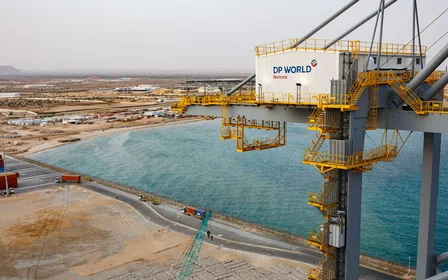
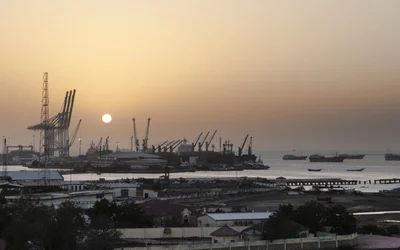
Since 1993, Ethiopia has relied on the port of Djibouti for sea access, but it has long sought alternative arrangements.
In January 2024, Ethiopia signed a memorandum of understanding with Somaliland, the breakaway region of Somalia also backed by the UAE and recognised by Israel, that envisaged access to the sea and a potential naval presence.
Somalia condemned the agreement as a violation of its sovereignty, although relations between Addis Ababa and Mogadishu subsequently improved.
Somali President Hassan Sheikh Mohamud said the country did not object to Ethiopia gaining access to the sea through Somali territory.
“I look forward to working closely together to strengthen Somalia-Ethiopia relations & advance peace, stability & shared prosperity for our peoples & the Horn of Africa,” Mohamud said in a post congratulating Abiy on his new term.
Ethiopia's other neighbours have taken a harder line.
On Sunday, the leaders of Egypt, Eritrea, Sudan and Somalia met in Egypt's New Alamein and issued a joint declaration affirming “the principle of freedom of navigation”, while saying that “the governance of the Red Sea is the exclusive responsibility of the littoral states”.
The declaration also called for respect for international law governing transboundary rivers, including the Nile, and rejected unilateral measures affecting the existing water uses of Egypt and Sudan.
In April, MEE revealed that an Ethiopian army base was being used to support the UAE-backed Rapid Support Forces in the Sudan war.
Dispute over maritime access
Ethiopia’s push for Red Sea access has become a growing source of tension with its neighbours.
While Addis Ababa sees this as necessary to ensure the country’s economic and geopolitical security, Eritrea, Egypt, Sudan, and Somalia have stressed that coastal states have jurisdiction over their territorial waters.
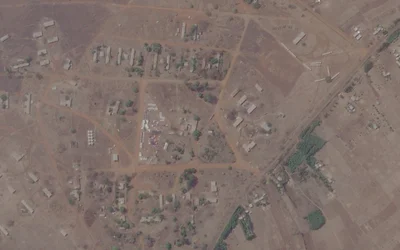
Somalia has opened the possibility of granting Ethiopia conditional access to the sea, if the two countries reach a formal agreement.
The dispute comes as fighting has intensified in Ethiopia’s northern Tigray region, with government-aligned forces retaking the regional capital Mekele after renewed clashes with Tigrayan forces.
The escalation has raised fears of the conflict spiralling into a larger regional confrontation.
Eritrea finds itself in the middle of the discord, as Ethiopia has long sought to gain access to the Red Sea through Eritrean ports.
The two neighbouring states have had a hostile relationship for decades, with Eritrea cutting diplomatic ties with Ethiopia last week after Addis Ababa closed its embassy in Asmara and expelled ten Eritrean diplomats.
This deterioration in relations comes on the heels of the two countries’ dispute with Egypt and Sudan over the Grand Ethiopian Renaissance Dam, which threatens to divert water from the Nile.
The African Union has called for restraint and dialogue as hostilities in northern Ethiopia intensify, urging the parties to seek a peaceful resolution to the crisis.
Middle East Eye delivers independent and unrivalled coverage and analysis of the Middle East, North Africa and beyond. To learn more about republishing this content and the associated fees, please fill out this form. More about MEE can be found here.