'We live in terror': Egyptians in Saudi Arabia await imminent execution

The families of Egyptians on death row in Saudi Arabia await news of their executions daily.
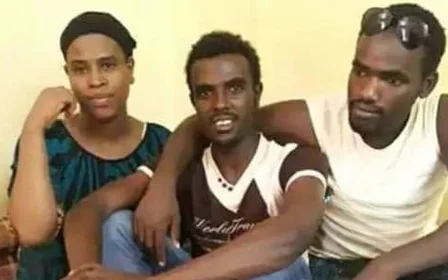
Having watched two of their cellmates being led away in the middle of the night, Issam al-Shazly, Rami al-Najjar, Ahmed Zeinhom, Abdelfattah Kamal, Hesham al-Teles, Mohamed Saad and Omar Sherif are unsure of when his time will come.
After a sleepless night, they sit from 7am watching their cell door, waiting to see if anyone will be taken away for execution.
Back in Egypt, the men's families, who communicate via a Whatsapp group, also observe this vigil - from 8am when the prison call centre opens to when it closes at 8pm.
"We pray at dawn that one of the families in the group will share that they managed to speak with their loved one, that they're alive and well," one of the relatives told Middle East Eye.
New MEE newsletter: Jerusalem Dispatch
Sign up to get the latest insights and analysis on Israel-Palestine, alongside Turkey Unpacked and other MEE newsletters
"Every day we sit in fear, waiting for news. We live in terror. None of the families can sleep until they hear something, until they know their loved one is okay, that no one was executed that day," she said.
Given the authorities' tendency to conduct executions on public holidays or on the weekend, these times are particularly excruciating for those waiting with baited breath for a message in the Whatsapp group.
The UK-based organisation Reprieve, who is representing the seven men, emphasised that all of them are now at imminent risk of execution. The organisation noted that their sentences were all based on state-affiliated witness statements and confessions coerced through torture. The majority did not receive legal counsel or representation at any stage of the proceedings.
All of them are from low income backgrounds, whose families have no clout and scant means to hire legal representation.
These are not isolated cases. They are among a surging number of foreign nationals facing death sentences in the kingdom on drug charges, in what Reprieve and the European Saudi Organisation for Human Rights (ESOHR) describe as an "unprecedented execution crisis".
In the years following the lifting of an unofficial moratorium on capital punishment for drug-related offences enacted in 2021, executions have been turbocharged.
In 2024, Saudi Arabia executed a record 345 people, almost half of them on charges with non-lethal crimes, according to Reprieve.
Foreign nationals are particularly at risk, accounting for 92 executions in 2024.
Lack of legal access, inadequate consular support and translation further obstructs their right to a fair trial in an already opaque and criminal justice system.
According to monitoring by Reprieve and ESOHR, between 2010 and 2021, Saudi Arabia executed almost three times as many foreign nationals for drug-related offences as Saudi nationals, despite foreign nationals representing just 36 percent of Saudi Arabia's population.
In 2025, the kingdom is set to break last year's record, with at least 172 people executed so far this year as of 27 June, according to Reprieve. Of this figure, 112 were executed for non-lethal drug-related offences, and 90 of them were foreign nationals.
Reprieve's head of MENA death penalty projects, Jeed Basyouni, told MEE that "fear is everywhere" in Tabouk prison, where the men are being held.
"Pulled from their cells daily... Egyptians, Somalis and more agonise over who will be next," she said.
"In the failed global war on drugs we see the same pattern repeating itself - authorities respond to concerns about drug use by killing poor and marginalised groups. To make matters worse, they rarely receive basic due process rights such as legal representation or interpreters during their trials."
'They beat you until you confess to everything'
29-year-old Issam al-Shazly, a fisherman from Hurghada in Egypt with no previous criminal record, was arrested in the sea between Saudi Arabia and Egypt by Saudi maritime border patrol, who he said opened fire on him during the arrest.
He was allegedly found with narcotics and transferred to Tabuk General Prison. In a voice recording shared with MEE by a relative, al-Shazly said he was forced at gunpoint to take packages of drugs and was not aware of the contents.
Al-Shazly said he was forced to sign confession statements to drug trafficking charges after three days of torture and sleep deprivation. Reprieve confirmed that he and two other men were subjected to pretrial torture to extract "confessions".
"They brought me a piece of paper saying that I was arrested on the Saudi side of the border and not the Egyptian side where I was actually detained. They wrote that I brought in drugs and I'm hiding the identity of the recipient. But I have no information on any of this," al-Shazly said in a voice recording shared with MEE.
"For three days they beat me, tortured me, humiliated me. There was no sleep. They inflicted the worst kind of beating and torture to coerce me to sign the document saying that I committed the crime."
On 30 November 2022, the Criminal Court in Tabuk handed al-Shazly a death sentence, a ruling later upheld by the Court of Appeal and the Supreme Court.
'For three days they beat me, tortured me, humiliated me. There was no sleep. They inflicted the worst kind of beating and torture to coerce me to sign the document saying that I committed the crime'
- Issam al-Shazly, Egyptian prisoner
Al-Shazly said that he was forced to fingerprint his confession in court.
Reprieve said he was a victim of trafficking, a fact that the court has refused to acknowledge.
"They beat you until you say 'yes, I confess to everything'. You say 'yes' to whatever they want. But all these details were not mentioned in court - that I was forced at gunpoint to transport items I didn't know anything about," he said.
Al-Shazly's family said he had no legal representation during his arrest or investigation. For his trial, he was assigned a government-appointed lawyer.
His family are living hand to mouth, some of them were forced to sell their flat in order to pay for a Saudi lawyer to take over his case for the appeal, which they said didn't result in anything.
He now remains without any legal representation.
Al-Shazly's family stopped hearing from him when he was hospitalised shortly after the appeal and diagnosed with clinical depression on 15 January 2023. According to Reprieve, he started experiencing suicidal thoughts.
"He stopped calling and I begged the families of other prisoners to tell me what's going on with my son," Rana, a relative who wished to remain anonymous, said.
When she finally heard from him, she told him: "'Why do you want to kill yourself? We will solve this. I will do everything I can for you.'
"I was saying anything just to give him hope," she said.
In 2024, Saudi authorities issued a pardon for all execution cases, but none of the men were released.
"We thought maybe the following year. But at the start of the year, they transferred them all to the prison section designated for those facing execution, and began carrying out the sentences," Rana told MEE.
She described him as being "completely shattered", having already watched four of his friends being led away from his cell for execution.
'It felt like he was saying goodbye'
Forty-two-year-old Rami al-Najjar, who was working as a taxi driver, was arrested along with Ahmed Zeinhom, a weaver, at a petrol station in Riyadh. The two were in a car together at the time of their arrest.
State-affiliated witnesses alleged that Zeinhom exited the vehicle to approach Abdelfattah Kamal Abdelfattah Abdelaziz, another co-defendant, to buy smuggled drugs, thought to be Tramadol and amphetamines.
However, when he was searched, al-Najjar was only found to be carrying eight grams worth of cannabis.
Despite this, he and Zeinhom were charged with possession and trafficking of two types of narcotics. Al-Najjar was also charged with drug possession with intent to use, attempting to resist arrest and crashing into the arresting officers' car.
Safiya, a family member who wished to remain anonymous due to fear of reprisals, told MEE that in calls to his family, he puts on a front, insisting that he's doing fine. He speaks to his mother every day, carefully hiding the fact of his death sentence from her.
"She only knows he's in prison. She's been ill ever since he was arrested," Safiya told MEE.
"He's careful about what he says on the phone, but he often asks: 'Has the media covered my case? Have there been any articles? Are people talking about it on social media?'
'You can tell his emotional state by his voice. Sometimes he sounds resigned to his fate. Sometimes he cries, especially when someone is executed'
- Sayifa, prisoner's family member
"You can tell his emotional state by his voice. Sometimes he sounds resigned to his fate. Sometimes he cries, especially when someone is executed," Safiya said.
Safiya last spoke to al-Najjar a few weeks ago, just after a large wave of prisoners had been led away for execution.
"That day, he spoke to all of us. It felt like he was saying goodbye," she said.
Despite having the means to hire a lawyer, Safiya says they are all "terrified", and that the prolonged wait and uncertainty is "unbearable".
"They haven't given us a date for the execution. They never do. Usually, they come for them in the morning and carry it out," she said.
"Two weeks ago, they said two prisoners would be executed but didn't say who. In the end, no one was executed. But before that, they executed four.
"We don't know how to live our lives anymore. Everything changed. It disrupted our whole family."
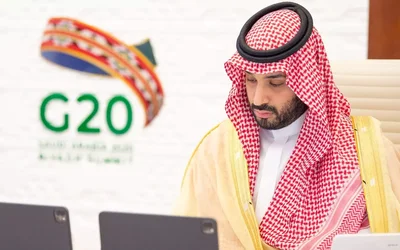
The rocketing number of executions contradicts multiple statements made by Crown Prince Mohammed bin Salman and King Salman pledging an end to death sentences for non-lethal offences.
On 22 January 2024, during their Universal Periodic Review (UPR), Saudi Arabia reaffirmed that the death penalty is reserved for the "most serious crimes", a claim that was repeated again in July 2024 before the UN Human Rights Council.
Reprieve and ESOHR have emphasised that the kingdom's surging executions targeting foreign nationals violate the UN Convention on the Elimination of Racial Discrimination, which Saudi Arabia ratified in 1997.
Middle East Eye delivers independent and unrivalled coverage and analysis of the Middle East, North Africa and beyond. To learn more about republishing this content and the associated fees, please fill out this form. More about MEE can be found here.