Fears grow for Sahrawi prisoner entering sixth week of hunger strike in Morocco

Rights groups have called for the immediate release of a Sahrawi political prisoner in Morocco as he nears his sixth week of a hunger strike.
Naama Asfari started his indefinite hunger strike on 8 June while detained in Kenitra prison, north of the city of Rabat, in an attempt to force Moroccan authorities to comply with UN rulings calling for his release.
Asfari has been in prison since 2010 over his involvement in the Gdeim Izik protest camp in Moroccan-occupied Western Sahara, which sought to highlight the ongoing human rights abuses, poverty and discrimination inflicted on the native Sahrawis by the Moroccan authorities.
The camp, which was erected in October that year near the city of Laayoune, was broken up by Moroccan security services with as many as 36 civilians killed and around 3,000 arrested.
Morocco said that 11 police officers were also killed during the November 2010 operation.
New MEE newsletter: Jerusalem Dispatch
Sign up to get the latest insights and analysis on Israel-Palestine, alongside Turkey Unpacked and other MEE newsletters
The incident led to widespread condemnation internationally, with some even citing it as a precursor to the Arab Spring uprisings which would erupt just weeks later.
Asfari and other imprisoned members of the camp were convicted of involvement in the killing of the Moroccan police officers.
'Naama Asfari's health is now at serious risk'
- Madeleine Sinclair, ISHR
However, according to the UN Committee Against Torture (CAT), statements made by Asfari and his colleagues were obtained through torture and coercion and has called for their convictions to be quashed.
Families members of Asfari say he has now lost approximately nine kilogrammes and is refusing to cooperate with the prison doctor and has foregone his daily exercise period.
The International Service for Human Rights (ISHR) called on Morocco to comply with the ruling from CAT as well as a UN Working Group on Arbritrary Detention opinion from 2023 that ordered his release.
ISHR co-director Madeleine Sinclair told Middle East Eye that Asfari's family had had no news since Monday.

"Naama Asfari's health is now at serious risk. The Moroccan authorities have an immediate obligation to protect his life and ensure he has access to independent medical care," she said.
"But they must also address the root cause of this crisis by implementing the decisions of the UN Committee against Torture and the UN Working Group on Arbitrary Detention, which have long called for effective remedies in his case."
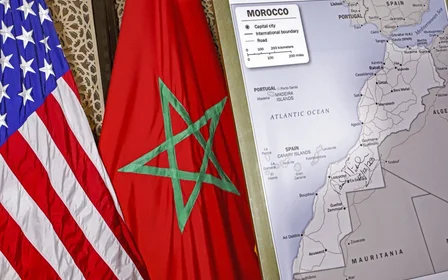
Occupied by Morocco since 1975, the Western Sahara has been claimed by native Sahrawis, while the Algeria-backed Polisario Front has fought against the Moroccan state for independence for decades.
Hundreds of thousands of Sahrawi refugees live across the border in camps in southwestern Algeria, while independence campaigners in Western Sahara have faced repeated repression by Moroccan authorities.
Middle East Eye delivers independent and unrivalled coverage and analysis of the Middle East, North Africa and beyond. To learn more about republishing this content and the associated fees, please fill out this form. More about MEE can be found here.