Four-year-old boy dies of starvation in Gaza due to Israeli blockade

A four-year-old boy has died in Gaza City from severe malnutrition caused by Israel's total blockade of the occupied Gaza Strip, Palestinian media reported on Sunday.
Doctors at al-Ahli Arab Baptist Hospital confirmed that Mohammad Mustafa Yassin, 4, died from prolonged malnutrition.
Yassin's death brings the number of Palestinians who have died from hunger-related causes to 58 over the past 80 days of the Israeli siege. An additional 242 people - mostly children and the elderly - have also died due to lack of access to food and medicine during this period.
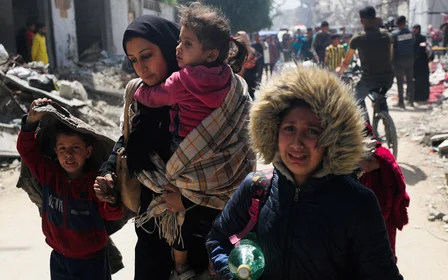
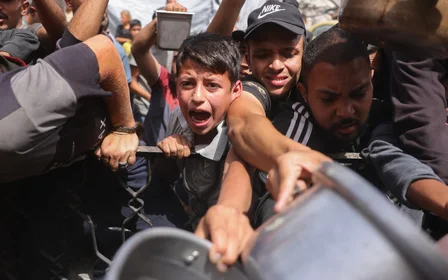
Israel has blocked virtually all aid from entering the Gaza Strip since early March, leaving nearly the entire population of 2.1 million Palestinians on the brink of starvation, with medicine and fuel supplies exhausted.
Global outrage has been steadily rising, alongside unprecedented criticism from Israel's western allies, including the UK, Canada and France.
New MEE newsletter: Jerusalem Dispatch
Sign up to get the latest insights and analysis on Israel-Palestine, alongside Turkey Unpacked and other MEE newsletters
On Friday, 80 countries issued a joint statement warning that Gaza is facing “the worst humanitarian crisis” since the war began in October 2023, with civilians at imminent risk of famine.
Prior to the current siege, aid groups were able to bring in around 600 trucks per day - the minimum humanitarian organisations say is needed for Gaza's population. However, only 119 trucks have entered the enclave over the past week following mounting international pressure, according to a network of Palestinian aid groups.
Philippe Lazzarini, the head of the UN agency for Palestinian refugees (Unrwa), has criticised Israel for sending a small convoy of trucks carrying vital supplies into the enclave, saying it was "far too little" and that "everyone in Gaza is [going] hungry".
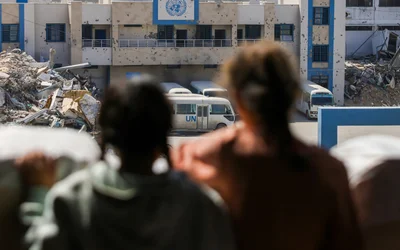
"For the time being, what we are talking about is a drop in a sea of distress and in a sea of needs," Lazzarini told Middle East Eye.
"We are confronted with a completely fabricated, man-made hunger. Hunger is deepening and starvation seems to be used as a weapon of war."
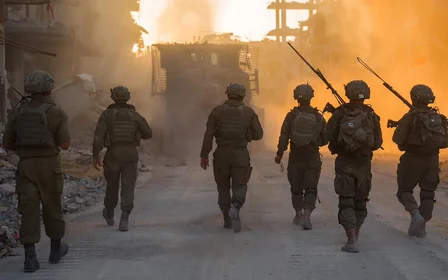
Over the weekend, Israeli media reported that the military had deployed all of its standing army infantry and armoured brigades to Gaza, as it expands its renewed ground offensive - named "Operation Gideon's Chariots" - across the enclave.
The Palestinian government media office said that Israeli forces were in control of 77 percent of the Gaza Strip, either through ground forces or expulsion orders and bombings that keep residents away from their homes.
On Sunday, Israeli strikes killed at least 23 Palestinians across the Gaza Strip, including a journalist and a senior rescue service official, local health authorities said.
Israeli attacks were reported in Khan Younis in the south, Jabalia in the north and Nuseirat in the central Gaza Strip, medics said.
In Jabalia, Palestinian journalist Hassan Majdi Abu Warda and several family members were killed by an air strike that targeted his house.
Another air strike in Nuseirat killed Ashraf Abu Nar, a senior official in Gaza's civil emergency service, and his wife in their house, medics said.
Abu Warda's death raises the number of Palestinian journalists killed in Gaza since October 2023 to 220, according to Palestinian officials.
At least 3,785 people had been killed in the territory since Israel broke the ceasefire agreement on 18 March, taking the war's overall toll to 53,939, mostly civilians, according to the Palestinian health ministry.
Middle East Eye delivers independent and unrivalled coverage and analysis of the Middle East, North Africa and beyond. To learn more about republishing this content and the associated fees, please fill out this form. More about MEE can be found here.