Hamas responds to ceasefire draft, demands changes to Israeli army's position in Gaza

Hamas and other Palestinians factions have reportedly demanded changes to the truce proposal regarding the Israeli army's withdrawal positions as well as amendments to the aid mechanism in Gaza.
Early on Thursday, Hamas announced it was submitting its official response to the ceasefire draft to mediators.
According to Al-Araby Al-Jadeed, two sources - an Egyptian source familiar with mediation efforts and a Hamas source - noted amendment requests made by the Palestinian movement regarding the deployment of the Israeli army further away, near the Gaza boundary.
One condition stipulated the Rafah border crossing between Gaza and Egypt be opened immediately after the ceasefire begins, the sources say.
The Egyptian source noted that US negotiators have expressed their commitment to ensuring ongoing discussions if a 60-day truce period does not conclude with an agreement.
New MEE newsletter: Jerusalem Dispatch
Sign up to get the latest insights and analysis on Israel-Palestine, alongside Turkey Unpacked and other MEE newsletters
"Now the ball is in the Israeli court, as the mediators await its response regarding the aid and redeployment maps clauses," the Egyptian source said.
According to the Israeli daily Yedioth Ahronoth, a source said the response by Hamas "improved" compared to previous proposals, but stressed that "the improvement is not sufficient, but it may form the basis for subsequent negotiations".
The withdrawal of the army, especially away from civilian areas, was one of the points of contention on the Israeli side, which Yedioth Ahronoth described as "much more than Israel was willing to do".
Meanwhile, the Hamas official speaking to Al-Araby Al-Jadeed noted concerns of displacement amongst Palestinians in Gaza, explaining that the clause pertaining to the opening of the Rafah crossing would allow Egyptian coordination to guarantee that the besieged enclave would not be emptied of its residents.
Moreover, the clause aims to affirm the freedom of movement of Palestinians, moving away from the concept of a prison, and ensuring that families stranded in Egypt are able to reunite with families across the Gaza Strip.
Aid mechanism and prisoner exchange
One of the amendments in Hamas' latest response has called for the exclusion of the Gaza Humanitarian Foundation (GHF) from participating in future aid distribution and delivery efforts, instead, relying on the previous mechanism led by the United Nations and other human rights organisations.
This demand has been one of a few that the Palestinian factions have laid stress on, especially with the ongoing attacks on relief-seekers at GHF-controlled distribution points.
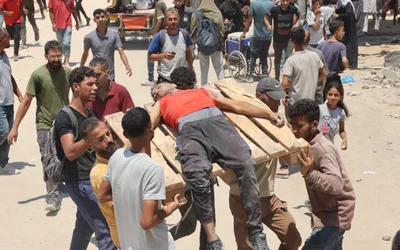
The US and Israeli-backed GHF was established to supplant the UN in distributing aid in Gaza. Only a trickle of food has entered the enclave, and some Palestinians, including children, are dying of hunger.
More than 1,000 Palestinians have been killed by Israeli forces while trying to access food aid in Gaza since the militarised GHF began operations in late May, the United Nations said on Tuesday.
Additionally, Israeli media reports that due to Hamas' distrust of US assurances of a continuation of the truce after the 60-day period is completed, requests have been made to release the maximum number of Palestinian prisoners.
This includes some of the most notable prisoners that the late Hamas leader Yahya Sinwar had vowed to release before he was killed by the Israeli military, Ynet reported.
The Israeli Channel 12 quoted a senior Israeli official that it "appears there will be no rapid progress" due to the "current gaps between the two sides regarding the prisoner exchange and the Israeli army's withdrawal lines".
It added that they are attempting to find possible "bridges" to overcome these differences and push towards the release of Israeli captives in Gaza.
Middle East Eye delivers independent and unrivalled coverage and analysis of the Middle East, North Africa and beyond. To learn more about republishing this content and the associated fees, please fill out this form. More about MEE can be found here.