Hezbollah's Nawaf Moussawi: Only force can compel Israel to leave Lebanon
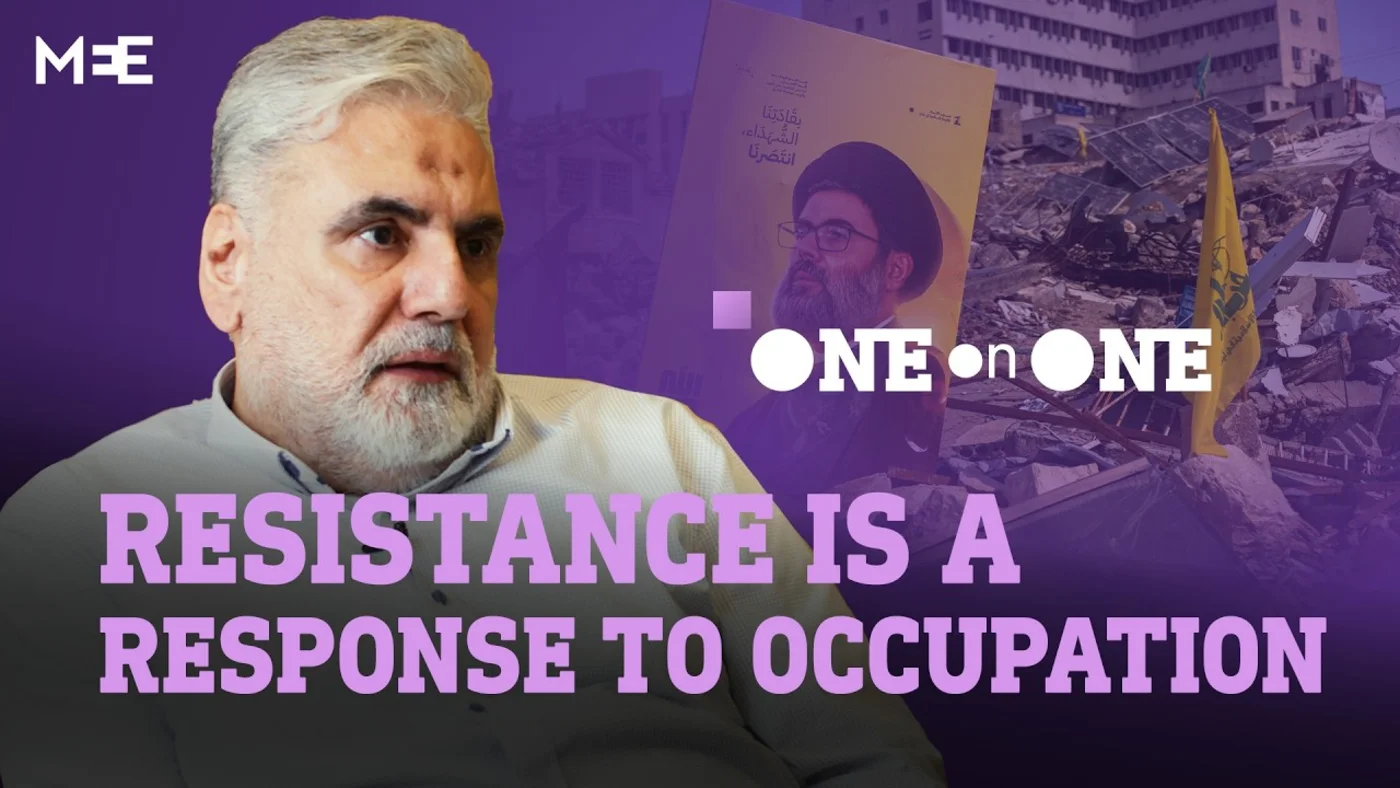
Force must be used to liberate South Lebanon because Israel will never be convinced to withdraw through negotiations alone, senior Hezbollah official Nawaf Moussawi told Middle East Eye.
Speaking to MEE in a wide-ranging interview at his Beirut office, Moussawi insisted that Lebanese-Israeli negotiations would remain fruitless as long as President Joseph Aoun comes to the table lacking any sort of leverage over the Israelis.
Moussawi, who, as head of Hezbollah’s border and resources department, is responsible for many Israeli affairs, said the Lebanese armed movement will continue to fight the occupying troops until they completely depart from his country.
“Is there international pressure that would compel the Israelis to withdraw? So far, there is not, just as there was not in Palestine,” he said.
“Therefore, we have no choice but to continue fighting the Israeli occupier until it withdraws.”
New MEE newsletter: Jerusalem Dispatch
Sign up to get the latest insights and analysis on Israel-Palestine, alongside Turkey Unpacked and other MEE newsletters
Hezbollah launched cross-border strikes against Israel the day after the Hamas-led 7 October 2023 attacks, initiating a “support front” to draw resources away from Israel’s war machine as the genocide in Gaza began.
Since then, Israel and Hezbollah have fought two wars: the first of which wiped out much of Hezbollah’s military capabilities and senior leadership, including its longtime secretary-general Hassan Nasrallah.
“We were fulfilling our duty towards the Palestinian resistance. It was therefore no secret that we were providing them with support wherever we could,” Moussawi said.
The second conflict, which Hezbollah launched in March, was sparked by the US-Israeli war on Iran and the killing of Ayatollah Ali Khamenei, an important spiritual and political figurehead for the party.
It also, Hezbollah and Israeli media reports suggest, pre-empted a new Israeli offensive on Lebanon following a 15-month period when Israel constantly violated a ceasefire and entrenched itself in occupied territory along the border.
The decision to enter the Iran war and escalate Israeli attacks on Lebanon has been met with incredulity and anger from many Lebanese as well as critics abroad.
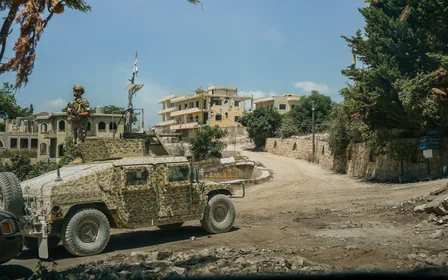
At least 4,348 people have been killed in Lebanon since March, and much more Lebanese territory has been occupied since.
Moussawi says blame should be reversed: it is the Israelis, as the occupying force, who are culpable.
“At one point, Israeli propaganda claimed that Fatah was the problem. Now, the problem is said to be Hamas. In the future, the problem will be said to be any Palestinian organisation that seeks to work towards liberating its land,” he said.
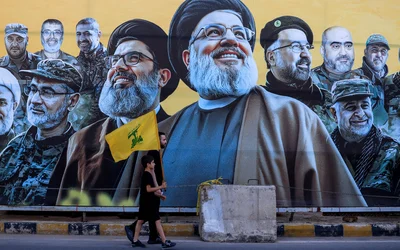
“The problem, therefore, is always the occupation, not the organisation resisting that occupation. For example, they now say that Hezbollah is the problem.”
Israel, Moussawi said, would have a problem with any organisation expressing the will of the Lebanese people to liberate their land, “even if it was called the Democratic Party of America”.
Moussawi said the US-backed Israeli attacks on Palestine and Lebanon since October 2023 have attempted to wreak such devastation that “people whose land is occupied feel that resistance is not an option, because it will lead to their destruction”.
“The Palestinian people, for example, tried the path of negotiations through the Palestine Liberation Organisation to the very end, yet did not obtain a Palestinian state,” he added.
“So what can they do? Surrender to the Israeli side? Even surrender is not acceptable to the Israeli side, because what the Israelis want is the extermination of the Palestinian people.”
'Negotiating with Israel has certain requirements'
Since April, the Lebanese state, through the presidency and embassy in Washington, has held direct negotiations with Israel seeking to secure a permanent ceasefire, the withdrawal of Israeli troops and decouple Lebanon from the war on Iran.
Those talks have resulted in a US-backed framework, which seeks to lay out a path towards ending hostilities between Israel and Hezbollah.
It has triggered widespread opposition in Lebanon, raising questions over sovereignty, accountability and provisions that place Lebanese obligations ahead of Israeli commitments.
Hezbollah has denounced the framework as failing to guarantee Israel’s full withdrawal from the six percent of Lebanese territory it continues to occupy and the return of hundreds of thousands of displaced residents to the south.
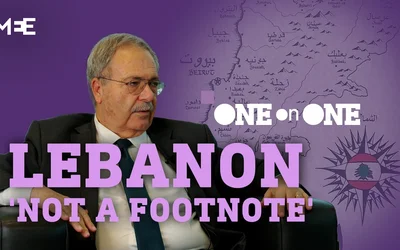
Moussawi previously served as head of the party’s foreign relations department and an MP, and was heavily involved in negotiations with the Israelis in the 2006 war and over Lebanon’s maritime border with Israel.
He has been highly critical of the way the Lebanese state’s negotiations with Israel have been conducted.
“So far, the Lebanese authorities have not achieved any result,” he told MEE.
As part of the framework, the Lebanese military has been allowed by Israeli troops to deploy in one village in south Lebanon, even though the Israelis never occupied it in the first place.
Talks to secure more villages currently under Israeli occupation have so far been unsuccessful, especially as bombings and skirmishes become more frequent.
“The problem with the negotiations which the president of the republic has now entered into is that he did so without national unity,” said Moussawi.
“In other words, what he is doing does not have the approval of the Lebanese political forces. In Lebanon, such steps must be supported by national consensus.”
Another major issue, Moussawi said, is that “negotiating with Israel has certain requirements, foremost among them being that you enter negotiations holding sources of leverage”.
Moussawi suggested that Aoun may have achieved better results if he had worked in lockstep with Hezbollah, using its armed resistance as a pressure point on the Israelis.
“The resistance, for example, is a source of strength, but he chose to place himself in confrontation with the resistance,” he said.
“How can you achieve liberation when you are at odds with your own people? That is the president's problem.”
'Our way of returning our people to the south is to liberate their land. Liberating the land requires fighting the Israeli occupier and driving it back'
- Nawaf Moussawi
That said, half a million Lebanese - the vast majority from the Shia community that Hezbollah says it represents and protects - have been displaced in this last war.
Hezbollah has pivoted to a tactic that allows its units to cede territory with the aim of harrying Israeli troops that then deploy there. It has proved effective, but also contributed to even more of south Lebanon falling under occupation.
Moussawi insists that armed resistance will return the displaced to their homes - or at least their land after Israel razed strings of villages and towns to the ground.
“Our way of returning our people to the south is to liberate their land. Liberating the land requires fighting the Israeli occupier and driving it back,” he said.
“That is what we did in 2000. This is our path.”
If Aoun had secured an Israeli withdrawal, he would have made himself a hero, Moussawi said. “He has not even been able to stop the destruction within the occupied villages,” he added.
“Despite all the concessions made by the president, the Israelis did not grant him a single gain. Therefore, we have no choice but to resist.”
Confrontations with the army
Also looming over Hezbollah’s relationship with the state is the issue of disarmament.
Days after the party launched six rockets at Israel on 2 March in response to Khamenei’s killing, Prime Minister Nawaf Salam outlawed Hezbollah military activity. The state, Salam insists, must have a monopoly on the use of arms.
There has since been pressure from Israel, Washington and some domestically for the Lebanese military to take a more proactive and confrontational role with Hezbollah and its potential disarmament.
Moussawi believes the framework was designed to create such a scenario, “to shift the problem into Lebanon itself, so that the Lebanese would fight among themselves instead of fighting the Israeli occupier”.
“I do not believe that anyone in Lebanon could take up arms against the resistance to the occupation, because that would mean their own destruction before the destruction of Lebanon,” Moussawi said.
“Does the president of the republic intend to fight the resistance?” he asked.
“I say that even if he were thinking in this way, he could not do it, because the army and security services in Lebanon do not belong to the president. They belong to the Lebanese people, and the Lebanese people will not fight among themselves.”
'Does the president of the republic intend to fight the resistance?'
- Nawaf Moussawi
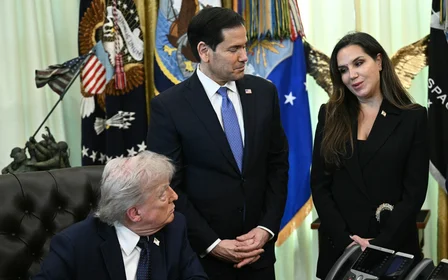
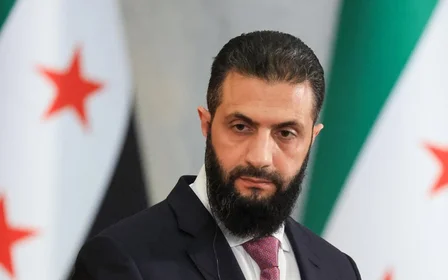
Another scenario proposed by US President Donald Trump is to have Syrian President Ahmed al-Sharaa, who fought Hezbollah for a decade in Syria, use his country’s army to confront the party.
This, Moussawi suggested, “was wishful thinking that cannot become reality”.
The Hezbollah official noted that Turkish President Recep Tayyip Erdogan, a close ally of Sharaa’s, recently said that Turkey’s security begins in Beirut.
“Of course, he was speaking in the context of confronting Israeli expansion,” Moussawi said.
“How, then, could the new Syrian government, which is allied with Turkey, become an instrument for advancing Benjamin Netanyahu's interests and expanding his power in the region?”
Notably, Moussawi opened the possibility of dialogue with Damascus via Ankara.
“We are engaged in genuine and effective dialogue with Turkey, through which new avenues can be opened with the emerging actors in the region.”
After the 2024 war, Hezbollah’s military wing appeared badly degraded. Most of its leadership and commanders had been killed, as well as their deputies, and it seemed unable to go toe to toe with Israel anytime soon, if ever.
However, as MEE revealed in an investigation earlier this month, the party reorganised itself and doubled down on its drone programme, which it staffed with video gamers.
Moussawi acknowledged that Hezbollah had been badly penetrated by Israeli intelligence, “but it is now fighting a generation it does not know”.
This fourth generation of Hezbollah military commanders “were not included on the targeting lists, whether for intelligence or operational purposes”, he noted.
“Therefore, the brothers now operate with greater ease than their brothers who were martyred before them.”
Middle East Eye delivers independent and unrivalled coverage and analysis of the Middle East, North Africa and beyond. To learn more about republishing this content and the associated fees, please fill out this form. More about MEE can be found here.