How the fall of Starmer will reshape British policy on Israel

Israel's genocide in Gaza and campaign of ethnic cleansing in the occupied West Bank have not yet become an issue in the battle to succeed Sir Keir Starmer as British prime minister.
Reporters have focused on the manoeuvrings of the candidates amid criticisms of Starmer’s style of government.
That is certain to change once the contest gets underway. One of the big issues will be Starmer’s handling of the Gaza genocide.
Here, we argue that whichever candidate succeeds Starmer, they will need to take a much more strident position on Israel.
This will likely mean sanctions on illegal settlements in the occupied West Bank, and a ban on settlement goods.
New MEE newsletter: Jerusalem Dispatch
Sign up to get the latest insights and analysis on Israel-Palestine, alongside Turkey Unpacked and other MEE newsletters
There could even be moves towards a full-scale sanction of Israel itself.
“Labour’s refusal to properly oppose Israel’s genocide in Gaza is one of the key issues that has appalled huge numbers of former Labour voters and driven them away from the party,” Labour MP Richard Burgon told Middle East Eye.
'Labour’s refusal to properly oppose Israel’s genocide in Gaza is one of the key issues that has appalled huge numbers of former Labour voters'
- Labour MP Richard Burgon
This logic implies that the topic of Israel and Gaza will be brought to the forefront in the leadership contest.
Kim Johnson, another Labour MP, told MEE: “Any future leader must demonstrate a clear willingness to challenge the Israeli government over the continued genocide in Gaza and illegal settlement expansion in the West Bank.
“I will be looking closely at where any future leader stands on these issues. This includes their willingness to take tough, principled action and their independence from foreign interests in the form of financial backing.”
The candidates are likely to include Wes Streeting, who resigned on Thursday from his role as health secretary, former Deputy Prime Minister Angela Rayner, and Energy Secretary Ed Miliband.
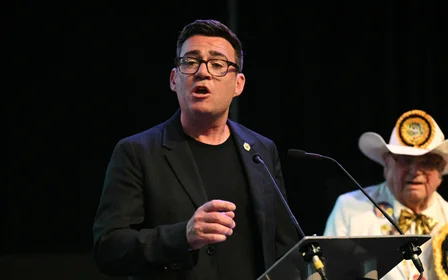
Greater Manchester Mayor Andy Burnham is now emerging as the favourite to succeed Starmer, if he can win a by-election in Greater Manchester's Makerfield, where MP Josh Simons - a former Starmer ally - has just resigned.
Burnham is the most popular contender among the rank and file of the party. Where do the contenders stand on Israel and the Middle East?
Burnham's journey
As Greater Manchester mayor, Andy Burnham has not played a role in deciding Labour policy on Israel.
To be sure, Burnham has never been seen as a stridently pro-Palestinian politician in the way that Jeremy Corbyn was.
Indeed, he joined Labour Friends of Israel (LFI) in 2015. That same year, running unsuccessfully to be Labour leader, Burnham said his first overseas visit would be to Israel. He called the Boycott, Divestment and Sanctions (BDS) movement "spiteful" and said he opposed it.
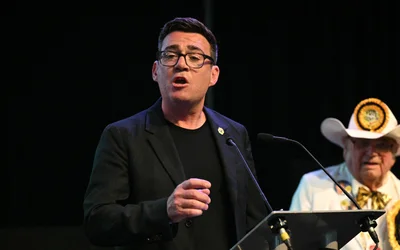
But Burnham also marked himself out as a critic of the Israeli government. In March 2015 he reacted to Benjamin Netanyahu's reelection as Israeli prime minister by calling the news "depressing" in a tweet.
"Palestine will need more international support,” he said. As mayor, Burnham took a bold stance after the Hamas attack on Israel on 7 October 2023; breaking ranks with the Labour leadership’s line of vocally supporting Israel amid its war on Gaza.
In late October, only weeks into the war, he called for a ceasefire - as Labour MPs were ordered not to vote for one in Parliament.
Burnham had voted for the Iraq war as a young MP in 2003. But at this point, two decades later, he criticised the war on terror, saying “the US-UK action resulted in huge harm to innocent civilians”, and he attacked the Blair government's introduction of "detention without charge".
The lessons of that period, he said, informed his decision to oppose the Gaza war.
As prime minister, Burnham would almost certainly toughen Britain’s stance on international law and Israel’s violations of it.
Miliband and Rayner
So would Ed Miliband, who was Labour leader from 2010 to 2015, when the party was in opposition. During that time he insisted he was a friend of Israel and opposed the boycott movement.
But Miliband, who has Jewish heritage, distinguished himself by strongly criticising the coalition government’s failure to challenge Israel when it bombed Gaza in 2014, killing 1,462 Palestinian civilians.
Compare this to Starmer’s instinct in October 2023, which was to throw his support behind the Tory government’s backing for Israel’s bombardment of Gaza.
In 2014 Miliband accused then-Prime Minister David Cameron of getting it “wrong” and slammed his “inexplicable silence” on “the killing of innocent Palestinian civilians caused by Israel’s military action”.
That same year Miliband backed recognising Palestinian statehood unilaterally, a position opposed by the Tories.
In the cabinet last year, Labour sources have said, Miliband was a leading voice pressuring Starmer to recognise a Palestinian state - which he finally did in September.
And according to a Whitehall source, Miliband and Home Secretary Shabana Mahmood privately and successfully lobbied Starmer not to allow the US to use British bases to strike Iran in February, although the prime minister would later partially u-turn on his decision.
Angela Rayner, meanwhile, has been closely associated with Starmer’s position on Gaza because of her position as deputy prime minister. She was, however, a strong supporter of recognising a Palestinian state.
Who is the real Wes Streeting?
The most ambiguous and apparently conflicted contender is Wes Streeting.
A member of LFI who regularly meets with the group in Westminster, according to a Labour source, Streeting has also received donations from Trevor Chinn, a 90-year-old philanthropist and former car industry mogul who was awarded the Israeli Presidential Medal of Honour for service to the State of Israel in November 2024.
Chinn gave Streeting more than £15,000 ($20,200) between 2021 and 2024. The following year, with Streeting as health secretary, he also gave him £5,000 to "support campaigning in Ilford North".
Streeting dutifully followed the official Labour position after 7 October.
Speaking to Sky News on 25 October 2023, Streeting accused Hamas of "cowardly using innocent civilians, children, women, men as human shields" - a false claim routinely deployed by the Israeli government.
He refused to call for a ceasefire. In January 2024 he even described South Africa's case at the International Court of Justice (ICJ) accusing Israel of genocide as a "distraction from what needs to happen, which is the diplomatic heavy lifting to bring about an end to this conflict".
But more recently Streeting has presented himself as a critic of Israel.
A Labour source who knows Streeting said that as health secretary and a member of the cabinet, he privately pushed Starmer to take a more pro-Palestinian position.
Last September Streeting said its actions in Gaza were "leading Israel to pariah status".
'Let [Israel] pay the price as pariahs with sanctions applied to the state'
- Wes Streeting MP
Then in February 2026, text message correspondence between Streeting and Peter Mandelson, the former British ambassador to the US and friend of Jeffrey Epstein, was leaked.
Multiple Labour sources told MEE that the leak was engineered by Streeting to shore up support for himself as the next prime minister.
The released text messages revealed that Streeting feared becoming "toast at the next election" in his Ilford North seat.
The former health secretary told Mandelson in July 2025 that Israel was "committing war crimes before our eyes" and endorsed sanctions on the state.
He said the Israeli government "talks the language of ethnic cleansing, and I have met with our own medics out there who describe the most chilling and distressing scenes of calculated brutality against women and children".
He accused Israel of "rogue state behaviour. Let them pay the price as pariahs with sanctions applied to the state, not just a few ministers".
Streeting’s critics attacked him for remaining in a government cooperating with Israel while privately believing Israel was committing war crimes.
But it is significant that Streeting might have considered it would help his position to appear critical of Israel.
This could be connected to the fact that in the 2024 general election, he only narrowly retained his Ilford North seat, with British Palestinian independent candidate Leanne Mohammed coming within 600 votes of unseating him.
So could Streeting, an enigma on many issues, now take a more pro-Palestinian stance to appeal not just to Labour members but to his own constituents?
Starmer's record on Gaza
Ordinary Labour members are much more left-wing than the parliamentary party. A poll last June showed that nine out of ten members thought the UK should be more critical of Israel than it currently is.
This will likely influence how candidates present themselves once the battle goes to the membership.
At hustings and in television studios, and among ordinary members, each contender will come under heavy pressure to take a position on Starmer’s handling of Gaza.
Let’s look back at that record - one of inconsistency, confusion and weakness.
Under Starmer, Britain sent at least 518 spy flights over Gaza - throughout Israel’s genocide. The government insisted these were “solely to locate hostages”, but the surveillance sorties continued during and after the ceasefire. Britain shared intelligence from the flights with Israel.

The government also recognised “the right of British dual nationals” to serve in the Israeli army and in Gaza.
To be fair, Labour departed from Tory policy in important ways.
The Starmer government angered the Israeli government by dropping its objection to the International Criminal Court’s jurisdiction over Israel, imposing a partial arms embargo on Israel and sanctioning far-right Israeli ministers Itamar Ben Gvir and Bezalel Smotrich.
But the government also green-lit $169m in military goods to Israel after a partial arms embargo - more in three months than all that was approved under the Tories between 2020 and 2023.
David Lammy, the former foreign secretary, told Parliament that “much of what we send is defensive in nature”, such as helmets or goggles, and “not what we describe routinely as arms”.
Yet the shipments included 8,630 separate munitions exports in the category of “bombs, grenades, torpedoes, mines, missiles and other similar munitions”.
In March 2025, Starmer rowed back on remarks made by his foreign secretary that Israel was committing a "breach of international law". He has consistently refused to accuse Israel of committing war crimes.
Britain even allowed the US to use British bases to launch strikes on Iranian missile sites this year, facilitating what legal experts described as an illegal war. Starmer insisted the strikes were purely “defensive”.
And at home his government has banned direct action group Palestine Action as a terrorist organisation and arrested thousands of people, many of them pensioners, for expressing support for the group.
The questions they must answer
Contenders for the premiership will therefore have a series of questions to answer.
Is Israel an apartheid state?
Has it committed genocide?
Would they continue to support Labour Friends of Israel?
Would they implement sanctions on West Bank settlements?
Would they ban the import of settlement goods?
Would they impose a full arms embargo?
Would they allow the US to use British bases in the event of another assault on Iran?
Do they support the ban on Palestine Action - a ban which has been judged unlawful by the High Court?
The Green challenge
All these questions and more will be especially salient because everyone in the Labour Party knows they face a massive challenge on the left from the Green Party.
The Greens have emerged as the leading political voice critical of British support for Israel and involvement in American wars.
The famous pollster John Curtice noted after last week’s local elections that the Greens had inflicted far more damage on the Labour vote than Reform.
There were numerous reasons for this, but a big one was Gaza - an issue on which many Green candidates campaigned.
The next prime minister must choose whether to stick with the old strategy of chasing the Reform vote even further to the right, or respond to the Green insurgency by moving back to Labour’s traditional roots on the left.
Historically Labour has been known for its strong support for the underdog. It shed that image in the New Labour years - and again under Starmer.
After two Jewish men were stabbed in Golders Green last week, UK Prime Minister Keir Starmer called out pro-Palestine protests. Are these horrific attacks being weaponised by Starmer to shut down the right of protest in the UK? pic.twitter.com/IfrsEF7Wgl
— Middle East Eye (@MiddleEastEye) May 5, 2026
But on foreign policy, even Streeting may now take a stronger stance against Israel. His leaked text messages to Mandelson suggest he views doing so will help his image - both among Labour members and ordinary voters.
For this reason, whoever emerges as prime minister, the fall of Starmer is likely to tear up British foreign policy on Israel.
Even if Starmer survives his crisis, he may have to adjust his policy to win back the support of the Labour left.
Labour MP Richard Burgon told MEE: “Sanctioning Israel to bring the government into line with its legal obligations under international law would not only be the right thing to do, it would also be popular.
“And if Labour under a new leader wants to convince people it has genuinely changed,” he added, “then such a clear break with the failures of the Starmer era on Gaza will be essential.”
Middle East Eye delivers independent and unrivalled coverage and analysis of the Middle East, North Africa and beyond. To learn more about republishing this content and the associated fees, please fill out this form. More about MEE can be found here.