'They spat in my face': Palestinians describe Israeli abuse at Gaza crossings

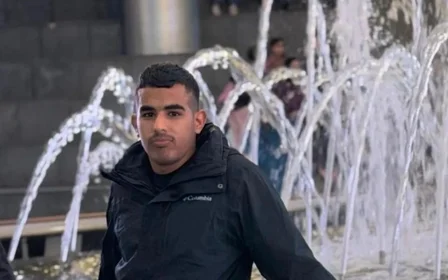
Mahmoud al-Najjar, 38, believed securing an Italian scholarship would mark a new beginning after losing everything during Israel's genocide in Gaza.
His hopes were shattered at the Karem Abu Salem (Kerem Shalom) crossing in early June, when Israeli forces detained and interrogated him before all contact was cut off.
Al-Najjar's colleagues, who had been travelling on a trip coordinated by the Italian embassy, left without him and later informed his family of his arrest.
"After we said goodbye to Mahmoud and felt happiness that he was starting a new journey, we were shocked to read the news of his arrest across social media platforms," his brother Attia al-Najjar, 28, told Middle East Eye.
"It was very harsh to find out about his arrest and disappearance while browsing social media, without receiving any official notification."
New MEE newsletter: Jerusalem Dispatch
Sign up to get the latest insights and analysis on Israel-Palestine, alongside Turkey Unpacked and other MEE newsletters
Attia, the youngest brother, tried every means to reach the family of the student who had witnessed the arrest and leaked news of it to online groups.
"We finally contacted the family of our brother's colleague, who conveyed the details. Their son saw my brother being arrested and taken for interrogation while he himself was being interrogated before being released," Attia said.
Al-Najjar's family had seen the scholarship as a crucial opportunity to rebuild after devastating losses. In an Israeli bombardment on their Jabalia home in October 2024, al-Najjar lost his father, eldest brother, wife and all four children.
During the war, Mahmoud had tried to overcome his grief by completing a master's degree in international economics and publishing scientific research papers.
"Mahmoud put a great deal of effort into obtaining this scholarship. He spent months filling out applications, certifying official documents, and went through several interviews until he won a place at Rome Tor Vergata University," Attia said.
'We never expected this to happen, especially since he had obtained travel clearance from the Israeli side'
- Attia al-Najjar
"My brother is not an ordinary person; he holds a bachelor's degree in engineering, another in mathematics, and a PhD in management and international economics."
But al-Najjar's academic journey was halted when Israeli forces arrested him without informing his family of his fate, health or whereabouts, leaving them in acute anxiety.
"We never expected this to happen, especially since he had obtained travel clearance from the Israeli side," Attia added.
Hundreds of students have travelled through the Karem Abu Salem and Rafah crossings since both partially reopened under the October 2025 Gaza ceasefire agreement.
Since Rafah's partial reopening, however, Israeli authorities have allowed only around 7,000 of 19,600 applicants - mostly patients and the wounded - to travel, following security screening, according to Gaza's government media office. No official figures exist for those travelling through Karem Abu Salem.
Meanwhile, only around 1,500 people have been allowed to return to Gaza through Rafah, amid severe movement restrictions into the Strip.
The al-Najjar family's fears have grown alongside testimonies from other travellers describing torture and prolonged interrogations at the crossings.
"We contacted the Red Cross and Addameer to find out my brother's fate, but unfortunately they could not obtain any news," Attia told MEE.
The family did receive a call from Al Mezan Centre for Human Rights confirming Mahmoud was being held in Ashkelon prison and was banned from receiving visits until 15 June. But after that date passed, no human rights organisation was able to reach him.
"Even after the specified date, no human rights organisation could visit him to reassure us. My mother is in a difficult health condition due to anxiety, especially after losing my father and eldest brother in the bombardment, and with two of my brothers currently in Israeli prisons after being arrested during a military operation in our displacement area during the war," Attia said.
Fears of speaking out
Middle East Eye attempted to speak to the family of the student who witnessed the arrest, but they declined, citing fears for their lives and for their son abroad.
That family is not alone. The majority of students who were interrogated or subjected to abuse have refused to speak about their experiences, even under pseudonyms.
'Many students have gone through this humiliating experience, but fear for their lives and their families drives them to silence'
- Mohammed Ahmed
Mohammed Ahmed, a pseudonym, was fortunate enough to travel through Karem Abu Salem to resume his European studies without incident.
"I worked as a journalist during the war and faced threats from settlers and Israeli activists on social media. But after obtaining the scholarship and a travel permit following security screening, I took the risk. Luck was on my side and I travelled without interrogation or abuse," Ahmed told MEE.
One of his colleagues, who travelled shortly after him for the same scholarship and shares a similar name, was not so fortunate.
"I was shocked when my colleague told me that he was interrogated by the Israeli army and questioned about journalistic work that I had done while I was in Gaza," Ahmed said.
"Despite telling them that he does not work as a journalist and has a different specialism, they stripped him of his clothes, beat him, abused him and humiliated him, simply because of the similarity of our names, before allowing him to leave."
Ahmed said his colleague remains silent about the ordeal, fearing for his family in Gaza and potential repercussions during his studies abroad.
"Many students have gone through this humiliating experience, but fear for their lives and their families drives them to silence."
Systematic practices
Lina al-Tawil, director of the Palestinian Center for the Defence of Prisoners, said her organisation had received reports from travellers leaving Gaza, including patients, students and their companions, describing hours of detention, interrogation and in some cases denial of exit.
"We received direct testimonies from travellers or their families about being subjected to detention and security interrogations, which included questions about places of residence, relatives, movements inside the Strip, affiliations, and details with no direct relevance to travel or treatment," al-Tawil told MEE.
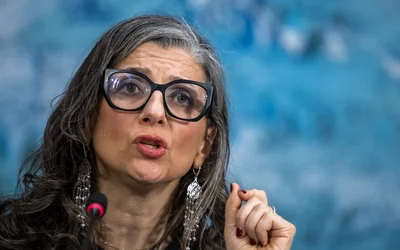
Al-Tawil said the centre could not provide a precise figure of those interrogated or detained given the difficulty of reaching victims during wartime, "but we can say that the cases are recurrent and not isolated".
"In most cases, the army asks travellers about the whereabouts of their relatives, the number of family members, political affiliations, or the affiliation of any family member remaining in the Gaza Strip."
Testimonies documented by the centre describe travellers being handcuffed, blindfolded and humiliated - accounts that align with prior human rights warnings that Israel is using crossing approvals as a pretext to arrest Palestinians.
Returning travellers face similar conditions. Despite widespread reluctance to speak out, some have described abuse during Israeli army interrogations at the Rafah land crossing.
"I never imagined in my entire life that I would be subjected to this amount of humiliation and psychological pain," Abdel Rahim Abu Toaima, 39, told MEE.
After the bus carrying his group arrived at the Israeli army checkpoint, names were called one by one. When Abu Toaima's name was reached, he was summoned to an interrogation room.
Soldiers began by asking whether he knew several individuals, to each of which he replied that he did not.
'After slapping and punching me, the army forced me to strip off all my clothes without respecting my privacy, especially in the presence of female soldiers'
- Abdel Rahim Abu Toaima
"After I denied knowing those figures, I was shocked by one of the soldiers striking me with a powerful slap across my face. Then he punched me hard and said mockingly, 'I see you know no one' and called me a dog."
Abu Toaima had travelled with his son in 2025 for open-heart surgery in Egypt. Before returning to Gaza, he had undergone emergency knee surgery after a fall ruptured his tendons.
Despite informing soldiers of his recent operation, they ignored his condition and refused him a seat.
"After slapping and punching me, the army forced me to strip off all my clothes without respecting my privacy, especially in the presence of female soldiers. They also forced me to unwrap the bandage from my knee, even though I could not bend my back," Abu Toaima said.
"They spat in my face, called me the vilest names, and forced me to stand for two hours in intense heat. Whenever I told them I was tired and could not stand, they insulted me more."
Abu Toaima asked for water and was refused.
After what he described as hours of abuse, soldiers allowed him to leave but confiscated his phone and other electronics. He returned to his tent in western Khan Younis without his belongings.
"I was shocked to find the medication for my son and myself stolen, along with many of our clothes from our suitcase. Now I am left without a phone. In addition to my psychological and physical pain, there are no phones available to purchase, and what is available costs exorbitant amounts that I cannot provide."
The ordeal left Abu Toaima with severe swelling and bruising around his knee, requiring periodic visits to Nasser Medical Hospital.
"I left Gaza with my injured son, and I returned with a knee injury that has not yet healed, and a harsh, unexpected interrogation experience from whose pain I will never recover."
Middle East Eye delivers independent and unrivalled coverage and analysis of the Middle East, North Africa and beyond. To learn more about republishing this content and the associated fees, please fill out this form. More about MEE can be found here.