
Trump vows to block Strait of Hormuz, says US ready to 'finish up' Iran

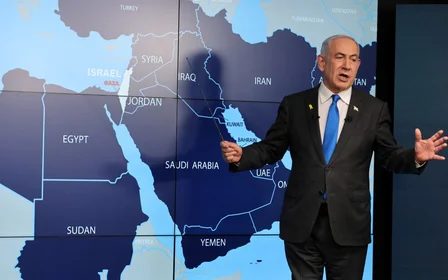
US President Donald Trump on Sunday said the Navy would immediately start blockading the Strait of Hormuz, hours after marathon ceasefire talks between the United States and Iran ended without an agreement.
Over the weekend, the world's eyes were on Islamabad for nearly 21 hours as the highest-level talks between Washington and Tehran in 50 years took place.
They involved US Vice President JD Vance, special envoy Steve Witkoff and Jared Kushner, alongside Iranian parliamentary speaker Mohammad Bagher Ghalibaf and Foreign Minister Abbas Araghchi.
However, Vance emerged from the talks on Sunday morning with the announcement that he would return to the US without an agreement.
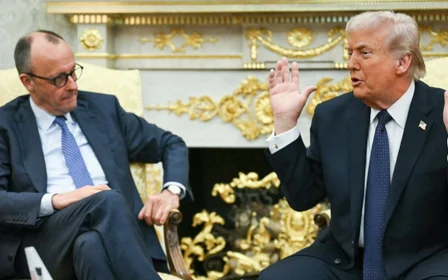
In the afternoon, Trump broke his silence with two posts on his social platform, Truth Social, announcing that the US military is "locked and loaded" to "finish up the little that is left of Iran" at the appropriate moment.
New MEE newsletter: Jerusalem Dispatch
Sign up to get the latest insights and analysis on Israel-Palestine, alongside Turkey Unpacked and other MEE newsletters
He said US forces will "begin the process of BLOCKADING any and all Ships trying to enter, or leave, the Strait of Hormuz".
Trump said: "At some point, we will reach an ‘ALL BEING ALLOWED TO GO IN, ALL BEING ALLOWED TO GO OUT’ basis, but Iran has not allowed that to happen.
"I have also instructed our Navy to seek and interdict every vessel in International Waters that has paid a toll to Iran. No one who pays an illegal toll will have safe passage on the high seas."
In a second post, the president said Iran was unwilling to abandon its nuclear ambitions.
He added: "In many ways, the points that were agreed to are better than us continuing our Military Operations to conclusion, but all of those points don’t matter compared to allowing Nuclear Power to be in the hands of such volatile, difficult, unpredictable people.
"IRAN WILL NEVER HAVE A NUCLEAR WEAPON!"
Points of contention
Earlier, Vance said the US negotiating team had been in constant contact with Trump throughout the talks.
On Saturday, Trump struck a nonchalant tone, telling reporters it "makes no difference to me" whether a deal is reached with Iran, as he prepared to travel to Miami to attend an Ultimate Fighting Championship event.
The president was reportedly watching the fight as Vance took to the podium in Islamabad.
Disagreements in the negotiations centred on Iran’s claim to control the Strait of Hormuz and its refusal to give up its stockpile of enriched uranium.
These issues emerged as the major points of contention in efforts to reach a deal.
Vance said Washington is seeking an "affirmative commitment" from Iran that it will not pursue a nuclear weapon or the means to rapidly develop one, describing it as the central goal of the negotiations.
"Again, their nuclear programme, such as it is, the enrichment facilities that they had before, they’ve been destroyed," Vance told reporters.
"But the simple question is, do we see a fundamental commitment of will for the Iranians not to develop a nuclear weapon, not just now, not just two years from now, but for the long term? We haven’t seen that yet. We hope that we will."
'Diplomacy never ends'
Meanwhile, Iran believes the "ball is in America’s court", Tasnim News Agency reported, citing an informed source.
The report said Tehran had presented "reasonable initiatives" during the talks.
It added that there will be no change in the situation in the Strait of Hormuz, which Iran is controlling, unless Washington agrees to what Tehran considers a "reasonable" deal.
No date or venue has been set for a possible next round of talks.
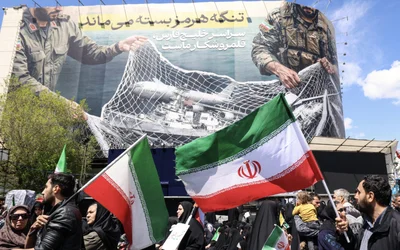
Ghalibaf said on X that "we have the necessary good faith and will, but due to the experiences of the two previous wars, we have no trust in the opposing side".
He added: "The opposing side ultimately failed to gain the trust of the Iranian delegation in this round of negotiations."
Iranian foreign ministry spokesperson Esmaeil Baghaei said it was unrealistic to have expected a deal with the US in just a single round of negotiations.
He noted the talks took place after weeks of conflict and amid deep mistrust.
Baghaei said both sides had reached an understanding on some issues but remained divided on "two to three important" matters.
He added that progress depends on the "seriousness and good faith" of the US and its recognition of Iran’s "legitimate rights and interests".
Baghaei said diplomacy "never ends", adding that consultations with Pakistan and other friendly and neighbouring countries will continue.
Allies urge more negotiations
Pakistani Deputy Prime Minister Ishaq Dar urged the US and Iran to maintain their commitment to the ceasefire and continue negotiations in a "positive spirit".
He said it is imperative that both sides work toward "durable peace and prosperity" in the region.
Dar added that Pakistan will continue to facilitate dialogue between the two sides.
Meanwhile, key US allies expressed disappointment in the talks stalling.
Australian Foreign Minister Penny Wong urged the US and Iran to uphold the ceasefire and return to negotiations.
British Health Secretary Wes Streeting said: "It’s obviously disappointing that we haven’t yet seen a breakthrough in negotiations and an end to this war in Iran that is a sustainable one."
He added: "As ever in diplomacy, you’re failing until you succeed. So while these talks may not have ended in success, doesn’t mean there isn’t merit in continuing to try."
Middle East Eye delivers independent and unrivalled coverage and analysis of the Middle East, North Africa and beyond. To learn more about republishing this content and the associated fees, please fill out this form. More about MEE can be found here.