ICC’s Khan probe ‘reduced to political referendum’, Palestinian rights groups warn

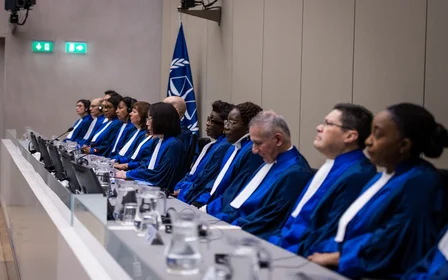
Leading Palestinian human rights organisations have warned that the disciplinary process against suspended International Criminal Court (ICC) chief prosecutor Karim Khan has been marked by a denial of due process and "politicisation" that is "corroding" the court's independence, days before member states vote on his removal.
In a joint statement published on Friday, the Palestinian Human Rights Organizations Council (PHROC) and the Palestinian NGO Network (PNGO), which represents over 140 organisations, said they took "no position on either the validity of the claims or the defence" against Khan, but warned that flaws in the process "breaches basic human rights guarantees" and represented "a grave departure from the rule of law".
"This dangerously opens the Court to political overreach," the statement said.
The groups argued that the disciplinary process "has been reduced to a political referendum following the national interests of individual States Parties".
"It is impossible to extricate such national interests from the political impact of the Chief Prosecutor’s decisions made in the various situations currently before the ICC," they wrote.
New MEE newsletter: Jerusalem Dispatch
Sign up to get the latest insights and analysis on Israel-Palestine, alongside Turkey Unpacked and other MEE newsletters
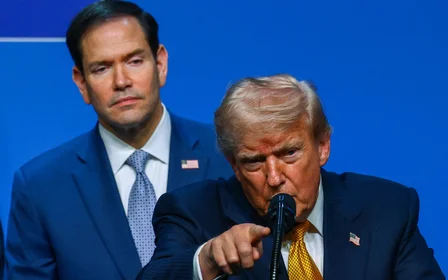
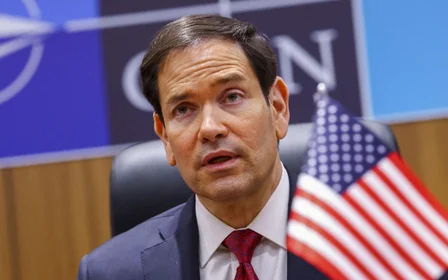
The statement called on member states of the ICC's Assembly of States Parties (ASP) to protect the independence of the court and the prosecutor, citing recent threats against the court by US Secretary of State Marco Rubio and what it described as "unwarranted political interference" by the bureau, the ASP’s executive body.
The ASP, made up of representatives from the court's 125 member states, is due to hold a special session at UN headquarters in New York on 24 July to vote on Khan's future.
'The Bureau, as a political body composed of diplomats, does not have the independence, impartiality or legal expertise to make assessments on the legal characterisation of conduct'
- PHROC and PNGO statement
Khan, who has strenuously denied allegations of sexual misconduct, was suspended by the bureau on 8 June after a majority of its 21 member states said he had committed "serious misconduct".
The groups criticised the bureau's decision to press ahead despite the findings of an independent panel of three senior judges, Paul Lemmens, Seymour Panton and Leona Theron, appointed by the bureau to legally assess a UN investigation into the allegations.
In March, the panel unanimously concluded that the evidence did not establish misconduct to the "beyond reasonable doubt" standard applied by the court. It found that the investigation had revealed "entirely conflicting accounts" and largely hearsay evidence.
The groups noted that "there has been no legal characterisation by an ad hoc panel that the factual findings of the investigation amount to serious misconduct or serious breach of duty in the case of the Prosecutor", and said the bureau's subsequent finding to the contrary "side-stepped the legal findings" of the panel.
The statement also criticised the bureau’s conclusion, based on an uninvestigated allegation, that Khan had "engaged in a sexual relationship" with the complainant that was inappropriate given the power imbalance between them.
It said "neither Karim Khan nor the complainant had reportedly ever claimed" such a characterisation.
The bureau's decision, the statement added, "failed to establish 'non-consensual sexual conduct'", despite that having been the substance of the original complaint.
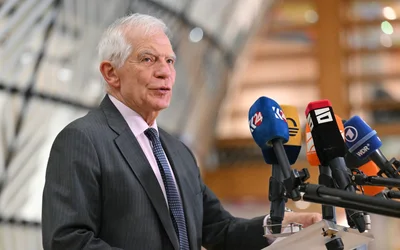
"Notably, the Bureau, as a political body composed of diplomats, does not have the independence, impartiality or legal expertise to make assessments on the legal characterisation of conduct, nor did it enjoy the same timeframe as the ad hoc Panel to independently examine the two reports and 5,000-pages of evidence," the satement said.
The statement also took aim at the bureau's "rushed amendments" of the voting process "to fast-track potential removal of Karim Khan from office".
Middle East Eye has reported that the bureau changed the court’s procedure from a two-step process requiring an initial two-thirds majority vote to establish serious misconduct, followed by a separate vote requiring the support of 63 member states to remove the prosecutor, to a single vote.
"The alteration of the process, removes the 2/3 majority vote, which would have been difficult to achieve, thereby reducing the voting threshold for removing the Prosecutor, and dismantling important checks and balances on the political decision-making of the Bureau," the statement added.
Risk of Israeli impunity
The allegations against Khan unfolded in April 2024 alongside a campaign by the US and its allies to disrupt his office's efforts to pursue a war crimes investigation into Israeli officials over the war on Gaza.
His decision to seek arrest warrants for Israel’s Prime Minister Benjamin Netanyahu and former Defence Minister Yoav Gallant in May 2024 prompted retaliatory US sanctions by the Trump administration.
The sanctions were later expanded to target two deputy prosecutors and eight ICC judges, the UN special rapporteur on Palestine, and Palestinian NGOs that provided evidence to the court.
PHROC and PNGO linked the disciplinary process to what they described as a pattern of states working to shield Israel from ICC accountability.
They pointed to interventions by several states, including some now sitting on the bureau, challenging the court's jurisdiction over Palestine in 2020, as well as the UK's 2024 legal challenge to the arrest warrants issued for Netanyahu and Gallant.
The groups also noted that Israel had cited leaked details of the misconduct investigation in a November 2025 filing seeking to have Khan disqualified from the Palestine case.
They warned of "the grave potential of Israel and its political allies, influencing and compromising any investigation of the Prosecutor carried out by political bodies, including the Bureau".
"There is a very serious risk that State Parties will again prioritise their national interests and support for Israeli impunity over any genuine care or concern for either the interests of the complainant, the Prosecutor, or for the integrity of the Court," the statement said.
It added that the disciplinary process, underway since late 2024, "has failed all parties" and risked causing "further untold damage" to the ICC and to international criminal justice more broadly.
Middle East Eye delivers independent and unrivalled coverage and analysis of the Middle East, North Africa and beyond. To learn more about republishing this content and the associated fees, please fill out this form. More about MEE can be found here.