Iran warns attack on Khamenei would mean full-scale war

Iranian President Masoud Pezeshkian said that any attack on the Supreme Leader Ali Khamenei would be "tantamount to a full-scale war on the Iranian nation", adding that a US strike on the country would provoke a harsh response.
In a post on X on Sunday, Pezeshkian said: “If the people of Iran face hardship and difficulties in their lives, one of the main reasons for it is the longstanding enmity and inhumane sanctions imposed by the United States government and its allies.
"An attack on the great leader of our country is tantamount to a full-scale war with the Iranian nation."
The statement comes after US President Donald Trump on Saturday described Khamenei as “a sick man” in an interview with Politico, calling for an end to his 37-year reign.
“It’s time to look for new leadership in Iran,” Trump said.
New MEE newsletter: Jerusalem Dispatch
Sign up to get the latest insights and analysis on Israel-Palestine, alongside Turkey Unpacked and other MEE newsletters
On Friday, Trump indicated that a potentially imminent US military strike on Iran appeared to be on hold after he had received assurances from “very important sources” in Tehran that planned executions of protesters would not take place.
Earlier on Saturday, Khamenei’s X account posted a series of messages aimed at Trump, blaming the US president for the violence and unrest in Iran.
“We find the US President guilty due to the casualties, damages and slander he inflicted upon the Iranian nation,” Khamenei wrote.
Thousands killed
In an official acknowledgement of the scale of deaths from the unrest, Khamenei said "several thousand" people were killed during the protests.
"The latest anti-Iran sedition was different in that the US president personally became involved," he said.
On Tuesday, Trump had called on Iranians to keep protesting and “take over institutions”, saying that “help is on its way”.
Iran indicated on Sunday it might go ahead with execution of people detained during the unrest, days after the Iranian foreign minister said the country had “no plan” to carry out hangings.
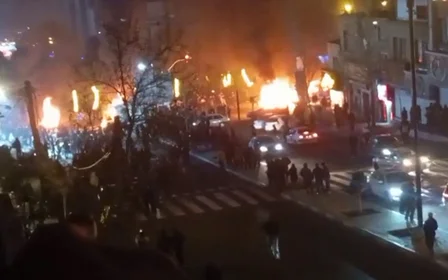
While the widespread protests appear to have waned, an Iranian official said on Sunday that the authorities have verified the deaths of at least 5,000 people since the anti-government protests erupted on 28 December.

The demonstrations were fuelled by anger at Iran’s collapsing economy and quickly swelled into nationwide mobilisations calling for the fall of the government.
The uprising was met with a deadly crackdown by authorities, which escalated with a nationwide internet shutdown beginning on 8 January, with reports of security forces targeting protesters with live ammunition.
The official, who spoke to Reuters on condition of anonymity, blamed the high death toll on "terrorists and armed rioters" who killed "innocent Iranians", and were equipped and supported by "Israel and armed groups abroad".
He added that the "final toll is not expected to increase sharply".
Meanwhile, residents told Reuters on Saturday that, amid an apparent easing of the internet blackout, the crackdown seems to have quelled the unrest, adding that there were no signs of major protests on Thursday or Friday in Tehran.
Internet monitoring group NetBlocks posted on X that metrics indicated a "very slight rise in internet connectivity" across the country, remaining at around 2 percent of ordinary levels.
The semi-official Mehr News Agency reported that internet service had been restored for some users. The ISNA news website said SMS service had also been reactivated.
According to Iran International, Iranian state television was hacked on Sunday, broadcasting messaging for several minutes, including a speech by Reza Pahlavi.
The report said videos of protests against the regime were broadcast and Pahlavi was seen urging security forces to side with the protesters.
Middle East Eye delivers independent and unrivalled coverage and analysis of the Middle East, North Africa and beyond. To learn more about republishing this content and the associated fees, please fill out this form. More about MEE can be found here.