Iranians struggle to rebuild lives and homes in wake of Israel's war

For a decade, Samira went to work at the same beauty salon in Tehran - a place where she built friendships, forged routines and earned a living. Then an Israeli air strike destroyed it.
Now, the building she used to call her second home lies in ruins.
"I couldn’t believe it until I saw it with my own eyes," she told Middle East Eye. "Our beautiful salon, the place I went to every day for years is completely destroyed."
She may have been just an employee and might find work elsewhere, but for Samira, the emotional loss cuts deeper than a job.
"I worked there for 10 years. I built connections, made friends with my coworkers - we were like a family," she said. "It’s not just about working somewhere else. It’s about all the hopes and memories that were destroyed."
New MEE newsletter: Jerusalem Dispatch
Sign up to get the latest insights and analysis on Israel-Palestine, alongside Turkey Unpacked and other MEE newsletters
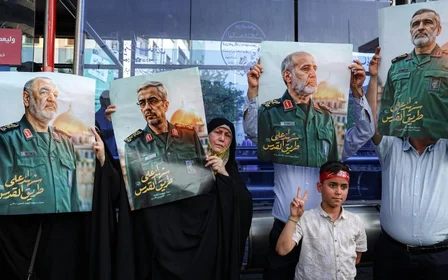
On 13 June, Israel launched a war on Iran that killed 900 people before a ceasefire was announced by US President Donald Trump, bringing an end to 12 days of fighting.
Although Israel said it was targeting Iran’s nuclear infrastructure, its strikes caused widespread destruction in Tehran, and most of those killed were civilians.
'Burning in front of our eyes'
In the Tehranpars neighbourhood in the east of the capital, Mohammad and his wife escaped mere moments before they lost their home.
"We were at home, hearing explosions, drones, and jets overhead. We were scared, and even though it was night-time, we decided to leave the house," Mohammad, 42, said.
Just minutes after they left, Israeli bombs struck their home. From the street, they watched as it went up in flames, leaving them facing an uncertain future.

"I didn’t know what to do - should I be happy we’re alive or cry because our beautiful home was burning in front of our eyes?"
Like Mohammad and his wife, thousands of people in Iran have been left homeless. The Iranian government has promised to cover the costs of rebuilding the buildings that were destroyed in Israeli strikes.
Government spokesperson Fatemeh Mohajerani said on 1 July that Israel’s 12-day assault had destroyed 3,500 residential units, including 332 in Tehran.
"The government is prioritising shelter for those affected. We are accommodating them in hotels and guesthouses," she said.
"The amount of housing aid and construction loans will be announced soon."
Iranian minister of roads and urban development, Farzaneh Sadegh, said on 26 June that helping those whose homes were damaged in the war is essential.
"Rebuilding the areas affected by the war is our top priority," she said.
The Iranian government has also introduced a system that allows people to either call or visit designated centres to register details of their destroyed homes, initiating the process for receiving loans for rebuilding, demolition, or compensation for a new apartment.
But it remains unclear how or when these people, who worked so hard to buy a home in an expensive city like Tehran, will ever sleep under their own roof again.
'The explosions kept coming'
In western Tehran, a day before the ceasefire went into effect, an Israeli air strike on Evin Prison, which houses prominent political prisoners, killed dozens and caused extensive damage to both the facility and nearby residential buildings."
Shiva, who lives with her parents and brother near the prison, described the attack that left their home in ruins.
"My mum, brother, and I were at home when we heard terrifying fighter jet sounds right above our house. Then the explosions started. We ran to the bathroom, and moments later, we heard glass shattering," she said.
'We can’t stay in the house, and we also can’t leave because we’re afraid thieves might steal our belongings'
- Shiva, Tehran resident
"We were so scared we didn’t dare leave. But the explosions kept coming. Chandeliers were falling from the ceiling."
She and her family remained huddled in the bathroom for half an hour.
When they came out, they saw the damage: The bookshelves were broken, the dresser was crushed, shards of glass were all over the floor, and the dining table and chairs were in pieces.
She said her father is handling the reconstruction of the house and liaising with government officials.
"I don’t know the details, but the day after the attack, people from several government agencies and the municipality came to assess the damage," Shiva said.
"They promised to process our case quickly. But the problem is, we can’t stay in the house, and we also can’t leave either because we’re afraid thieves might steal our belongings."
Anger at Israel
Amirhossein, 36, lives in the Sattarkhan neighbourhood in western Tehran.
He was picking up his four-year-old son from daycare when Israel attacked their neighbourhood.
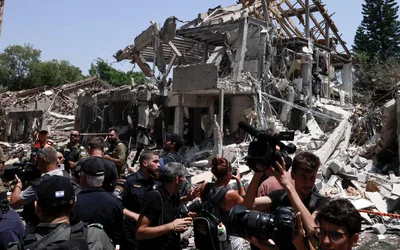
"When I got to our street around noon, I was shocked. One of the houses was completely destroyed, and almost all the houses on the street were badly damaged," he said.
"My son saw the damage and my terrified face, and said: ‘Daddy, what happened? Did the bad guys attack us? Are my toys broken too?’"
Amirhossein, a civil engineer, says he was lucky that his house wasn’t completely destroyed, only the facade was damaged and the windows were shattered.
"Since I’m a civil engineer, I understand how difficult rebuilding can be right now. Still, we’re lucky we don’t need to demolish the entire building. But with our income, the cost of repairs is very high. I hope the government pays for the reconstruction soon."
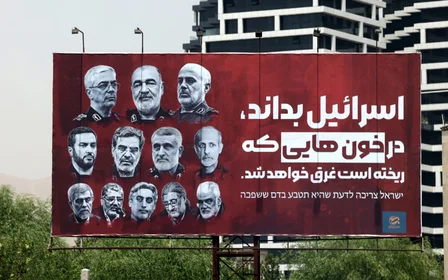
Israel has insisted that it targeted only military figures, but for Iranians, the scale of civilian damage tells a different story.
Siamak is one of them. The 43-year-old graphic designer lived in Sohrevardi Street in Tehran’s downtown. His home was hit by Israeli bombs, and he lost his father.
"I was destroyed in just a few hours. My father was my only joy in life," Siamak said. "After my mother died, I lived with him in the house I was born in. But those criminal Israelis destroyed both our home and my father, who was inside and died under the rubble."
'I was naive. I believed Israel when they said they only carry out precision attacks... But now I’ve lost everything'
- Siamak, Tehran resident
The war, despite causing a lot of destruction in Iran, seems to have awarded the Islamic Republic a valuable gift.
For many in Iran, the war has put things into perspective. Even critics and opponents of the government say they now see through the propaganda of Israeli officials.
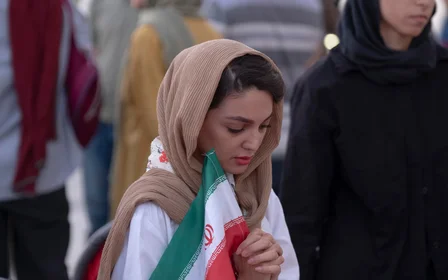
A growing sense of national unity has emerged as a significant gain for the establishment.
"Before this war, I was one of those people who even welcomed the idea of a foreign attack to change the establishment. I was naive," said Siamak.
"I believed Israel when they said they only carry out precision attacks and would free us from this dictatorship. But now I’ve lost everything - my biggest material and emotional asset."
Middle East Eye delivers independent and unrivalled coverage and analysis of the Middle East, North Africa and beyond. To learn more about republishing this content and the associated fees, please fill out this form. More about MEE can be found here.