Israel: Ex-Netanyahu ally shuns opposition amid ‘national unity’ government push

A former ally turned opponent of Israeli Prime Minister Benjamin Netanyahu has stopped taking calls from opposition leaders amid efforts to form a “national unity” government and avoid relying on Palestinian-led parties, according to Channel 12
The broadcaster reported on Wednesday that Avigdor Lieberman, leader of the Yisrael Beitenu party, had largely cut off contact with his opposition counterparts.
He has reportedly ignored calls from Gadi Eisenkot, head of the Yashar party, and former prime minister Naftali Bennett, leader of B’Yachad (Together).
Lieberman’s party is projected to win seven seats. He has previously ruled out joining a government led by Netanyahu or one that includes Palestinian-led parties.
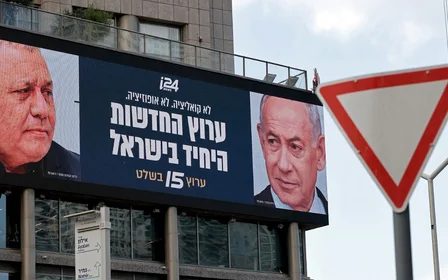
With more than 90 percent of votes counted, preliminary results point to a deadlock between Netanyahu’s outgoing bloc and the Zionist opposition.
New MEE newsletter: Jerusalem Dispatch
Sign up to get the latest insights and analysis on Israel-Palestine, alongside Turkey Unpacked and other MEE newsletters
Neither side has secured the 61 seats needed for a parliamentary majority, partly due to Palestinian-led parties winning a projected record 19 seats.
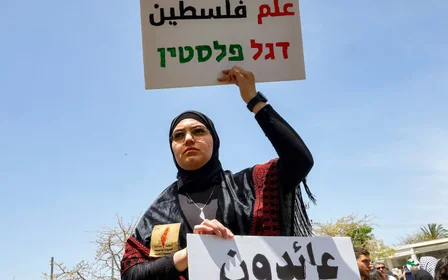
Palestinian-led parties have offered to support an opposition-led minority government to prevent Netanyahu from returning to power. But key opposition figures, including Lieberman, have rejected the prospect of governing with Arab parties.
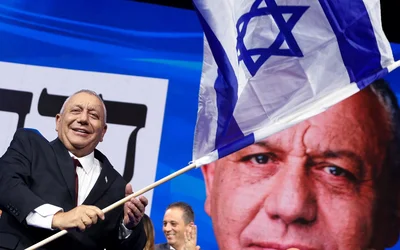
To break the deadlock and avert another election, a “national unity” government involving a power-sharing arrangement between Netanyahu and major opposition parties has been floated since election day.
According to Channel 12, Lieberman does not want to be the opposition leader who makes the first move towards such an arrangement. Instead, he is hoping Eisenkot will take the initiative himself.
For now, Lieberman's strategy is to “lie in wait” as coalition negotiations unfold, the report said.
The Times of Israel reported that Lieberman had used a similar tactic in the past before joining a Netanyahu-led government.
After the 2009 election, he went on a week-long holiday while coalition negotiations continued. He subsequently joined the government as deputy prime minister and foreign minister.
Before the 27 October election, Lieberman explicitly ruled out supporting a minority government involving Arab parties, even as a temporary arrangement.
He said he would be open to a national unity government involving Netanyahu’s Likud party, provided Netanyahu himself was not part of it.
Middle East Eye delivers independent and unrivalled coverage and analysis of the Middle East, North Africa and beyond. To learn more about republishing this content and the associated fees, please fill out this form. More about MEE can be found here.