Israel intentionally released footage of Mossad operatives in Iran to provoke mass arrests, ex-chief says

Former Mossad chief David Barnea has said Israel intentionally released images of their covert operation in Iran during the June 2025 conflict to provoke mass arrests and make it harder for Iranian forces to find real Israeli agents.
“One of the reasons we immediately released an official video on the morning of Operation Rising Lion, with the Mossad logo, was to protect the agents who were there,” Barnea said, according to comments The Jerusalem Post reported on 25 October.
Barnea said the leak of the footage of Israeli operations in Iran was not just an attempt to showcase the Mossad’s reach but also a strategy to overwhelm Iranian counterintelligence, causing them to make mass arrests, making it more difficult to distinguish operatives from ordinary citizens.
“We wanted to make sure they arrested so many people in Iran that they wouldn’t be able to distinguish the wheat from the chaff and would eventually release everyone,” he said.
Barnea said Iranian authorities arrested 21,000 people during the operation.
New MEE newsletter: Jerusalem Dispatch
Sign up to get the latest insights and analysis on Israel-Palestine, alongside Turkey Unpacked and other MEE newsletters
“You have to imagine that when you arrest 21,000 people, even if you’ve caught an agent or two, eventually you have to release them because everyone’s story will be the same: I was walking down the street, I was driving a car, they arrested me,” he said.
Barnea added that many people arrested or executed on accusations of working for Israel had no connection to the Mossad.
“Some of the people being hanged in Iran on accusations of being Mossad agents, I have to ask who they are,” he said. “They tell me, ‘Listen, we don’t know either.’”
He described some of those executed as “just unfortunate people whom they decided were our agents, but who never worked for the Mossad, and probably never worked for any other intelligence organisation either”, according to the reported remarks.
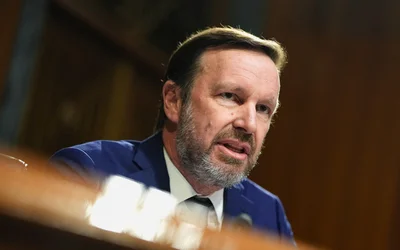
The remarks made at the Priority Summit on 22 October to a private audience have sparked a sharp response from Trita Parsi.
Parsi, executive vice-president of the Quincy Institute for Responsible Statecraft, described it as an admission that Israel "used ordinary Iranians as tools to protect Mossad operatives" in the country.
“Rarely will you find a more crude admission of how Israel deliberately and carelessly put thousands of people it claimed it sought to liberate in harm’s way,” Parsi wrote on X.
Mass detentions
Israel launched Operation Rising Lion on 13 June 2025, during which they bombed Iran and killed senior military commanders as well as scientists.
After Iran retaliated with missile attacks on Israel, the 12-day war ended with a ceasefire.
On the first morning of the attacks, the Mossad released videos showing what it said were its agents operating inside Iran.
The footage included attacks on ballistic missile and air-defence targets, with the faces of those involved concealed.
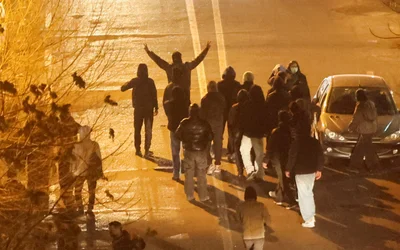
Iranian police announced in August 2025 that they had detained about 21,000 people during the 12-day conflict.
Police spokesperson Saeed Montazer al-Mahdi said the arrests followed reports from members of the public and increased security measures.
More than 260 suspects were arrested on suspicion of espionage and 172 people were arrested for illegal filming, the police statement said.
Barnea’s comments come amid concerns over Iran’s use of espionage allegations to prosecute people following the conflict.
Amnesty International and Human Rights Watch said in September 2025 that Iranian authorities had arrested more than 20,000 people after the outbreak of hostilities with Israel.
Those targeted included journalists, human rights activists, social media users, members of ethnic and religious minorities, and foreigners.
Iranian authorities have said they were responding to genuine threats from Israeli intelligence and collaborators inside the country.
Tehran has repeatedly accused the Mossad of recruiting people to gather intelligence, carry out sabotage and assist military attacks.
Middle East Eye delivers independent and unrivalled coverage and analysis of the Middle East, North Africa and beyond. To learn more about republishing this content and the associated fees, please fill out this form. More about MEE can be found here.