
'A triumphant failure': How Israel's use of social media influencers to win back support backfired

An unprecedented investment in social media propaganda by Israel is failing to shift the cratering support for the country in the western world amid its ongoing genocide in Gaza, particularly among the younger generation, analysts have told Middle East Eye.
A Pew Research Center survey conducted in March found that a majority, 60 percent of the American public, including 57 percent of Republican voters under the age of 50 and 84 percent of Democrats under 50, view Israel unfavourably.
Much of this is down to an increasing number of younger people using social media rather than mainstream outlets, which are overwhelmingly pro-Israel, for their news.
To counter this shift, Israeli lawmakers approved a record budget of $730m for public diplomacy - known by its Hebrew name Hasbara - in March, amounting to almost five times its previous annual budget, which was already 20 times pre-2023 levels.
In September 2025, Israeli Prime Minister Benjamin Netanyahu met with several American influencers in New York to enlist them to amplify pro-Israel messaging in the US.
New MEE newsletter: Jerusalem Dispatch
Sign up to get the latest insights and analysis on Israel-Palestine, alongside Turkey Unpacked and other MEE newsletters
During the meeting, Netanyahu stressed the importance of their role, saying: "We have to fight with weapons that apply to the battlefields in which we’re engaged in and the most important ones are on social media."
He added that the deal, which saw American billionaire Larry Ellison, alongside several other pro-Israel businessmen, acquire TikTok's US operations, was "the most important purchase going on right now".
As part of its propaganda campaign, Israel used secret PR operations and hired corporate firms to manage paid influencer networks under a plan code-named the "Esther Project".
According to documents filed under the US's Foreign Agents Registration Act (Fara), Israel paid influencers up to $7,000 per social media post, operating through its contractor Bridges Partners, which worked with a global ad agency called Havas Media Group Germany for an “Influencer Campaign”.
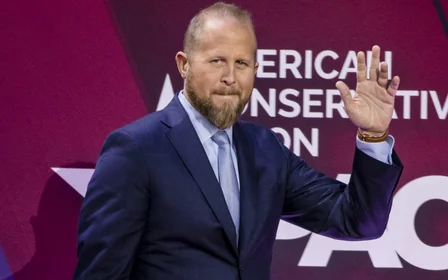
Havas also signed a $15m contract with Trump's former campaign manager Brad Parscale’s firm Clock Tower X, which was recently exposed to be behind a social media campaign to attack the US president’s ceasefire deal with Iran on behalf of Israel.
'Influencers derive much of their persuasive power from perceived authenticity, yet overt coordination or sponsorship can undermine that credibility and generate backlash'
- Marc Owen Jones, associate professor at Northwestern University
Time Magazine revealed last week that in private group chats, influencers for this campaign were guided on the language to use for posts on social media sites such as X, Instagram and TikTok and were paid up to $4,250 per post.
Separately, according to the Wall Street Journal, a group called Show Faith by Works filed documents with plans to spend more than $3m on promoting pro-Israel messages to megachurch attendees and Christian college students, and proposed reaching out to churches, pastors and Christian social media influencers to reach an audience of four million in the American Southwest.
Founder Chad Schnitger told the the Wall Street Journal the group has now abandoned these plans.
Another insight into the strategy behind the Hasbara machine came in April when Ella Kenan, a former Israeli military intelligence captain, revealed at a conference in New York that she had worked with 60,000 influencers around the world to "serve the narrative" for Israel after 7 October 2023.
Kenan, who founded the Bright Mind organisation to "counter misinformation about Israel", claimed that her network's content, much of which was produced specifically for non-Jewish influencers, had generated almost three billion views across social media platforms.
She also claimed to have coined the slogan "Hamas is ISIS", later adopted by global leaders, including former US President Joe Biden.
The Spokesperson’s Unit
The Israeli foreign ministry also launched an initiative to fund an Israel tour for social media influencers associated with the Make America Great Again (Maga) movement.
The ministry spent $86,000 on a contract with nonprofit organisation Israel365 to bring 16 US-based social media influencers under the age of 30 to the country to encourage them to disseminate messaging aligned with the Israeli government to their large followings of young Christian conservatives.
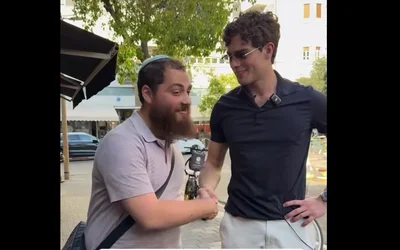
Separately, US right-wing influencer Clavicular recently came under fire for a visit to Israel seemingly to clear himself of antisemitism accusations, after he appeared alongside influencers including self-proclaimed misogynist Andrew Tate and white nationalist Nick Fuentes, singing the lyrics to the song "Heil Hitler" by Kanye West.
Clavicular, whose real name is Braden Eric Peters, is a leading figure in the "looksmaxxing" movement, a male internet subculture built around the extreme pursuit of physical attractiveness.
During the visit, celebrated as "Israelmaxxing" by the right-wing, pro-Israel outlet The Free Press, he appeared on a livestream alongside Shira Braun, a soldier serving in the Israeli army's propaganda wing, the Spokesperson Unit, and asked her whether he would receive $7,000 for publishing pro-Israel posts.
Braun was subsequently removed from her position and barred from continuing as social media coordinator for the army.
Clavicular was also confronted by Israelis over his past antisemitic comments, with the whole episode failing to deliver the polished publicity Israeli officials were looking for.
Marc Owen Jones, an associate professor of media analytics at Northwestern University, told Middle East Eye: "Rather than relying solely on official government accounts, these campaigns increasingly operate through hybrid networks of state institutions, advocacy organisations, private donors, diaspora groups and content creators, blurring the distinction between official public diplomacy and decentralised digital advocacy."
However, "the strategy contains an inherent trade-off: influencers derive much of their persuasive power from perceived authenticity, yet overt coordination or sponsorship can undermine that credibility and generate backlash," he added, as illustrated by the fallout from Clavicular’s visit.
'The biggest challenge that we face is that you can’t really fight photos of dead children'
- Rachel Lester, former Israeli military spokesperson
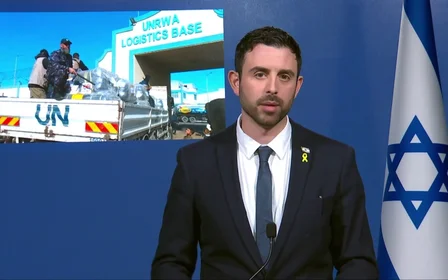
Former Israeli military spokesperson Rachel Lester, who spent four years in the International Branch of the Spokesperson's Unit producing social media content, told American publication The Media Line that Israel cannot win the battle against anti-Israel sentiment online because "our enemies are too good at manipulating the world’s emotions".
Lester explained that the Spokesperson's Unit is divided into three branches: Hebrew media, international media, and Arabic media. The international branch tried to convince the world that Hamas does not care about Palestinian civilians in Gaza.
She said she was "always trying to make videos about people’s favourite topic, which is civilians in Gaza", about "how this horrible war was affecting innocent Gazan civilians". These videos "performed the best", she added, "because the international community doesn't really have much sympathy for Israel".
In a separate interview with Ynet, Lester said that "the biggest challenge that we face is that you can’t really fight photos of dead children".
Miriyam Aouragh, professor of Digital Anthropology at University of Westminster, in the UK, told MEE that many of Israel’s attempts to recruit influencers have "backfired" by not only failing to promote pro-Israel messaging, but inadvertently exposing the operation behind it so that “the influence of social media itself becomes the story".
She described the strategy as a "triumphant failure" where, despite Israel's consolidation of power over mainstream media and social media ownership, it has been unable to break through the cultural zeitgeist shifting under its feet and the organised social movement behind it.
Part of this is down to the difficulties of messaging to both internal Israeli audiences and external international ones.
She explained that, whereas to convince Israelis to stay in an increasingly unstable settler colonial state requires using “colonial methods” to radicalise its population to believe in ethnic supremacy, that is not compatible with maintaining Israel’s image as “the only democracy in the Middle East”.
"Palestine has become our generation's… political cause like Vietnam was in the 60s and 70s," she told MEE, so that “it is impossible to break through the zeitgeist with money and influence.
"There are some things that money cannot buy."
Aipac spending in US elections
The shift in younger American attitudes in particular represents an existential threat to Israel, whose long-standing reliance on billions of dollars in US aid has previously been guaranteed by bipartisan support among elected politicians.
However, the ongoing Democratic Party mid-term primary elections have seen a number of vocally pro-Palestine candidates successfully pushing out establishment politicians whose Israel-linked funding has become the subject of increased scrutiny by voters.
'Israel’s real problem is the gap between message and reality; you cannot ‘explain’ a livestreamed genocide'
- Abeer al-Najjar, American University of Sharjah
One such candidate, Abdul El-Sayed, is running in Michigan's Democratic Senate primary against Haley Stevens, who has received more than $28m from pro-Israel PACs, according to the New York Times.
United Democracy Project, the super PAC of the American Israel Public Affairs Committee (Aipac), a leading pro-Israel lobbying group in the US, launched a series of attack ads on El-Sayed, claiming he has "a history of disrespecting women" after several polls showed him leading the race ahead of the 4 August primary.
A Jewish influencer recently revealed he "received a confidential influencer brief" from Stevens' campaign, offering to pay him $1,500 to promote various talking points favourable to her image, covered by a non-disclosure agreement that he never signed.
MEE contacted Stevens' campaign, Clavicular and the Israeli army for comments, but did not get a reply by the time of publication.
During the race, El-Sayed drew criticism for meeting with US political commentator and Twitch streamer Hasan Piker, a particularly influential pro-Palestine voice for a younger audience who was recently subjected to a coordinated smear campaign from US mainstream media.
Despite the barrage of attacks, El-Sayed's polling saw a bump after his rally with Piker, showing it had the inverse effect of boosting his name recognition and cementing his status as the anti-establishment candidate voters were searching for.
A similar trend has played out with Piker himself: after being banned from the UK, which he said was "at the behest of Israel", Piker saw his popularity increase, the result of what he calls the "Streisand effect" - where an attempt at censorship instead puts the issue under a spotlight.

Unlike the Hasbara influencers, Aouragh said, pro-Palestine content creators "set the tone, they set the agenda, [and] they understand very well that social media traction is a big component of news" which can exist in parallel to mainstream media, or even be followed by it.
However, she added that the move to ban Piker is "a very dangerous game, because every erosion of citizen liberal rights is one too many, and creates… new rules of engagement" which "normalises the closing down of free speech".
Abeer al-Najjar, professor of media and journalism studies at the American University of Sharjah, told MEE the campaign to silence these influencers and buy support among others will almost certainly fail, and in fact "may accelerate what [Israel] fears".
She explained that pro-Israel influencers are "the 'organic-looking' front of a professionalised state operation" whose official channels have lost credibility, aiming to "launder state messaging as peer culture".
"Israel's real problem is the gap between message and reality; you cannot 'explain' a livestreamed genocide," she said, adding that "the Clavicular episode exposes the model’s limit; even funded, curated trips can’t manufacture the authenticity they’re buying".
What they can expect instead are "diminishing returns, visible backlash like the Clavicular fiasco, and deepening cynicism among the very youth being targeted".
Middle East Eye delivers independent and unrivalled coverage and analysis of the Middle East, North Africa and beyond. To learn more about republishing this content and the associated fees, please fill out this form. More about MEE can be found here.