Israeli forces reportedly use phosphorus shells in attacks on southern Lebanon

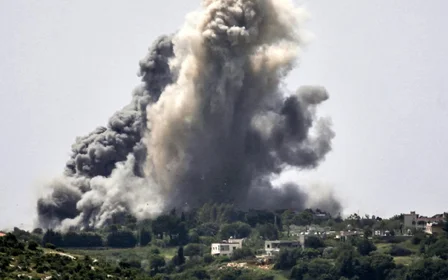
Israeli forces fired phosphorus shells and carried out air strikes and heavy artillery attacks across several areas of southern Lebanon overnight and early Saturday, Lebanese state media reported.
Heavy Israeli artillery fire targeted the town of Mansouri, the area around Bayt al-Sayyad and the outskirts of Majdal Zoun early on Saturday, Lebanon's National News Agency (NNA) reported.
Israeli forces also carried out extensive attacks overnight in Mansouri, Majdal Zoun and Bayt al-Sayyad, the agency said.
NNA reported extensive destruction to homes in Bayt al-Sayyad, saying no house in the town had been left undamaged.
Similar explosions were reported in Hadatha, Beit Yahoun and Aita al-Jabal, while Israeli forces also directed machine-gun fire towards nearby valleys, according to the agency.
New MEE newsletter: Jerusalem Dispatch
Sign up to get the latest insights and analysis on Israel-Palestine, alongside Turkey Unpacked and other MEE newsletters
Israeli drones continued flying over villages and towns in the western and central sectors of southern Lebanon, NNA added.
Separately, Israeli warplanes carried out two air strikes on Ali al-Taher hill, on the northern outskirts of Nabatieh al-Fawqa, the agency reported.
Israeli artillery also heavily shelled the outskirts of Dawhat Kfar Remman, the area around Dabsha hill and the wooded area of Ali al-Taher overnight and into early Saturday, using phosphorus shells, according to NNA.
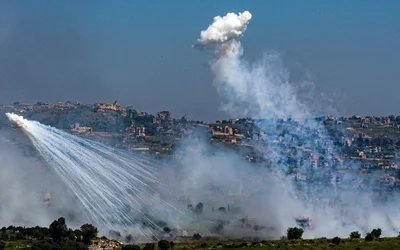
The reported use of phosphorus munitions comes amid previous warnings from rights groups over Israel's use of white phosphorus in southern Lebanon.
The use of airburst white phosphorus on areas with a dense civilian population is prohibited under international law, as the weapon inflicts indiscriminate harm on civilians.
White phosphorus is an incendiary chemical that ignites when in contact with air and can cause severe burns in people or structures it comes into contact with.
In 2024, images and footage shared by Human Rights Watch showed the munitions hitting residential buildings in the southern Lebanese border villages of Kafr Kila, Mays al-Jabal, Boustane, Markaba, and Aita al-Chaab.
Inhalation of white phosphorus fumes can cause respiratory injuries and asphyxiation, and inflict second- and third-degree burns to the skin.
In 2023, HRW revealed that Israeli forces had used the weapon on the densely populated Gaza Strip and on two rural areas along the Israel-Lebanon border.
Middle East Eye delivers independent and unrivalled coverage and analysis of the Middle East, North Africa and beyond. To learn more about republishing this content and the associated fees, please fill out this form. More about MEE can be found here.