Israeli opposition accuses Netanyahu of fuelling diplomatic isolation after UK sanctions

Israeli opposition politicians have accused Benjamin Netanyahu's government of driving the country into unprecedented global isolation after the United Kingdom announced sanctions on illegal Israeli settlements in the occupied West Bank.
Former Prime Minister Yair Lapid said the British decision to sanction settlements was "wrong", but turned his criticism on Netanyahu's government, accusing it of leading Israel "into unprecedented diplomatic isolation".
The government, he said, was "doing nothing but issuing rebukes and threats that no one takes seriously".
Gilad Kariv, a Knesset member from the left-wing Democrats party, also blamed Israel's far-right government for the sanctions, pointing to Israel's dispossession of Palestinian land in the occupied West Bank.
Kariv said the government was leading Israel into "international isolation," adding that Netanyahu had become politically "leprous" on the world stage.
New MEE newsletter: Jerusalem Dispatch
Sign up to get the latest insights and analysis on Israel-Palestine, alongside Turkey Unpacked and other MEE newsletters
"The citizens of Israel must not pay the price for his corrupt alliance with the nationalist fanatics," Kariv said on X, referring to Netanyahu's far-right coalition.
Michael Ben-Yair, a former Israeli attorney-general, went further, welcoming the British measures despite saying he did not welcome punitive action by one of Israel's allies.
Writing in the Financial Times, Ben-Yair said the measures were necessary to preserve the possibility of a political solution that could provide "peace and security for the seven million Jews and seven million Palestinians living between the Mediterranean Sea and the Jordan River".
He argued that the measures distinguished between Israel's legitimacy as a state and its occupation of Palestinian territory, which he described as "morally, politically and legally unacceptable".
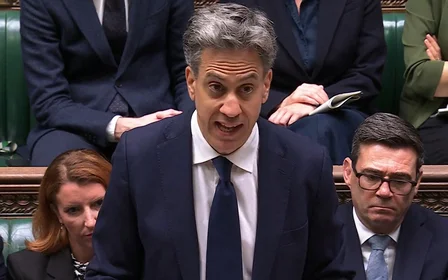
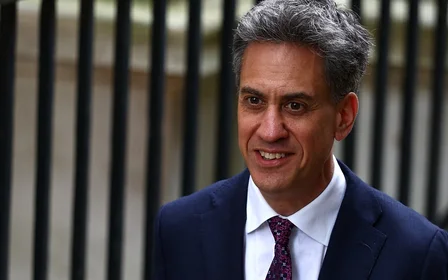
His comments came as Israel announced a series of retaliatory measures against Britain following Foreign Secretary Ed Miliband's announcement of sanctions targeting settlement activity.
Miliband said the British government could no longer simply "call out" injustice and suffering, but had to act to oppose the expansion of Israeli settlements.
"Today we refuse to be bystanders to further suffering and to the destruction of the two-state solution," he said.
"The British government has rightly said settlements are illegal, but we have remained silent on the question of the legality of the occupation as a whole" pic.twitter.com/l3RqtqxE9Z
— Middle East Eye (@MiddleEastEye) September 8, 2026
The UK will ban imports of goods produced in Israeli settlements in the occupied West Bank and introduce sanctions against companies and individuals involved in construction, infrastructure, financing and real estate linked to settlement expansion.
Miliband said the sanctions would target "illegal settlements and settlement expansion, not Israel," while stressing that the UK would continue to trade with Israel within its internationally recognised borders.
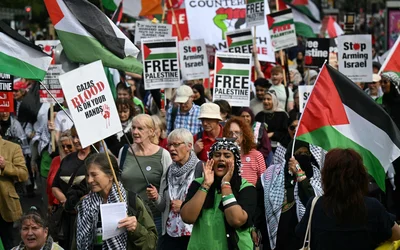
He also announced a ban on advertising properties in illegal settlements in Britain and said the government would sanction extremist settlers accused of supporting or inciting violence against Palestinian communities.
The UK will also refuse new licences for weapons and other exports that "materially contribute to the occupation," while maintaining more than 30 arms licence suspensions already imposed on Israel.
Miliband said the UK now considered Israel's occupation of the West Bank unlawful and accused settler groups of carrying out "ethnic cleansing" against Palestinians, with the Israeli government having "turned a blind eye" to the violence.
The measures were announced alongside a joint statement by 12 countries, including Britain, France, Canada, Spain, Denmark, Ireland, Finland, Iceland, Norway, Poland, Portugal and Sweden, backing further restrictions on trade with Israeli settlements.
The countries said Israel's actions in the West Bank were undermining the possibility of a two-state solution and called on the government to halt settlement expansion, ensure accountability for settler violence and investigate allegations against Israeli forces.
'British audacity'
The announcement prompted an immediate backlash from Netanyahu's government, with Foreign Minister Gideon Saar announcing several retaliatory measures.
Speaking to the media on Tuesday, Saar announced the closure of the British consulate in Jerusalem and the removal of British representatives from the US-led International Gaza Support Centre, which was established to monitor the ceasefire in Gaza.
Saar also ordered the termination of UK training for Palestinian Authority security forces and imposed entry bans on 11 British parliamentarians and a lawyer he deemed critical of Israel.
The 11 parliamentarians were Jeremy Corbyn, Zarah Sultana, Naz Shah, Diane Abbott, Hannah Spencer, Carla Denyer, Sian Berry, Ellie Chowns, John McDonnell, Richard Burgon and Adrian Ramsay.
Fahad Ansari, the director of the law firm Riverway to the Sea, was also banned from entering Israel.
"The British move is morally distorted and constitutes a blatant interference in the affairs of a sovereign state," Saar said, adding that the sanctions were an "unacceptable attempt by a foreign state to influence the elections," referring to Israel's upcoming elections in October.
Calling the sanctions "despicable" and "abhorrent", Saar said they would not change Israelis' views on the establishment of a Palestinian state, claiming the Israeli public "overwhelmingly opposes" the idea.
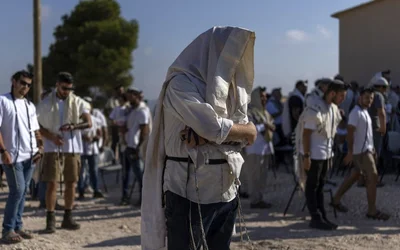
He accused the Labour government of "trying to impose on Israel" a two-state solution, and said he would retaliate against other countries that joined the UK measures.
"The message to every government that harms us: whoever acts against Israel - Israel will harm them, and they will lose their influence and relevance," he said.
Israeli President Isaac Herzog also condemned the measures, calling them "a gross interference in the democratic elections of a sovereign nation, and a decision that will fall on the wrong side of history".
"I say to all foreign governments: Stop," Herzog wrote on X, calling on international actors to "step away from the dead-end of sanctions and boycotts, and turn toward constructive dialogue and toward cooperation."
National Security Minister Itamar Ben Gvir called on Netanyahu to "close the British Consulate in East Jerusalem today," claiming the consulate was working "on behalf of the Palestinian Authority".
"This must be Israel's resolute response to British audacity," Ben Gvir added in a post on X.
In a letter to Netanyahu and Saar, the far-right minister said Jerusalem should make clear to London "that the [British] Mandate ended long ago, and Israel is an independent sovereign state."
Netanyahu's government has been criticised by much of the international community for accelerating the construction of illegal settlements in the West Bank and not doing enough to stop violent attacks by Israelis on Palestinians there.
Earlier this year, Israel opened up tenders for the construction of some 1,200 settlement homes in a strategically important part of the occupied West Bank.
The proposed Israeli E1 project is designed to connect Jerusalem to Ma'ale Adumim and other settlements east of the city, carving into land on which Palestinians seek to establish their state.
Middle East Eye delivers independent and unrivalled coverage and analysis of the Middle East, North Africa and beyond. To learn more about republishing this content and the associated fees, please fill out this form. More about MEE can be found here.