Israeli press review: Netanyahu moved to undermine Palestinian vote on election day

Netanyahu sought to delegitimise Palestinian voters
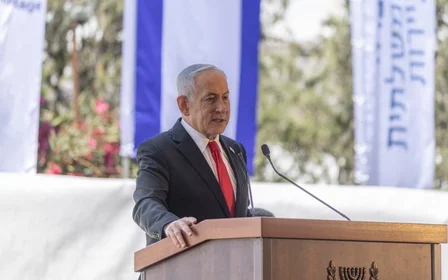
On Israel's election day on Tuesday, Prime Minister Benjamin Netanyahu published dozens of posts aimed at delegitimising the Palestinian vote, laying the groundwork to discredit the election results, a Haaretz investigation found on Thursday.
According to Haaretz, which monitored Netanyahu’s social media activity, almost every second post by the Israeli prime minister on election day focused on the Palestinian vote, in an apparent attempt to undermine Palestinian voters, who turned out in record numbers.
Out of 146 posts on all of Netanyahu's social media accounts during the 15 hours when polling stations were open, he devoted 72 to attacking Palestinian turnout.
Haaretz noted that Netanyahu’s staggering number of posts targeting the Palestinian vote was only part of a broader campaign on election day that extended well beyond his own social media accounts.
New MEE newsletter: Jerusalem Dispatch
Sign up to get the latest insights and analysis on Israel-Palestine, alongside Turkey Unpacked and other MEE newsletters
In addition, attempts to mobilise Netanyahu's Likud voters included phone calls and text messages to voters, while Netanyahu and his allies also spread delegitimising messages in videos.
Netanyahu’s eldest son, Yair, also published or shared 103 posts on X targeting Palestinian voters on election day, while Israel’s Channel 14 News, widely seen as the prime minister’s propaganda arm, posted or shared 40 such posts.
Haaretz also found that between Tuesday and Wednesday, some 2,300 messages and posts aimed at undermining Palestinian voters were distributed across 90 right-wing social media accounts.
US government pushes for a unity government
Two days after the elections, US President Donald Trump conveyed messages to Prime Minister Netanyahu and Zionist opposition leaders that he would prefer them to form a unity government, US sources told the right-wing Israel Hayom newspaper.
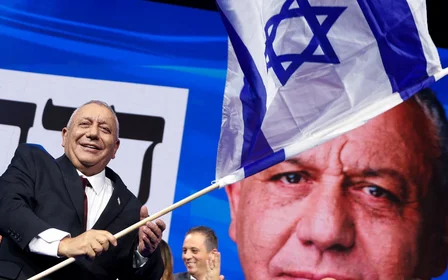
According to the report, published on Thursday, the US president wants a broad government that includes Netanyahu's Likud party and Gadi Eisenkot's Yashar party, the biggest parties in Israel according to the election results.
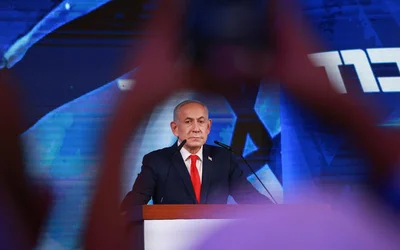
Trump, the report said, wishes to advance his Middle East policies, which include political agreements with states in the region, believing that a broad Israeli government would be best suited to achieving his goals.
According to Israel Hayom, Trump's plans for the Middle East include "agreements between Israel and several Arab states, including Saudi Arabia, as well as advancing a solution to the Palestinian issue".
One source with knowledge of Trump's plans told the newspaper that the US president will wait for the final results before speaking with Israeli leaders about forming a new government.
Meanwhile, the source said, Trump is making his intentions clear by stating the direction in which he wants Israel to go after the elections.
The US source added that if Israeli leaders "don't hurry to take advantage of this dramatic strategic window of time, then in two years, when it closes, Israel's war for its very existence will be much harder", he said, referring to the end of Trump's presidency.
Furthermore, according to a report by Israel's public broadcaster, Kan 11, Trump is specifically asking for far-right National Security Minister Itamar Ben Gvir to be excluded from any future government, as the US administration sees him as an obstacle to advancing its policies in the occupied Gaza Strip.
Israeli artists call for a government with Palestinian parties
Amid calls to exclude Palestinian-led parties from any future ruling coalition, some 400 Israeli artists, actors, writers and poets called on the Zionist Change bloc to form a new government with them, Israeli Channel 12 News reported on Thursday.
The Joint List and Ra'am, the two Palestinian-led parties, made significant gains following a historically high turnout among Palestinian voters, making both parties instrumental in replacing Prime Minister Netanyahu.
According to the report, the artists called "on the entire change bloc, in both its Jewish and Arab wings, to unite into one bloc and join together in a brave, groundbreaking, and historic act, in order to create a better, more equal, tolerant, and shared reality".
The letter was addressed to all the leaders of the so-called Change bloc in the opposition, which include Gadi Eisenkot, Naftali Bennett, Yair Lapid, Avigdor Lieberman and Yair Golan, asking them to set aside the "prejudice, racism, and incitement we've grown used to".
The letter said that "in the face of a real danger to the continued existence of democracy", Israel's Zionist opposition leaders must act "to save our shared home from total destruction" by joining forces with Palestinian leaders.
The Palestinian-led parties, the letter said, "are extending a hand towards repair, and we must not ignore the outstretched hand", adding that Palestinian voters "are an integral part of the state's citizens, and it is only natural that they should also take part in its leadership, especially at this hour".
Eisenkot may be tasked with government formation
Israeli President Isaac Herzog is expected to give Gadi Eisenkot the first opportunity to form a governing coalition in the aftermath of Tuesday's elections, Israeli Channel 13 News reported on Wednesday.
According to the report, Herzog will task the party leader who receives the most recommendations from other parties with trying to form a government.
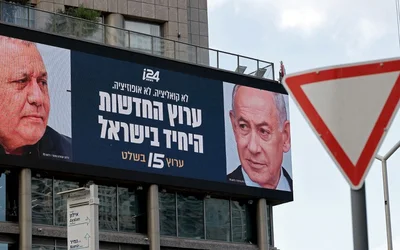
As of Thursday, Eisenkot's bloc held 48 Knesset seats, while the Palestinian-led parties, which are expected to support the former army chief, held 19 seats, giving them a combined majority of 67 seats in the Israeli parliament.
In Israel's proportional electoral system, every party recommends to the president the candidate it wants to form a government, making Herzog's largely ceremonial position a key part of the political process.
If Eisenkot is given the opportunity to form a government before Netanyahu, it could have major implications for the current far-right governing coalition. Reports have already indicated that he is seeking to replace Parliament Speaker Amir Ohana, a member of Netanyahu’s Likud party.
Replacing the speaker, which would require the support of the Joint List and Ra’am, would allow the Israeli opposition to control the Knesset’s agenda while parties work out how to respond to the election results.
Both Yousef Jabareen, leader of the Joint List, and Mansour Abbas, leader of Ra'am, said they will support a move to replace Ohana, with both leaders vowing to topple the Netanyahu government.
Middle East Eye delivers independent and unrivalled coverage and analysis of the Middle East, North Africa and beyond. To learn more about republishing this content and the associated fees, please fill out this form. More about MEE can be found here.