Israel's genocide in Gaza continues as Palestinians face 'slow death', Amnesty says

Israel is still waging a genocide against Palestinians in Gaza despite the fact that a ceasefire in the enclave is entering its second month and all living Israeli captives have been released, Amnesty International has said.
“The ceasefire risks creating a dangerous illusion that life in Gaza is returning to normal,” Agnes Callamard, Amnesty's secretary general, said in a statement on Thursday.
"While Israeli authorities and forces have reduced the scale of their attacks and allowed limited amounts of humanitarian aid into Gaza, the world must not be fooled. Israel’s genocide is not over,” she added.
Amnesty in December 2024 deemed Israel’s war on Gaza a genocide. That judgment was reaffirmed by the United Nations’ top investigative body on Palestine and Israel in September when it ruled that Israel is guilty of the crime of genocide in the strip. That view has been shared by dozens of world leaders, historians, human rights experts, and genocide scholars.
A US-brokered ceasefire in Gaza began on 10 October. However, Israel has continued to strike the enclave in violation of the agreement. At least 339 Palestinians have been killed by Israeli air strikes amid nearly 500 ceasefire violations, according to Gaza authorities.
New MEE newsletter: Jerusalem Dispatch
Sign up to get the latest insights and analysis on Israel-Palestine, alongside Turkey Unpacked and other MEE newsletters
Amnesty also noted that Israel is continuing to keep the amount of food and humanitarian aid that enters the enclave to a trickle. For example, Rafah, Gaza’s only border crossing to the outside world, remains closed, meaning that aid enters through Israel. Gaza remains under a full sea blockade.
Gaza’s Government Media Office said Israel is allowing just 200 aid trucks a day into the wartorn enclave, far below the 600 agreed under the ceasefire.
'Destruction of Palestinians in Gaza persists'
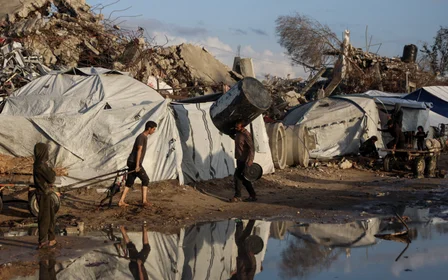
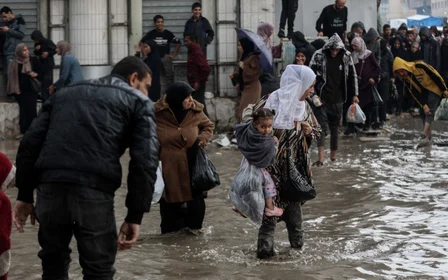
Despite Israel’s military onslaught being curbed, Palestinians in Gaza are at risk of a “slow death” because of the lack of food, shelter and medicine, Amnesty said.
“The objective probability that the current conditions would lead to the destruction of Palestinians in Gaza persists, particularly considering the enhanced vulnerability of the population to sickness and spread of disease following months of famine caused by years of unlawful blockade and months of total siege,” the report said.
The US-backed ceasefire left Israel in control of a little more than half of Gaza, with Israeli troops stationed inside the enclave. The Trump administration and Israeli government are now working on a plan to prevent the rebuilding of central Gaza, which Israeli troops were mandated to withdraw from.

The New York Times reported this week that US and Israeli officials are working on a plan to build temporary housing for “screened” Palestinians in Israeli-occupied Rafah. The housing compounds will be built on Palestinian-owned land.
The plan has faced intense criticism from Palestinians, and also European, UN and Arab officials who say it will de facto partition Gaza, using reconstruction and aid to divide the enclave.
The UN said this week that reconstruction of the Gaza Strip will cost $70bn over the coming decades. The report said Israel's bombardment of the enclave had created a "human-made abyss”, with the economy contracting by 87 percent from 2023 through 2024.
Israel has destroyed almost all housing units in Gaza and laid waste to its farmland. The World Food Programme reported that most households in Gaza were currently unable to afford basic food items.
“Israel has not stopped severely limiting Palestinians’ access to the sea. It has taken no measures to address the impact of its extensive destruction of farming land and livestock over the last two years,” Amnesty said.
“Altogether, this means that Palestinians are left virtually totally deprived of independent access to forms of sustenance,” the report said.
Middle East Eye delivers independent and unrivalled coverage and analysis of the Middle East, North Africa and beyond. To learn more about republishing this content and the associated fees, please fill out this form. More about MEE can be found here.