Israeli president pardons soldier convicted for killing wounded Palestinian

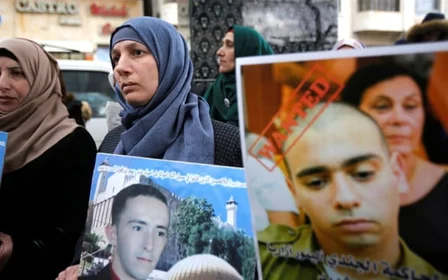
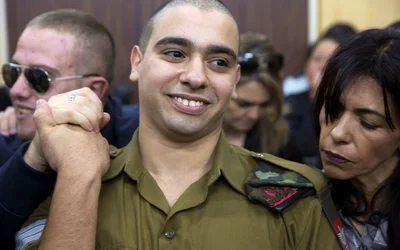
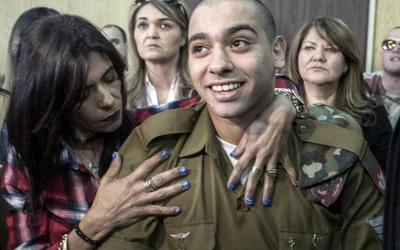
Israeli President Isaac Herzog has pardoned former Israeli soldier Elor Azaria, who was convicted of manslaughter for shooting a wounded Palestinian man in Hebron in 2016, erasing his criminal record, Haaretz reported on Saturday.
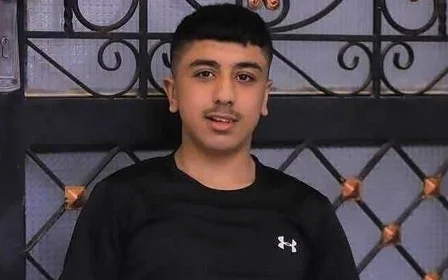
Azaria's pardon comes more than 10 years after he shot 21-year-old Abdel Fattah al-Sharif in the head after the Palestinian man was wounded by Israeli soldiers' fire.
Azaria welcomed the scraping of his criminal record by thanking God, his family, Katz and Herzog, saying to Channel 14 News that it was "a blessed week".
"Thank God we have reached this moment," he said.
"It is important that no fighter goes through what I went through," Azaria reportedly told Defence Minister Israel Katz during a phone call.
New MEE newsletter: Jerusalem Dispatch
Sign up to get the latest insights and analysis on Israel-Palestine, alongside Turkey Unpacked and other MEE newsletters
The killing, which was captured on camera by a Palestinian photographer working for Israeli human rights group B'Tselem, led to an uproar in Israel and the occupied Palestinian territories.
At the time, the Palestinian foreign ministry said the killing was an "extrajudicial execution", while the Israeli military said Azaria violated the army's ethics code.
Herzog's office said in a statement on Saturday that "Azaria bore the consequences of his actions" for many years, adding that the former Israeli soldier expressed remorse for the consequences of his actions and, therefore, it was justified to allow him "to turn a new page in his life".
The Israeli president said he was acting in the spirit of Yom Kippur, or Day of Atonement, one of the most important holidays in the Jewish calendar.
The decision, Herzog's statement said, was made "out of a belief in the importance of repair, reconciliation, and the ability to move forward".
However, according to Haaretz, Herzog acted against the advice of the Israeli military, as the army's chief, Eyal Zamir, said in a letter to the president that he was against pardoning, citing Azaria's lack of public remorse for the killing of al-Sharif.
Katz, who filed the pardon request to Herzog, welcomed the Israeli president's decision, calling it "a correct, humane, and fitting decision".
Azaria's pardon, Katz added, also sends an important message to Israeli soldiers and their family members: "We do not abandon soldiers and do not leave them behind."
The military said the young Palestinian man carried out a stabbing attack in the Tal Rumeida neighbourhood of Hebron.
Years of controversy
In 2017, Azaria was convicted in the manslaughter of al-Sharif and sentenced to 18 months in military prison, which the army's chief, Gadi Eisenkot, later reduced to 14 months.
Shortly after the killing, Azaria stood trial before a military court after Defence Minister Moshe Yaalon and Eisenkot condemned Azaria's actions.
Azaria's arrest led to right-wing demonstrations calling for the release of the soldier from custody, with politicians joining the calls to release him.
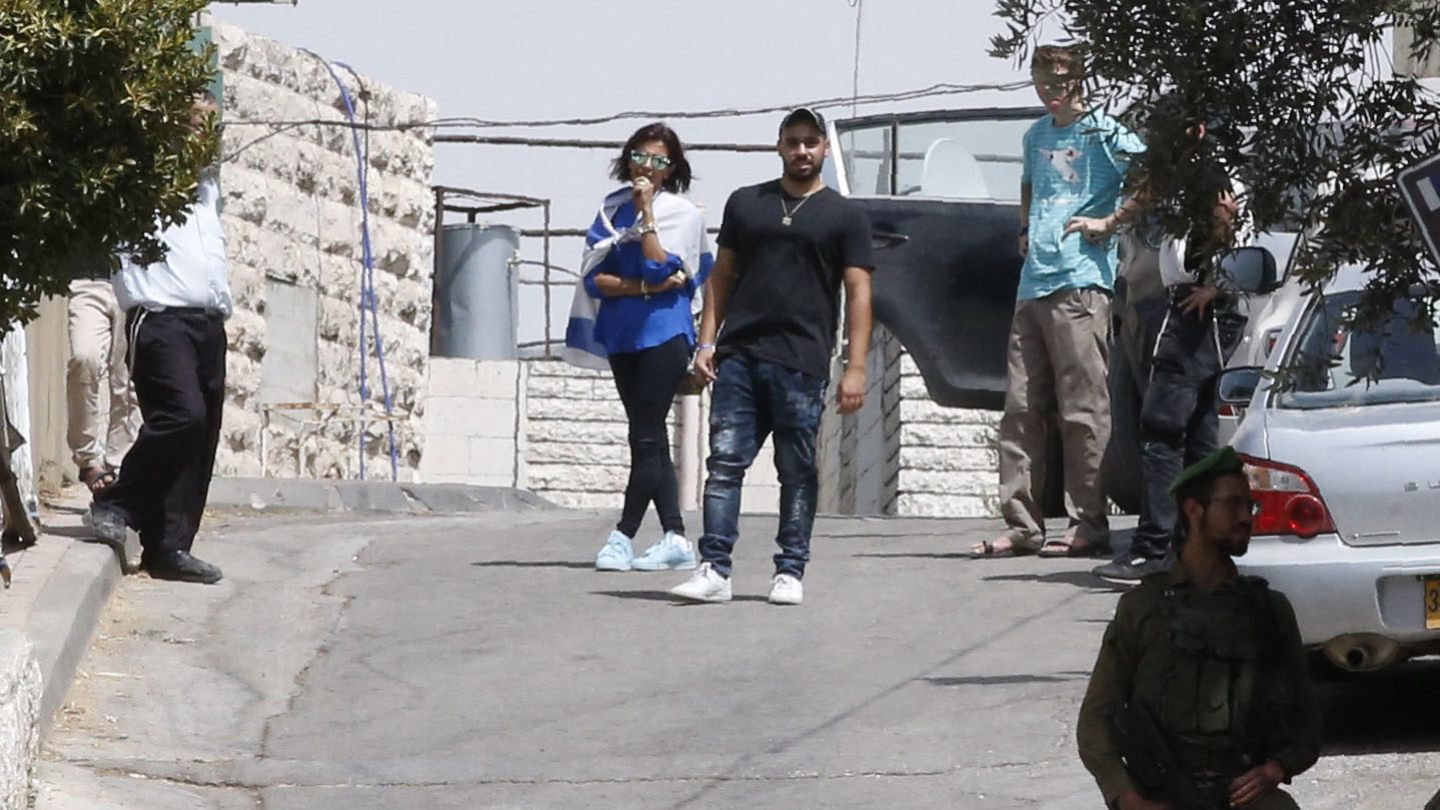
Three months after the incident in Hebron, amid government support for Azaria, Yaalon resigned, citing a lack of trust in Israel's Prime Minister Benjamin Netanyahu over the handling of the incident, with Azaria supporter Avigdor Liberman taking his place at the time.
Efforts to release Azaria started immediately after he was sentenced by the military court, with Liberman asking then-Israeli President Reuven Rivlin to pardon Azaria in 2017.
The minister said that Azaria was "an outstanding soldier".
Netanyahu joined the calls to pardon Azaria, but Rivlin rejected the request.
In May 2018, after serving a shortened sentence of nine months in prison, Azaria was released.
'A disgrace'
Yaalon, who later became one of Netanyahu's strongest political critics, condemned Herzog's latest decision.
In a post on X, Yaalon called the pardon "a disgrace" and accused Herzog of joining Netanyahu's attacks against former military chief Eisenkot, who is currently leading opinion polls ahead of elections in October.
Yaalon said that Azaria "did not claim he shot the terrorist because he felt his life was in danger, but rather 'because he deserved to die'", as he questioned Herzog's reasoning for pardoning Azaria.
Israeli National Security Minister Itamar Ben Gvir said he was thrilled with Herzog's decision, adding that "as someone who protested a decade ago on behalf of Elor Azaria", the pardoning of the former soldier "moves and delights me very much".
Ben Gvir said that if the rules of engagement were different in 2016, Azaria would not have been convicted, referring to the change the current Israeli far-right government has led in the military's rules of engagement in the past four years.
According to a recent report by B'Tselem, between October 2023 and June 2026, Israel killed 1,087 Palestinians in the occupied West Bank and East Jerusalem, including 242 children and 21 women.
The group described Israeli policies in the Palestinian territories as "a sweeping Israeli assault that is systematically and at an accelerating pace dismantling the foundations of Palestinian existence".
According to the human rights group, Israeli soldiers, police officers and settlers receive "broad impunity" when it comes to harming Palestinians.
Between 2016 and 2024, the group said, 2,427 complaints were filed against soldiers, but investigations were opened in only 22.7 percent of cases, and indictments were filed in only 0.9 percent of cases.
Middle East Eye delivers independent and unrivalled coverage and analysis of the Middle East, North Africa and beyond. To learn more about republishing this content and the associated fees, please fill out this form. More about MEE can be found here.