Killed in Israeli strike, Mona Khalil remembered as the guardian of turtles

On the eve of World Environment Day, the Israeli army targeted The Orange House, the south Lebanon home of marine ecologist and environmentalist Mona Khalil, leaving her critically wounded. Two weeks later, on 19 June, Khalil succumbed to her wounds in Beirut.
Born in Lagos, Nigeria, in 1949, Khalil spent years living in the Netherlands during Lebanon’s civil war. She returned to Lebanon in 1999, where her life took an unexpected turn after a chance encounter with a sea turtle.
Ramy Khashab, an environmental consultant and herpetologist, recounted the moment Khalil, a close friend, felt sand being flung into the air by a nearby nesting green sea turtle.
It was after that night that she embarked on a mission to protect the sea turtles that nest along the shores of Mansouri, her hometown just south of Tyre.
“The Orange House was meant to be in every single way because that’s where she discovered the sea turtle that turned her life around,” Khashab, 32, told Middle East Eye.
New MEE newsletter: Jerusalem Dispatch
Sign up to get the latest insights and analysis on Israel-Palestine, alongside Turkey Unpacked and other MEE newsletters
Khashab met Khalil randomly on the beach in Mansouri as a child, describing it as the perfect coincidence of his life. By then, she had already been working with turtles for more than a decade.
Khalil recognised Khashab’s love of animals, reptiles and amphibians, and later gave him his first job while he was still in high school.
Life and resistance in the south
Khalil trained generations of volunteers in environmental conservation. She taught them how to protect dozens of eggs from foxes and other animals, from cars driving onto the beach, and even from UN forces who tried to hire local fishermen to hunt the turtles for them. During nesting season, she would be the first to patrol the shoreline.
Khalil and her volunteers would also help newly hatched turtles, who only have about a 1 in 1,000 chance of surviving to adulthood, make their way into the Mediterranean Sea. She also founded the Orange House Children Turtle Club.
Her long fight against coastal privatisation, new building development and the use of dynamite in fishing is also a key reason why turtles have thrived in Mansouri.
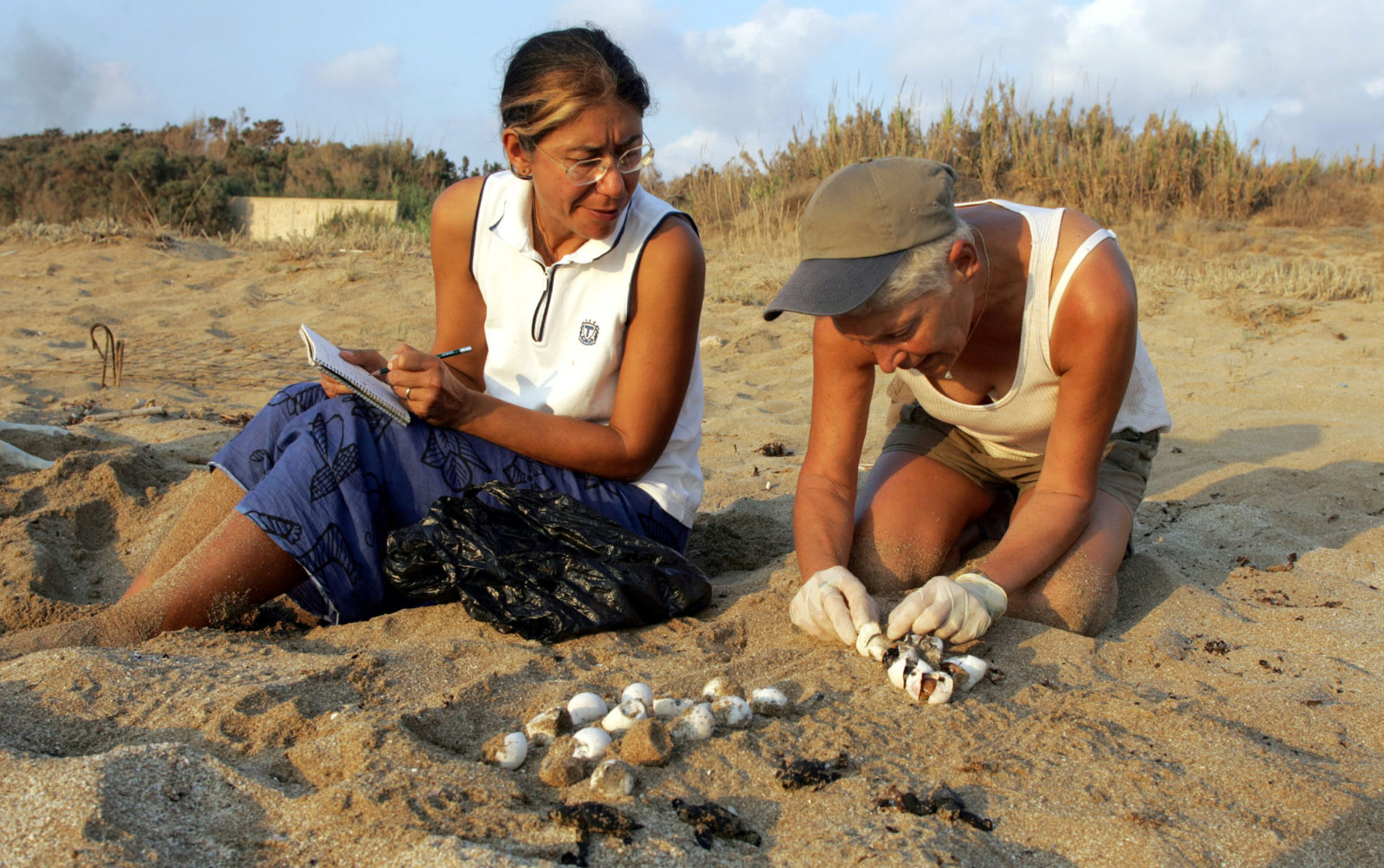

During winter, when Mansouri was empty of tourists and storms rolled in, she would call on her friends to help clear the coast, or when waste, believed to be drifting from Israel, would suddenly wash up on southern Lebanese shores. They would start in the border town of Naqoura and work their way north.
Visitors and community members have long celebrated Khalil's Orange House as a welcoming space for people of all backgrounds and identities.
Several people who spoke to MEE shared a common thought: Israel targeted Mona Khalil for who she was, a leader committed to preserving life and freedom.
There is only one Orange House in Mansouri, and Khalil, who decided to stay despite Israel’s bombing campaigns, built a community, a sense of solidarity and a shared purpose around it.
“She kept resisting and taught everyone to love Lebanon as much as she did. It’s because she insisted on staying, because she was symbolising life and resistance there in the south, that’s probably why they murdered her,” Khashab said.
Immortal legacy
The day after her death, hundreds gathered in Beirut to pay their respects. The mourners were diverse: relatives, activists, environmentalists, friends, and representatives from the culture and environment ministries.
Most people were dressed in black in mourning, but notes of colour moved through the crowd, as some of Khalil’s friends who remain displaced did not have access to their black clothes.
Perhaps the most striking presence at her wake was that of her assistant Hawi, who had been with Khalil in her final moments before the Israeli strike.
'She kept resisting and taught everyone to love Lebanon as much as she did'
- Ramy Khashab, herpetologist
That day, despite the second-degree burns she sustained in the attack, the Ethiopian woman ran to a nearby Lebanese army post to urge them to rescue Khalil.
It was because of her actions that Khalil did not die buried under the rubble.
A large photo of Khalil holding a baby turtle and looking into the camera rested on a wooden table at her wake. Next to it, two large glass bowls held dates and small green and brown turtle charms, in tribute to the thousands of endangered loggerhead and green sea turtles she and her guests had saved at The Orange House.
Amal Ephrem, a university professor and environmentalist who founded the Waste Management Coalition, chose a green turtle for her bracelet.
Ephrem said she had long wanted to meet Khalil and had come not only to pay tribute to the activist, but also to mourn the thousands of people killed by Israel during the war.
More than 4,000 people have been killed in Israeli attacks, among them women and children, and more than 12,000 others have been wounded since 2 March.
“I came because I could,” she said, alluding to the vast areas of southern Lebanon that are inaccessible or unsafe due to Israeli bombardment.
“It’s in Beirut, how can I not? It’s also not only for Mona. It’s for all of the people who died. It’s to see my friends from the south who are going through a lot, to stand with them at this moment.”
In an Instagram post on her Lebanese Composters page, Ephrem wrote: “We will keep walking on the white sands of Mansouri, admiring its purple seashells and diving into its turquoise waters, grateful for all you did to protect this special place.
“We will keep walking with endless admiration.”
In 2000, Khalil started the project at The Orange House. In 2026, Israel took her life but not the work.
“Her passion, her persistence, and her stubbornness, even, are what make her so amazing,” Khashab said.
“The things we learned from her we use daily, not only in relation to sea turtles and environment, but in our everyday life.”
Much of the conservation work and awareness around sea turtles and other environmental projects continued during the war, despite intense Israeli bombardment of southern Lebanon.
Khalil's work became a model for conservation efforts on other beaches across southern Lebanon beyond Mansouri, and its influence will continue into the future.
“Mona’s legacy is immortal. Parts of Mona are in every person, not only myself,” Khashab said.
Middle East Eye delivers independent and unrivalled coverage and analysis of the Middle East, North Africa and beyond. To learn more about republishing this content and the associated fees, please fill out this form. More about MEE can be found here.