
Kuwait citizenship crackdown leaves widows stateless and critics in exile

At least 50,000 people in Kuwait have lost their citizenship since September 2024.
Campaigners suggest the figure could be as high as 200,000. However, the government stopped regularly announcing figures in September 2025.
Kuwait, with a population estimated to be just shy of five million, has long been regarded as one of the more democratic states in the Gulf. Unlike its neighbours, since 1963 it has had a parliament – albeit one with limited power.
Occasionally acting as a mediator in negotiating diplomatic crises in the region, Kuwait has also offered safe haven for dissidents fleeing its more authoritarian neighbours.
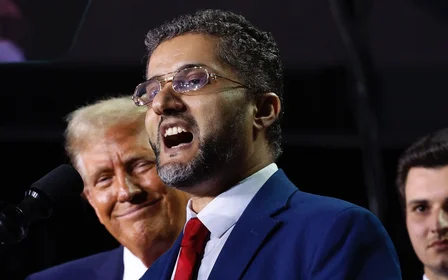
"In the 70s, Kuwait was a closer refuge for the oppressed in the Middle East than Europe," said Mohammed al-Mail, an Islamic scholar and political activist who was granted asylum in the UK in 2017.
New MEE newsletter: Jerusalem Dispatch
Sign up to get the latest insights and analysis on Israel-Palestine, alongside Turkey Unpacked and other MEE newsletters
"The same state that once sheltered persecuted political refugees is now persecuting its own children."
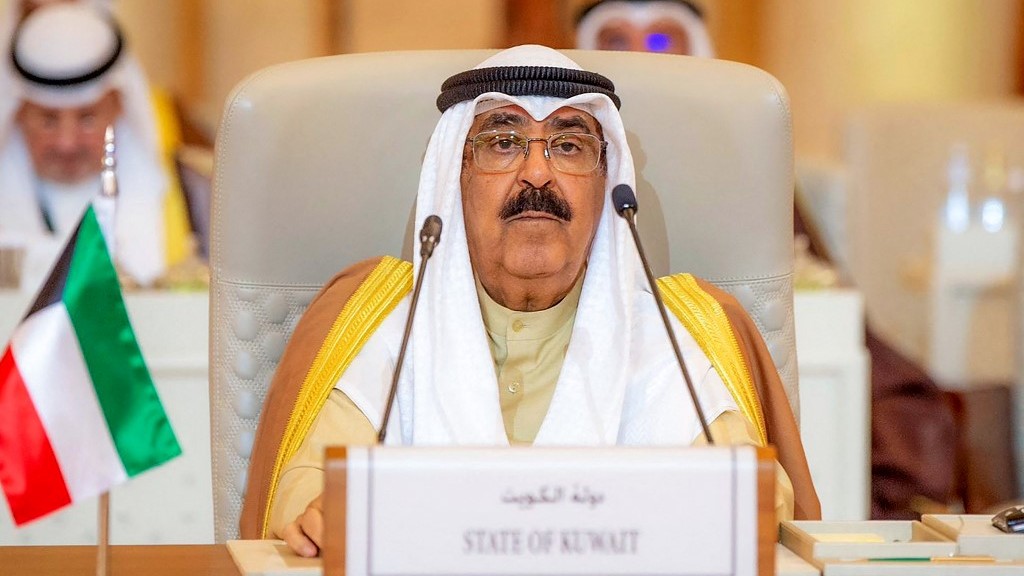
Since Sheikh Mishal Al Ahmad Al Jaber Al Sabah came to power in 2023, Kuwait has seen a major clampdown on the limited democratic freedoms its citizens have enjoyed.
The parliament was suspended in in May 2024, as well as key articles of the constitution around citizenship. These measures have been used to denaturalise tens of thousands of Kuwaitis, including activists, politicians and ordinary citizens.
Mail, an outspoken government critic who has been handed multiple prison sentences in absentia, was stripped of his Kuwaiti citizenship on 19 October. He described the move as a "purely political" act.
"What is truly astonishing is that it took them this long to make their move, when I have been an outspoken critic in exile for a decade," he told Middle East Eye.
"It seems they resorted only to the last card in their hand, after all other attempts – courts, media campaigns, smear operations – had failed."
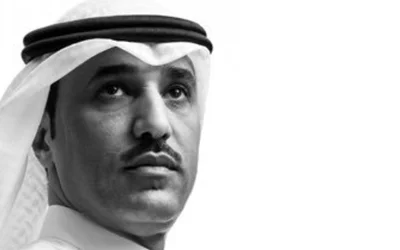
But while the wave of citizenship stripping has been used to target high-profile political and religious figures – including, most recently, prominent Islamic scholar Tareq al-Suwaidan – it has arguably been ordinary residents of Kuwait who have suffered the most.
'Frauds' and 'gold diggers'
Mail is rare among those targeted in being willing to speak on the record, under his own identity.
Having been granted asylum in the UK in 2017, he also enjoys a degree of support denied to those in Kuwait.
Many of those affected, including several people contacted by MEE, have been unwilling to speak, even anonymously, for fear of reprisal against themselves or their families by the Kuwaiti government, even fearing their phones could be bugged.
Legislation passed in December 2024 stated that citizenship could be removed for reasons including “moral turpitude or dishonesty, or for actions aimed at threatening state security, including criticism of the emir or religious figures".
On one day alone, on 6 March, at least 464 citizens were stripped of their nationality, including 12 people accused of “illegally” holding dual nationality and 451 accused of “forgery and fraud".
Women who became citizens by marrying Kuwaiti men have been a particular target, following the suspension of article 9 of the constitution, which previously protected those who gained citizenship through marriage.

As many as two-thirds of those who have had their citizenship suspended are divorcees and widows who gave up their previous citizenship to become Kuwaiti, as the country forbids dual nationality.
This has left the women stateless and locked them out of access to vital services such as schools, state employment, property ownership and healthcare.
Case studies gathered by the rights group Salam detailed a number of women – including some born in Kuwait – who had suffered at the hands of the new legislation.
Iman was born in Kuwait and became a naturalised citizen after getting married in 2006, aged 22. She divorced her husband in 2013 after suffering domestic abuse.
In December 2024, she found her name on a government list of women who had had their citizenship removed.
After speaking on the issue in an X Space in February, where she said she would retrieve her citizenship "through the law", Iman was then also accused by authorities of “insulting the state” and “challenging the government”.
As a result, her phone line and access to government healthcare were cut off and she was later summoned by criminal investigation officers, who seized her ID and interrogated her in handcuffs.
'Today, I am more legitimate than any emir or minister ruling the state without a constitution'
- Mohammed al-Mail, campaigner
After being strip-searched in a manner she described as verging on "sexual harassment" and abused and insulted by officials, she was eventually forcibly deported to Egypt, leaving her children behind in Kuwait.
Another woman, Layla, was a Saudi Arabian citizen before becoming a naturalised Kuwaiti in 2004 through marriage. After having her citizenship stripped during the mass denaturalisation process, she was told by authorities she needed to try to regain her Saudi citizenship if she wanted to be "treated like a Kuwaiti" in the country.
However, the authorities in Saudi Arabia – where she has no family, property or social ties – refused to intervene, saying Kuwait had to “deal with the consequences”.
Andrew McIntosh, director of research and studies at Salam, said much of the rhetoric in government and media circles had been xenophobic and misogynistic, portraying the women affected as "gold diggers" and frauds.
"We are talking about tens, if not hundreds of thousands of people who have lost their nationality for slights, frauds, economic improprieties, or a political nature… or bureaucratic error," he told MEE.
'Defining a distinct Kuwaitness'
A range of different reasons have been cited for the current campaign.
For Mail, it is about the authorities consolidating power and curbing dissent in a country that was once known for allowing a breadth of opinions.
He said the new emir had lost his legitimacy, with his actions undermining the constitution – and he put himself forward as a possible alternative.
"Today, I am more legitimate than any emir or minister ruling the state without a constitution," Mail said.
But economic considerations are also a major factor in the recent measures.
'There are well-established international laws which prohibit depriving someone of their nationality arbitrarily'
- Tiana Danielle Xavier, Institute on Statelessness and Inclusion
Like much of the Gulf, Kuwait has been a largely rentier state since its inception, providing generous welfare packages to its citizens off the back of large numbers of immigrant labourers and oil wealth.
However, as the world moves away from fossil fuels, many of the Gulf petro-states have begun attempting to diversify their economies and bring more citizens into the regular workforce.
McIntosh said the stripping of citizenship from those seen as non-Kuwaiti was partly a means of maintaining the country's welfare provisions and public sector without sinking the economy.
He described it as a method of "defining a distinct Kuwaitness".
And so far, there has been little or no criticism from the international community, despite forced statelessness being illegal under international law.
"There are well-established international laws which prohibit depriving someone of their nationality arbitrarily, prohibit discrimination in the treatment of people, protect an individual from being rendered stateless and ensure that any decisions made need to follow due process," said Tiana Danielle Xavier at the Institute on Statelessness and Inclusion.
"Unfortunately, in Kuwait, there is currently no possibility for courts to review the decisions of those who have been stripped of their nationality."
Mail said he had reached out to the authorities in the UK for help with his case.
"I do this only to ensure the historical record remains clear and unambiguous," he said.
"And yes, we have begun serious, escalating steps to hold the Kuwaiti authorities accountable, the results of which will become visible soon."
The UK Foreign Office told MEE that it was establishing further information on what the new campaign could mean for Kuwaitis of British origin, but would not comment on individual cases.
Middle East Eye delivers independent and unrivalled coverage and analysis of the Middle East, North Africa and beyond. To learn more about republishing this content and the associated fees, please fill out this form. More about MEE can be found here.