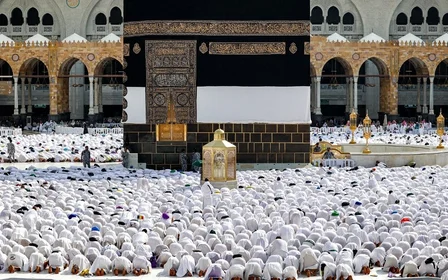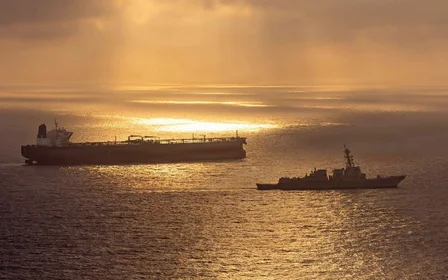

Hajj pilgrims press on despite Iran war uncertainty

For years, Shahid Ali and his wife quietly saved money in a small tin box tucked away in their East London home.
The couple cut back on luxuries, postponed renovations and skipped holidays for one reason: to perform Hajj together before they grow too old.
But after Israel and the United States began their war on Iran, what should have been a moment of anticipation became clouded by doubt and anxiety.
"My children asked us to reconsider, but we have waited our lives for this," Ali told Middle East Eye from his home.
"There was a lot of uncertainty because flights were cancelled en masse, but no change has been made and it looks like we are going."
New MEE newsletter: Jerusalem Dispatch
Sign up to get the latest insights and analysis on Israel-Palestine, alongside Turkey Unpacked and other MEE newsletters
His concerns are echoed in conversations taking place in homes and mosques across the world, yet they have not stopped hundreds of thousands from undertaking this year's pilgrimage.
The war has already disrupted air travel, increased living costs in many countries, and forced airlines to introduce additional fees and longer routes.
Despite the disruption, hundreds of thousands from across the globe have already made the journey, with Ali among them.
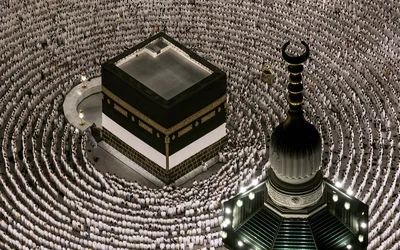
Saudi authorities said on Saturday that around 1.5 million pilgrims had already arrived from abroad, surpassing last year's total.
Earlier this week, two officials told MEE that US President Donald Trump postponed a planned attack on Iran after being warned by Gulf allies and his own officials not to resume the war during the Hajj pilgrimage.
Trump has since said an agreement was "largely negotiated" as multiple reports over the weekend said the two sides were close to agreeing on a 60-day ceasefire extension and a memorandum of understanding.
Rising travel costs
For Muslims, Hajj is a religious obligation and one of the key pillars of Islam.
Muslims are expected to perform it at least once in their lifetime, and many families spend decades saving for the journey, while waiting lists in parts of the Global South stretch for years.
For many elderly pilgrims, the prospect of postponement is especially difficult, with fears that another opportunity may never come.
"There's uncertainty everywhere now," said Farzana Begum, a retired teacher from Birmingham preparing to leave for Mecca. "But if God has invited you, you cannot refuse because of politics."
The conflict has nevertheless created significant logistical challenges.
'Flights are being rerouted, prices are moving constantly and pilgrims are calling every hour asking whether it's still safe'
- Hajj organiser
Commercial airlines across the Gulf have been forced to reroute flights due to airspace restrictions and fears of escalation. Some carriers have temporarily suspended routes through parts of the region, leading to delays and higher ticket prices.
Travel operators in Jordan, Pakistan and Indonesia told MEE that Hajj package costs have risen sharply in recent weeks due to higher fuel prices and longer flight paths.
"Every day the situation changes," said one Jordan-based Hajj organiser who asked not to be named because of the sensitivity of the issue.
"Flights are being rerouted, prices are moving constantly and pilgrims are calling every hour asking whether it's still safe."
"When the war first broke out, there was a lot of concern among my customers, but that has seemed to have subsided."
Saudi authorities have sought to reassure pilgrims that extensive contingency plans are in place.
However, some countries with large Muslim populations have already passed on additional costs to pilgrims. India imposed an extra 10,000 rupees ($105) on Hajj packages, while Indonesia, which has the world's largest Muslim population, said it would absorb the added costs.
Pilgrimage under uncertainty
Despite recent reports suggesting a ceasefire agreement may be close, concerns remain that the war could still be reignited.
The Gulf's tightly packed air corridors are among the busiest in the world, and any regional escalation would involve further disruption to international travel networks.
Pilgrims travelling from Europe, South Asia and Africa often transit through regional hubs such as Doha, Dubai and Jeddah.
For many, the uncertainty has added emotional strain to what is already an intense and costly journey.
At Heathrow Airport this week, groups of British pilgrims gathered around luggage trolleys stacked with suitcases and prayer mats. Some said they were nervously tracking news updates before departure, while others avoided coverage altogether.
One woman travelling with her elderly mother said relatives had begged them to cancel.
"My brothers said we should wait another year," she said. "But my mother is 78. She said: 'what if I don't have another year?'"
The atmosphere around this year's pilgrimage is also shaped by wider turmoil across the Middle East.
Many Muslims preparing for Hajj say they feel deep sorrow over ongoing wars and humanitarian crises in the region, particularly in Gaza.
For some, the inability of Palestinians trapped by war and siege to perform Hajj this year weighs heavily.
"We will pray for them when we are there," said Begum. "You cannot separate Hajj from what is happening to Muslims elsewhere."
Historically, Hajj has continued through conflict, pandemics and political upheaval.
Pilgrims have travelled even during periods of regional war and instability long before modern aviation. More recently, the Covid-19 pandemic forced Saudi Arabia to sharply restrict pilgrim numbers for the first time in modern history, leaving many believers devastated.
'The essence of Hajj is sacrifice'
The return of large-scale pilgrimages after the pandemic had initially brought renewed optimism for both travel operators and worshippers.
Now, the Iran conflict has introduced fresh uncertainty.
Analysts say the situation highlights how vulnerable global religious travel has become to geopolitical shocks.
"Hajj depends on massive international coordination," said one Gulf-based aviation expert, who asked not to be named for fear of repercussions. "When airspace becomes militarised or unstable, the consequences spread quickly."
"Some pilgrims may end up staying in Saudi Arabia for longer."
Yet among pilgrims themselves, fear is often secondary to faith.
'People throughout history travelled under far more dangerous conditions than we face today'
- London mosque speaker
In west London, worshippers attending a pre-Hajj seminar at a local mosque listened as organisers outlined emergency procedures, travel insurance requirements and possible delays.
But the discussion repeatedly returned to spirituality rather than politics.
Imams reminded pilgrims that hardship has always been part of the journey.
"The essence of Hajj is sacrifice," one speaker told the congregation. "People throughout history travelled under far more dangerous conditions than we face today."
That message resonates strongly with many preparing to depart.
Some pilgrims acknowledge they are afraid. Others say family members remain deeply concerned. But few appear willing to abandon plans they may have spent decades preparing for.
For Ali and his wife, cancelling now is unthinkable.
"We don't know what will happen in the world," he said quietly. "There is war everywhere. But we believe if God wants us to complete Hajj, we will complete it."
Middle East Eye delivers independent and unrivalled coverage and analysis of the Middle East, North Africa and beyond. To learn more about republishing this content and the associated fees, please fill out this form. More about MEE can be found here.