Netanyahu says he backs 'Greater Israel', which includes parts of Jordan and Egypt

Israeli Prime Minister Benjamin Netanyahu has said he feels “very” connected to the vision of a “Greater Israel”, which includes occupied Palestinian territory as well as parts of Egypt, Jordan, Syria and Lebanon.
During an interview on Tuesday with i24 News, Netanyahu was presented with an amulet depicting “a map of the Promised Land” by interviewer Sharon Gal.
Gal then asked the prime minister whether he felt connected to this vision of Greater Israel.
“Very much,” Netanyahu replied.
While the amulet itself did not appear on screen, the term “Greater Israel” is widely understood to refer to a far-reaching expansionist vision.
New MEE newsletter: Jerusalem Dispatch
Sign up to get the latest insights and analysis on Israel-Palestine, alongside Turkey Unpacked and other MEE newsletters
It has previously been used by ultra-nationalist Israelis to claim parts of Jordan, Egypt and Syria - along with the occupied West Bank and Gaza Strip - as part of a future Israeli state.
During the interview, Netanyahu also described himself as being on a “historic and spiritual mission”.
His comments come amid ongoing Israeli military occupation of the West Bank, Gaza Strip and parts of southern Lebanon and southern Syria.
Similar views have been echoed by ministers within Netanyahu's government.

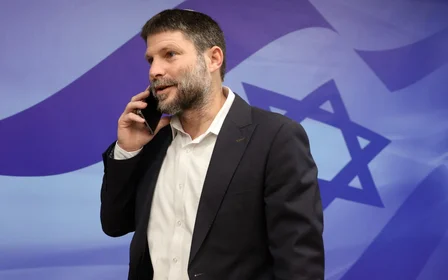
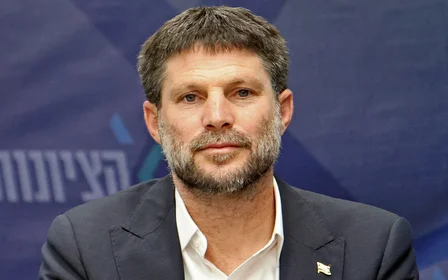
Last year, in a documentary, Finance Minister Bezalel Smotrich was filmed advocating for the expansion of Israeli borders to include Damascus.
He suggested that Israel would gradually grow to encompass not only all Palestinian territories but also parts of Jordan, Lebanon, Egypt, Syria, Iraq and Saudi Arabia.
“It is written that the future of Jerusalem is to expand to Damascus,” he said, invoking the “Greater Israel” ideology.
Smotrich had previously raised similar ideas during a 2023 memorial service for a Likud activist in Paris.
Speaking from a podium adorned with a map of Israel that included Jordan, he controversially stated that “there is no such thing” as the Palestinian people.
Middle East Eye delivers independent and unrivalled coverage and analysis of the Middle East, North Africa and beyond. To learn more about republishing this content and the associated fees, please fill out this form. More about MEE can be found here.