
France: Mosque closure fuels fear of state overreach on Muslim worship

In Aulnay-sous-Bois, in the northeastern suburbs of Paris, a recent court decision to uphold the six-month closure of a mosque for inciting violence and terrorism has caused a stir.
The Montreuil Administrative Court rejected earlier this month an attempt to suspend the July prefecture order against the Attaqwa Mosque, also known as the Chanteloup Mosque, named after a neighbourhood in the south of the city with a large immigrant population.
Located in the heart of a social housing complex, the religious establishment looks like a residential apartment block. It has no minaret or dome. However, it houses a prayer hall that can accommodate dozens of worshippers, as well as administrative offices belonging to the Aulnay-Sud Cultural Association (Acas), which manages the mosque.
“Originally, it was an informal prayer room. It was set up by residents in the early 2010s without any opposition from the social housing landlord or the town hall,” Salah, 78, who lives near the mosque, told Middle East Eye.
Speaking on an avenue adjacent to the place of worship, the retired bus driver lamented its closure.
New MEE newsletter: Jerusalem Dispatch
Sign up to get the latest insights and analysis on Israel-Palestine, alongside Turkey Unpacked and other MEE newsletters
“I used to go there every evening for Maghrib [sunset] prayer. I would meet friends there. We would chat for a bit, and then everyone would go home,” he said, adding that his fragile health prevents him from walking to the other mosques in Aulnay.
Rayane, 20, another resident of Chanteloup who was passing near the mosque, is furious. He accuses the state of “punishing all” the worshippers in the neighbourhood by closing the mosque.
‘Why didn't the Seine-Saint-Denis prefecture simply prosecute the imams they accuse of making violent speeches?’
- Rayane, a worshipper at the Attaqwa Mosque
“Why didn't the Seine-Saint-Denis prefecture simply prosecute the imams they accuse of making violent speeches?” he told MEE.
Like Rayane, those opposed to the closure also accuse the authorities of undermining religious freedom and the principle of secularism, which enshrines the state's neutrality towards religions in France.
In the order to close the mosque, the prefect cited “statements, ideas or theories disseminated in the mosque and on the imams' social media accounts, which incite violence, hatred or discrimination, glorify acts of terrorism, and encourage their commission”.
The Montreuil Administrative Court upheld the prefecture's arguments and ruled that “the closure does not constitute a serious and manifestly illegal infringement on freedom of worship”.
However, for Rafik Chekkat, the lawyer for Acas, whose assets have also been frozen, “certain parts of the court's decision run counter to religious freedom”.
Chekkat, who announced his intention to appeal to the Council of State, France’s highest administrative court, believes that the principle of secularism has not been respected in this case.
He denounced a decision which, according to him, amounts to making the sacred text itself an indicator of radicalism, saying that the authorities based part of their case on imams “quoting...seven passages from the Quran and references to major works of the Islamic tradition, such as The Garden of the Righteous and The Forty Hadiths”.
The works cited belong to the corpus of the 13th‑century Syrian scholar Imam al‑Nawawi, widely viewed as one of the foremost thinkers in the Muslim tradition.
The defence also emphasised that the prefect objected to sermons “evoking ‘hell’ and the ‘punishments of the grave’ reserved for ‘unbelievers’”, despite similar teachings being found in the preaching of other faiths, including in Christian places of worship.
The court argued that the prefectural order did not incriminate the citation of the Quran, as it was also based on other statements that do not come from religious texts, as well as on elements relating to the attendance of the mosque by “radicalised people”. According to the judge, the prefect therefore did not interfere in religious belief, nor did he violate the principle of secularism.
‘Authoritarian shift in French secularism’
Lawyer Sefen Guez Guez, who has obtained the suspension of closure orders for three French mosques in his career, also disputes the court’s interpretation.
“The court’s decision is quite serious from a legal standpoint because it is based on statements relating to verses from the Quran and the Hadith [Prophet Muhammad’s recorded sayings and teachings],” he told MEE.
Guez Guez says the prefecture “interpreted religious texts spoken during sermons literally, in order to justify its closure decision”.
“Furthermore, some sermons mentioned in the closure order date back to 2020. This raises questions in terms of the rule of law. That is, how far back can we go to justify closing a mosque?” Guez Guez said.
‘The court’s decision is quite serious from a legal standpoint because it is based on statements relating to verses from the Quran and the Hadith’
- Sefen Guez Guez, lawyer
At the start of Emmanuel Macron's presidency in 2017, several Muslim places of worship were forced to cease operations.
In the following years, a legislative framework intended to combat “Islamist radicalism” was put in place, notably the August 2021 “anti‑separatism” law - formally the “Law reinforcing respect for the principles of the Republic” - which has been criticised for stigmatising the country’s Muslim community while restricting civil liberties.
The law provided a broader legal basis for mosque‑closure decisions, as it strengthened prefectural powers over places of worship, created new obligations for religious associations, expanded grounds for closure and made prefectural control more systematic.
As a result, closures became more frequent, more legally structured, and more easily justified administratively.
In his book Governing Islam in France (2025), religions specialist and CNRS researcher Franck Fregosi argues that the closure of mosques is the expression of an “authoritarian shift in French secularism”.
He laments the increasingly heavy interference of the authorities in the internal governance of mosques, aimed at imposing the vetting of imams and worshippers.
For Fregosi, the state’s current policies fall within a historical continuum of attempts to control and administratively monitor Muslim worship, dating back to the colonial era.
‘Political’ closure orders
In 2024, then Interior Minister Gerald Darmanin announced the creation of an official status for imams in France, intended to put an end to the system in which they were posted to France by foreign governments. The stated goal was to shield Islam in France from foreign influences and radical ideological currents.
He did, however, officially grant foreign clerics already serving in mosques in France the possibility of remaining in the country under certain conditions: these imams had to be hired by a local religious association and undergo appropriate civic training, such as university degrees on secularism.
‘When it’s not for radicalisation, mosques are closed under the pretext of non-compliance with urban planning regulations’
- Abdallah Zekri, rector of the Grand Mosque of Nimes and chairman of the Observatory Against Islamophobia in France
This is precisely what an Algerian imam recruited by the Grand Mosque of Nimes did. However, despite complying with all the procedures, the prefecture refused to issue him a residence permit.
“He returned to Algeria a year ago and resumed his duties there,” Abdallah Zekri, rector of the mosque and chairman of the Observatory Against Islamophobia in France, told MEE.
Zekri, who also serves as vice president of the French Council of Muslim Worship (CFCM), a national representative body created to serve as the official interlocutor of the Muslim faith with the public authorities, believes that the targeting of Muslim places of worship is an expression of a growing climate of Islamophobia.
“When it’s not for radicalisation, mosques are closed under the pretext of non-compliance with urban planning regulations,” he said, adding that associations are finding it increasingly difficult to obtain approval from public authorities to acquire land for mosque construction.
Guez Guez confirms the existence of multiple obstacles.
“It’s often political,” the attorney told MEE. “Municipalities use pretexts, such as non-compliance with fire safety regulations, to demand the closure of Muslim places of worship.”
According to official data from the interior ministry, 12 places of worship have been administratively closed since 2017 for reasons related to radicalisation, most of them mosques.
However, journalistic investigations show that the number of mosques forced to cease their activities for technical or regulatory reasons - such as urban planning rules, health and safety standards or accessibility - is significantly higher. Between 2021 and 2022, around 20 mosques were closed as part of a broad campaign of expanded administrative inspections.
The association Trouve Ta Mosquee (find your mosque) even puts forward the figure of 89 mosques closed since 2017, including temporary closures and places targeted by ongoing investigations.
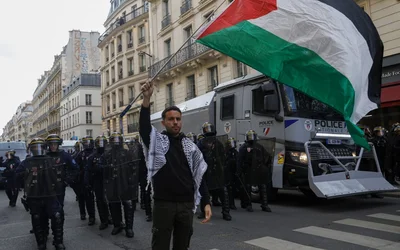
Zekri also says that certain topics addressed by imams, such as Palestine and Israel’s genocidal war in Gaza, are hastily interpreted as hate speech, leading to retaliatory measures.
In March 2025, Abdourahmane Ridouane, a Nigerien national and president of the Pessac mosque near Bordeaux, was sentenced to four months' suspended imprisonment and a two-year ban from French territory for “apology for terrorism” after denouncing Israeli policy in the Palestinian territories. He was subsequently acquitted by the Paris Court of Appeal at the end of the same year.
Meanwhile, attempts to tighten control over mosques continue.
After publishing a report on “entryism” - or the alleged gradual infiltration of the Muslim Brotherhood in France - in June 2025, Senator and former Interior Minister Bruno Retailleau succeeded in having a bill on the same issue adopted by the upper house of Parliament in May, strengthening the state’s oversight of places of worship.
The bill reinforces the prefect’s power to close places of worship by broadening the grounds for doing so, now defined less strictly than before, and by facilitating preventive closures, even before a serious disturbance has occurred - at the risk of a more discretionary use of this authority.
Meanwhile, another bill, introduced in January by several right-wing Les Republicains MPs, would make the prefect’s approval mandatory for the construction or expansion of a place of worship, whereas until now the prefect issued only a non‑binding opinion. Neither bill has been adopted as law at this stage.
Middle East Eye delivers independent and unrivalled coverage and analysis of the Middle East, North Africa and beyond. To learn more about republishing this content and the associated fees, please fill out this form. More about MEE can be found here.