'No end in sight': Democrats slam Trump after six months of Iran war

US Democrats on Friday slammed the Trump administration for dragging out the war on Iran to its six month anniversary, warning Republicans would pay the price in the upcoming midterm elections.
The joint US-Israeli attack on Iran, beginning on 28 February, was initially meant to last a few weeks, by President Donald Trump's own estimates.
Half a year later, the war has seen the US lose at least 18 of its troops and cost $100bn in military spending, most of which was approved by the Republican-controlled Congress late last month after Secretary of War Pete Hegseth requested additional funds north of $60bn.
The war has cost each American taxpayer around $600 to $1,000 in extra energy costs because of Iran's response in blocking the Strait of Hormuz, according to a Brown University study and estimates from Moody's Analytics.
Estimates for the number of Iranian dead vary between 3,400, according to the UN’s OCHA agency, and 6,000, according to the Israeli military.
New MEE newsletter: Jerusalem Dispatch
Sign up to get the latest insights and analysis on Israel-Palestine, alongside Turkey Unpacked and other MEE newsletters
"Trump and his chief dealmaker [Vice President JD] Vance have failed to reach an agreement to end their war. Back in March, Trump and Vance said the war would be over 'soon' - but just this week, Trump said he is 'not in a hurry' to end the war," Democratic National Committee (DNC) chair Ken Martin said in a statement on Friday.
The DNC oversees all party activities and vets candidates for elections.
"[They] dragged the US into a deadly and costly war they clearly cannot find a way out of - at the expense of the American people who are struggling to make ends meet. Trump and Vance explicitly promised no new foreign wars, yet six months in, there is no end in sight to the conflict that has driven up prices on everything from gas to groceries," Martin said.
"While Republicans claim they cannot bring down costs or fund affordable healthcare for everyday Americans, they continue to spend billions of dollars on a war no one wanted or asked for - and voters will remember this betrayal when they head to the polls in November.”
The Silver Bulletin, which tracks and analyses public sentiment, noted on Friday that repeat polling has shown around 37 percent of Americans support the US-Israeli war on Iran, while 55 percent oppose it.
Half hearted opposition?
While Democrats in the House of Representatives latched onto an effort by the progressive wing of the party in late February to force a War Powers vote - which would insist on Congress having the power to declare war and not the president - it was not clear they would have actually opposed any attacks in their capacity as lawmakers.
Earlier this year, before the 28 February US-Israeli onslaught began, reports emerged that Democratic Party leadership was trying to curb more grassroots efforts to restrain Trump's war-making authority.
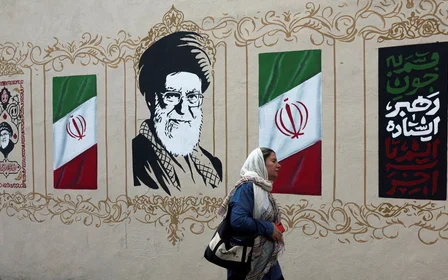
Establishment Democrats, many of whom failed to condemn Israel for what the United Nations and Holocaust scholars have called a genocide in Gaza, have not shied away from consistent condemnation of Iran, believing that, if not now, then at some point Tehran would have to be militarily confronted.
Iran itself had said that, while it must be ready for a war with the US - largely egged on by Israel - it would rather cut a deal that allows it the weapons it says it needs to defend itself as a sovereign state.
A week before the US and Israel began joint air strikes, Secretary of State Marco Rubio and CIA Director John Ratcliffe briefed House and Senate leadership on the latest Iran developments behind closed doors.
The top Democrat in the Senate, Chuck Schumer, emerged only to say to reporters: "This is serious, and the administration has to make its case to the American people."
Four days earlier, Schumer said in a statement that "confronting Iran’s ruthless campaign of terror, nuclear ambitions, regional aggression, and horrific oppression of the Iranian people demands strength, resolve, regional coordination, and strategic clarity".
Where things stand
If there is a diplomatic track that Trump is still pursuing, there are no signs that it's yet at a senior enough level to bear fruit. Two attempted ceasefires have quickly collapsed.
Qatar's prime minister arrived in Iran on Thursday in a bid to seek a joint Iran-Oman solution to reopening the Strait of Hormuz. The talks have slightly lowered the price of oil this week, but Trump's new deployment of the USS Theodore Roosevelt for a seven-month stint in the region suggests tensions are not winding down any time soon.

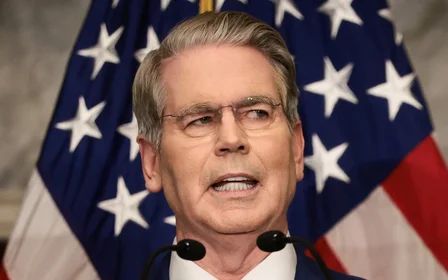
US Treasury Secretary Scott Bessent on Monday announced a new wave of sanctions against Iran and its "enablers", towards what he described as an "asphyxiation of this regime".
He called it "Operation Economic Outcast".
Using a "zero leakage approach", Bessent said the Treasury had "mapped every node, every facilitator, and every network that Iran has used to smuggle oil and evade sanctions", and that Trump had already made phone calls to counterparts around the world "with specific requests to cease their interactions with the regime".
He did not specify which leaders, nor on what timeline they may act.
Then there's the critical shortfall in US munitions, given the Pentagon has moved many to the Gulf, as it strikes back at Iranian retaliation against US military bases and energy facilities in the region.
A Reuters report this month said the US had exhausted its stockpile of sophisticated long-range missiles during the war on Iran, including surface-to-surface ATACMS and Precision Strike Missiles (PrSM).
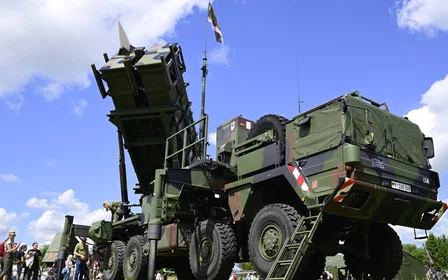
The Associated Press also reported a "beyond critical" shortage of advanced missile interceptors, especially Patriots, which have been used to shoot down Russian ballistic missiles in the war with US-backed Ukraine.
Middle East Eye delivers independent and unrivalled coverage and analysis of the Middle East, North Africa and beyond. To learn more about republishing this content and the associated fees, please fill out this form. More about MEE can be found here.