‘No reshape’: Algeria prepares for elections but few hold out hope for change

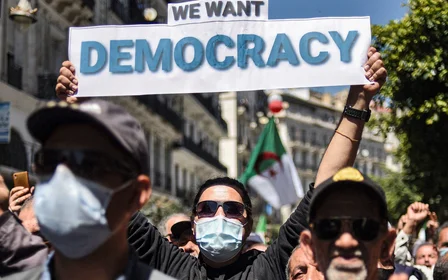
As Algeria prepares to hold parliamentary elections next month, there is scant hope that these could mark a new political opening, seven years after the derailed pro-democracy Hirak protests.
On 2 July, Algerians will be called upon to elect the 407 members of the National People's Assembly (APN) for a five-year term.
The last legislative election in 2021 saw a record abstention rate: only 23 percent of eligible voters participated, according to official figures, while the vote was also boycotted by most opposition parties.
One of the major challenges facing the authorities today is reversing this trend.
“A figure above 35 percent would be presented as a sign of political normalisation after the turmoil of the Hirak. A figure below 20 percent would be a scathing rebuke,” an Algerian official told Middle East Eye.
New MEE newsletter: Jerusalem Dispatch
Sign up to get the latest insights and analysis on Israel-Palestine, alongside Turkey Unpacked and other MEE newsletters
The Hirak was the widespread popular uprising that led to the downfall of long-time autocrat Abdelaziz Bouteflika in 2019.
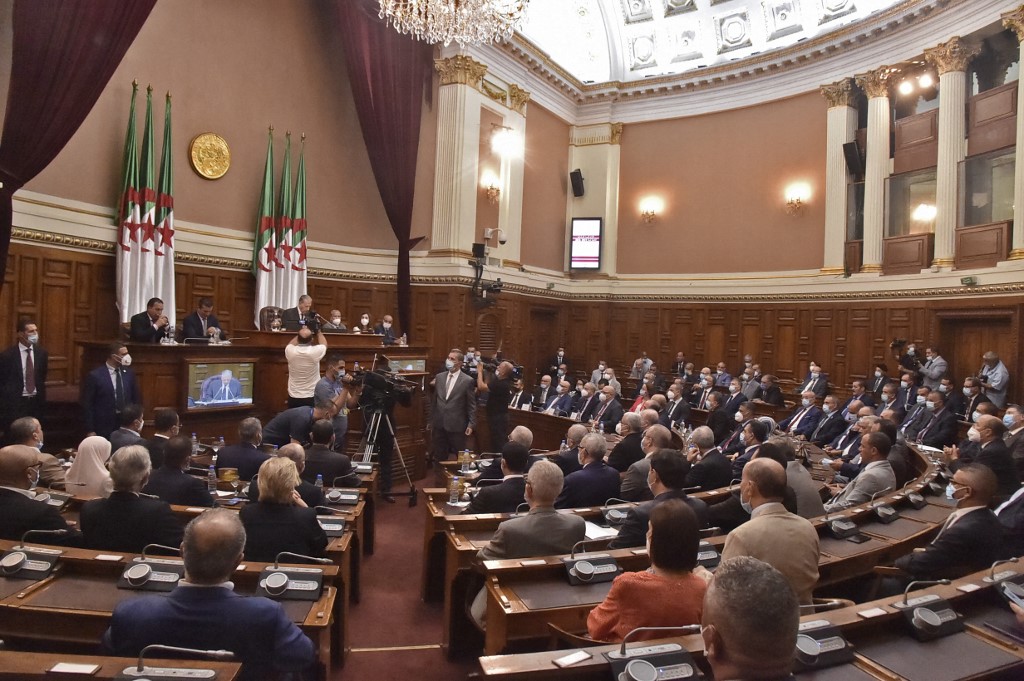
Now, the challenge to encourage greater voter turnout promises to be difficult, as parliament is widely seen in Algeria as a mere “rubber stamp” for government decisions, and generates little public interest in the election of its members.
‘Through the legislative elections, the Algerian regime wants to project the image of a democratic, pluralistic state’
- Ali Boukhlef, Algerian journalist
The national assembly, which will be holding its 10th elections since the North African country’s independence from French colonisation, has always been dominated by parties traditionally linked to the establishment.
The National Liberation Front (FLN), the former single ruling party that emerged from the war of independence against France, controls over a quarter of the outgoing assembly, with 105 out of 407 seats.
It is followed by the Movement of Society for Peace (MSP), an offshoot of the Muslim Brotherhood, with 64 elected members, and the National Democratic Rally (RND), established in 1997 by government officials to support the ruling elite, which holds 57 seats.
The upcoming election also comes at a time when the state is seen as strengthening its authoritarian nature, with the adoption of a series of laws that increase the president's powers and further tighten control over political life.
This resulted in the invalidation of hundreds of candidacies before the vote.
‘Challenge it from within’
"Through the legislative elections, the Algerian regime wants to project the image of a democratic, pluralistic state," Algerian journalist Ali Boukhlef told MEE.
In a country where voter abstention is seen as the only real issue in electoral life, the authorities are “counting on a decent turnout to legitimise an election that is widely seen as already tilted in favour of the ruling parties, the RND and the FLN,” he added.
Researcher Nacer Djabi, a former professor of sociology at the University of Algiers 2, told MEE that apart from party activists and their families, “the average citizen has long been disinterested in this type of election, a trend that has only intensified since the end of the Hirak protests.
“The situation is all the more critical [due to the fact] that the legislative body is controlled by the authorities and is completely subservient to the executive branch,” he added.

In this context, the authorities hope that the return to the election race of parties that boycotted the 2021 vote might generate at least some degree of interest among voters.
The Socialist Forces Front (FFS), the Trotskyist-inspired Workers' Party (PT), and the centre-left Rally for Culture and Democracy (RCD) have all announced their participation in the elections, after boycotting them in 2021.
They are, however, aware of the biases inherent in an election held in such a context.
‘Leaving the field vacant is essentially giving full rein to the forces that perpetuate authoritarian and clientelist practices’
– Atmane Mazouz, president of the Rally for Culture and Democracy
Since the brief period of democratic change begun in February 2019 by the Hirak, political parties, journalists and activists have complained of a complete closure of the political and media sphere.
Algerian authorities have been accused by NGOs of restricting rights and resorting to arbitrary arrests, unfair trials and travel bans to punish peaceful opponents.
The activities of political parties have also been obstructed, including through the suspension of several, such as the Democratic and Social Movement (MDS) since 2023, and the Socialist Workers' Party (PST) since 2022.
More recently, in May 2025, the authorities also refused to authorise an RCD rally in Algiers, as well as the party's conference in Bejaia in October, without providing any reason. Meanwhile, Fethi Ghares, coordinator of the MDS, was arrested in September for "insulting" the president and sentenced to two years in prison.
For the once-boycotting opposition parties, their return to the electoral process reflects a kind of exhaustion of the empty chair policy, but also the conviction that their prolonged absence from the institutional arena has only weakened them in the face of the ruling parties' juggernaut.
"It is clear that these legislative elections are taking place in a context of persistent political closure," Atmane Mazouz, president of the RCD, told MEE.
"However, leaving the field vacant is essentially giving full rein to the forces that perpetuate authoritarian and clientelist practices. Participating means refusing this abdication. It also means giving political expression to the democratic aspirations that have been expressed massively in recent years, but which remain without institutional outlets," he said.
“In short, we find ourselves in a paradoxical situation: participating in a process we criticise, not to endorse it, but to challenge it from within. It’s a demanding, sometimes uncomfortable, but consistent approach with the history and principles of the RCD,” Mazouz added.
This view is shared by many political actors.
“The problem lies in a political environment that remains insufficiently open: a lack of spaces for debate, weak channels of expression and an opacity that fuels distrust,” Zouheir Rouis, vice-president of the centre-left opposition party Jil Jadid (New Generation), told MEE.
“Under these conditions, it’s difficult to speak of a fully dynamic political life.”
The assessment of the MSP, a moderate opposition party that has always played along with the electoral process, is more tempered.
MSP MP Abdelouahab Yagoubi told MEE: “Of course, like any political actor, and even more so in the opposition, including as members of parliament, we face real constraints, various difficulties, and sometimes pressures, whether organisational or related to the general context.
“However, the national political situation calls for a nuanced interpretation: while limitations exist, dynamics of change are also at work,” he added.
New laws expand state control
Three laws adopted ahead of the elections have, however, reinforced fears of increased state control over political life in Algeria, and particularly over elections.
On 9 March, a new law was adopted that has been accused of strengthening the government’s control over political parties.
‘There will be no fundamental upheaval in the balance of power and influence within the Algerian political system’
- Lachemot Amar, journalist and researcher
Presented as a modernisation of the legal framework, the law tightens the rules for the creation and operation of parties, limits the terms of their leaders, mandates their participation in elections and raises the thresholds for territorial representation.
On 25 March, a constitutional amendment – officially presented as a mere “technical” update – significantly curtailed the powers of the Independent National Electoral Authority (Anie). Created after the Hirak to remove election management from the interior ministry, it has now been stripped of key prerogatives, with responsibility for preparing elections handed back to that ministry.
The law also expands the powers of the head of state and strengthens the stability of his loyalists, notably by doubling the term of the president of the Senate, the upper house of parliament. It also introduces a minimum level of education for presidential candidates, further restricting access to grassroots candidacies.
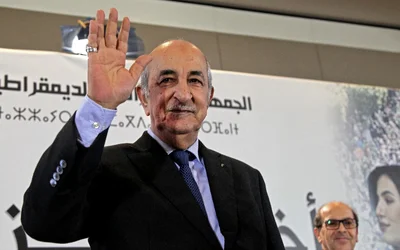
Finally, on 2 April, an electoral reform was adopted, also presented as purely technical, which further strengthened President Abdelmadjid Tebboune's power while giving the administration greater weight in the electoral process.
"Since the introduction of political pluralism, the current regime has been working to establish rules that frame the political landscape and dictate its pace and limits," journalist and researcher Lachemot Amar told MEE, referring to the end of the single-party system in 1989 after more than 25 years of FLN monopoly.
“Despite a carefully calibrated margin of freedom allowing for some diversity in parliament among different political currents, domination will remain in the hands of the system’s functional parties," he added, referring to those that operate within the framework imposed by the authorities.
"There will be no fundamental upheaval in the balance of power and influence within the Algerian political system," Amar added.
Several indicators support this analysis, he said, "especially the return of the administration to a direct role in monitoring the electoral process, showing a clear desire to control the results and their consequences".
‘Filtering practices’
From the start of the campaign, opposition parties have complained of various complications, while contenders have denounced rejections of candidacies by the Anie under Article 200 of the new law on political parties, judging these to be arbitrary.
Earlier this week, the body announced that it had disqualified 3,174 candidates out of a total of 10,168.
“We are facing difficulties,” said Zouheir Rouis, vice-president of Jil Jadid. "They are not unique to our party, but stem from a broader environment: limited access to spaces for expression, difficulty in structuring a political platform in a context marked by distrust, and administrative and political constraints that weigh on party work."
The RCD also denounced a series of difficulties in a press release, as did the PT, which notably expressed concerns about the phase of collecting the required number of sponsorship signatures mandated by electoral law.
‘We are facing difficulties. They are not unique to our party, but stem from a broader environment’
– Zouheir Rouis, vice-president of Jil Jadid
“The administrative obstacles to legalising sponsorships, the blockages observed in several [municipalities], the lack of neutrality of certain institutions supposed to oversee the electoral process… all of this confirms that the system continues to tightly control access to the competition,” Mazouz told MEE.
“We are not dealing with isolated malfunctions, but with recurring practices aimed at filtering candidacies and limiting the expression of truly independent forces,” the RCD chairman added.
These practices were particularly visible during the September 2024 presidential election, which led to Tebboune’s re-election for a second term against two competitors seen as mere “guarantors” of a facade of democracy, while the outcome of the vote was deemed by many to be a foregone conclusion.
Boukhlef points out that "these difficulties began many months ago, as all spaces remain closed to opposition parties" – citing the lack of debate and media coverage of opposition parties' activities, with very few exceptions.
"Even after the election date was announced, these parties have remained banned from public media," he said.
"Added to this are difficulties with the administration, which will obviously benefit the ruling parties, who have the support of the media and the administration.
"The political landscape will therefore not be reshaped, but it will allow the ruling parties, the RND and the FLN, to maintain their advantages."
Middle East Eye delivers independent and unrivalled coverage and analysis of the Middle East, North Africa and beyond. To learn more about republishing this content and the associated fees, please fill out this form. More about MEE can be found here.