Turkey says its soldier killed by Assad forces in Syria’s Idlib

Forces of Syrian President Bashar al-Assad reportedly killed a Turkish soldier and injured three others after attacking their observation post in Syria’s northwestern city of Idlib, Turkey’s Defence Ministry said late on Thursday.
The ministry said the attacks were judged to have been deliberate, and that Turkish forces retaliated by opening fire on positions controlled by the Syrian government, from which the first attack was launched.
The wounded soldiers are currently receiving treatment, the statement added.

Syria's state-run Ikhbariyah TV said on Friday that the Syrian army responded after more than 18 shells targeted government territory in the northwest Hama countryside.
The ministry said Russia’s Ankara attaché was summoned and told that the attacks will be “punished in the strongest way”.
New MEE newsletter: Jerusalem Dispatch
Sign up to get the latest insights and analysis on Israel-Palestine, alongside Turkey Unpacked and other MEE newsletters
According to Turkish pro-government news outlet Daily Sabah, the attack was the sixth near the same observation post since late April.
Russia and Turkey co-sponsored a de-escalation agreement for Idlib last year, but the accord has faltered in recent months, forcing hundreds of thousands of civilians to flee.
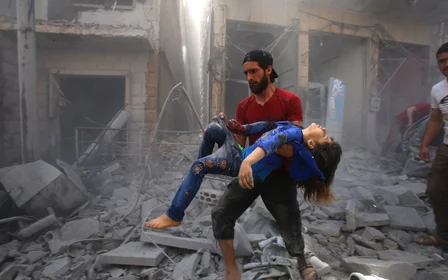
Assad forces and its Russian allies have stepped up their assaults on the rebel-held enclave over the past month, killing hundreds of civilians and displacing hundreds of thousands.
The assaults have systematically targeted civilian areas, including 33 medical facilities and 77 schools since late April, the Syrian Network for Human Rights activist group told Middle East Eye.
Earlier this week, senior European Union officials warned that the rise in hostilities in the Idlib and northern Hama over the past month have caused an estimated 160 civilian casualties and the further displacement of over 200,000 people.
The SNHR and Syrian Observatory of Human Rights put the civilian death toll at more than 500 since late April.
Middle East Eye delivers independent and unrivalled coverage and analysis of the Middle East, North Africa and beyond. To learn more about republishing this content and the associated fees, please fill out this form. More about MEE can be found here.