'From outlier to trailblazer': How Oman offers a glimpse into the post-war Gulf

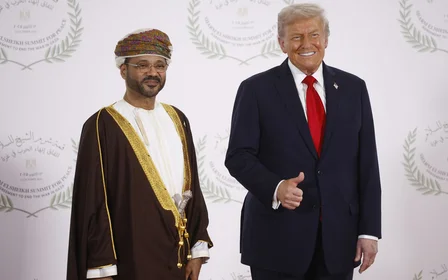
US President Donald Trump threatened to attack just one Arab Gulf country during the war on Iran: Oman. Now, it is emerging as the biggest winner from a new Middle East order being hashed out by the US and the Islamic Republic.
That assessment may seem counterintuitive at first glance, but due to its geography, business acumen, and Tehran’s newly demonstrated heft in the region, western, Arab, and even some US diplomats see the new order unfurling with Oman on top.
Oman’s rapid turn of fortune also underscores a bigger shift in the Middle East, some analysts say.
In the war’s early days, when other Gulf states opened their military bases to the US and joined the attack on Iran, Oman was called an outlier among its neighbours because of its criticism of the US and its reluctance to enter the fray.
But Muscat's decision has been vindicated by a ceasefire that is widely viewed as a victory for Iran in the Gulf.
New MEE newsletter: Jerusalem Dispatch
Sign up to get the latest insights and analysis on Israel-Palestine, alongside Turkey Unpacked and other MEE newsletters
“Oman’s position, which was always conciliatory to Iran, has now become the approach of other Gulf countries,” Bernard Haykel, a scholar of Middle Eastern studies and professor at Princeton University, told Middle East Eye.
'Let Iran control the narrative'
Oman is the US’s oldest treaty partner in the Gulf, going back to 1833. Trump’s threat to “blow them up” stemmed from anger that Oman did not renounce Iran’s call to join it in charging a toll in the Strait of Hormuz, a US official told MEE.
Trump’s outburst left US diplomats scrambling to preserve ties, while pressing Oman, unsuccessfully, to issue a statement denouncing Iran’s claims about a toll, Arab and US officials told MEE.
'Oman’s position has now become the approach of other Gulf countries'
- Bernard Haykel, professor at Princeton University
Omani officials never took the bait and insisted that they valued the US relationship, but the diplomatic cleanup was described as “stressful” by one US official.
The US ambassador in Oman didn’t respond to MEE’s requests for comment.
“Oman let Iran control the narrative,” a US official familiar with the feud told MEE. “They didn’t confirm or deny Iran’s language. The Omanis played it too coy. It pissed Trump off."
Oman also got some tough love from its Gulf neighbours. In April, Muscat was notably absent from a Gulf Cooperation Council meeting in Jeddah. Its official reason - that it couldn’t send a foreign minister to the wartime conference in time - was met with scepticism in western and Arab capitals.
Kuwait, Bahrain, Saudi Arabia, and the UAE were frustrated that Oman did not condemn Iran’s missile and drone strikes on their countries, Gulf and US officials told MEE.
Instead, Omani Foreign Minister Sayyid Badr Albusaidi said the US had “lost control of its own foreign policy” to Israel, and that Iran’s strikes on Gulf states hosting US military bases were ”inevitable”.
Fast-forward a few months, and those same Gulf states are trying to mend fences with Iran, which expects sanctions relief in any peace deal with the US.
Despite the Trump administration’s claims, Iran’s military capabilities also remain largely intact.
Arab Gulf moves from accommodating Israel to Iran
Saudi Arabian Crown Prince Mohammed bin Salman, who has spoken weekly with Trump amid the war, walked a fine line between supporting the US’s offensive and advancing negotiations via Riyadh’s close ally, Pakistan, US and Arab officials told MEE.
A western official and Arab official told MEE that Kuwait has sent signals to Iran that it is prepared to pay for transit through the Strait of Hormuz. Kuwait, which is home to over 13,000 US troops, was pummelled by Iranian strikes until a few days before the ceasefire was extended.
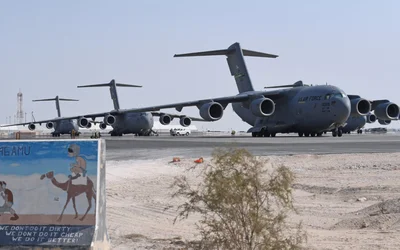
But the biggest surprise has been the UAE, which staked out the most hawkish position on Iran. The UAE not only launched dozens of strikes on the Islamic Republic, but tried to prevent Pakistan from mediating between Tehran and Washington.
Reuters reported on Friday that the UAE agreed to pay Iran billions of dollars to stop attacking it.
Emirati national security advisor Sheikh Tahnoun bin Zayed al-Nahyan even hosted Islamic Revolutionary Guard Corps officials at his guesthouse to cut the deal. The UAE denied it, but it has stuck with analysts and officials in the region.
“Before the war, the central question for the region was still the extent of Gulf-Israel normalisation. Now the central question is the extent of Gulf accommodation with Iran,” Fawaz Gerges, a Middle East expert at the London School of Economics and Political Science (LSE), told MEE.
“The Gulf states don’t like or trust Iran, but their security and economic interests require it. Oman was the trailblazer. Gulf states are copying what Oman has done,” he said.
Oman's 'huge say' in Hormuz strait
Oman has always positioned itself as a mediator. It helped broker the 2015 nuclear deal between the US and Iran. Likewise, Muscat served as the US’s backchannel to the Houthis in Yemen after Trump’s failed military campaign in the Red Sea. It also was famously hosting talks between the US and Iran when the US decided to launch its war against Iran on 28 February.
When asked by MEE why Oman did not flat-out refuse to consider charging a toll or fee in the Street of Hormuz, one Omani official said it was to preserve Muscat’s ability to serve as a mediator.
A US official told MEE that Washington was aware Muscat faced constraints. “Oman is the one Gulf country without a real air defence system,” the official said.
Oman emerged relatively unscathed from the war, suffering minimal strikes.
Still, the idea of exerting sovereignty in the Strait of Hormuz has appealed to many in Oman.
“Oman has no objection to international commercial vessels navigating through the Iranian side of the Strait of Hormuz. However, if geopolitical or security circumstances require vessels to alter course and transit through Oman’s territorial waters, Oman has a sovereign responsibility to ensure that such passage is safe, orderly, and environmentally responsible,” Zakaria al-Muharrmi, an Omani commentator, wrote on X, in response to a US threat to sanction Oman if it engaged in tolling.
“Under the UN Convention on the Law of the Sea, coastal states may also impose charges for specific services rendered to passing vessels,” he added.
US Vice President JD Vance said on Monday that during the 60-day ceasefire extension, no tolls would be charged for transit through the Strait of Hormuz. But the two sides are expected to wrestle over the matter during upcoming "technical negotiations".
According to the United Nations Convention on the Law of the Sea (UNCLOS), countries can stake a claim up to 12 nautical miles for their territorial waters. The Strait of Hormuz is just 21 nautical miles wide at its narrowest point. Oman and Iran are its only two littoral states.
Legal experts tell MEE that there are plenty of examples Iran and Oman could cite to charge “piloting fees” or “fees for service” in the waterway.
“Oman, in a way, is a winner,” Haykel, at Princeton University, told MEE. "Whatever set of arrangements are made for Hormuz going forward, Oman will have a huge say. It will get ratification of its partial control over Hormuz.”
Oman reaps financial gains
But Oman’s gains extend far beyond any fee in the Strait of Hormuz.
“Oman is a major economic beneficiary of what has happened,” Gerges, at LSE, told MEE.
'Oman has become even more strategically significant in the region because of this war'
- Anna Jacobs, European Institute of Peace
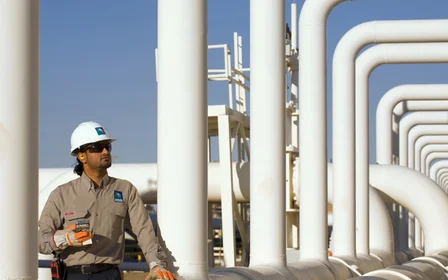
Oman’s government saw a 13 percent bump in revenue during the war, mainly as a result of oil and gas exports. Oman’s Mina al-Fahal terminal - which handles the bulk of the country’s crude exports -sits well outside the Strait of Hormuz. It is also a top ten global exporter of liquefied natural gas.
Although it's a small oil and gas exporter compared to its Gulf neighbours, Oman has invested heavily in fertilisers, the main components of which, ammonia and urea, are created using natural gas.
“Because of our geography and diplomacy, Oman was able to be a responsible provider of energy and contribute to food security,” an Omani official told MEE.
“I think our tourism sector will also bounce back faster,” the official added.
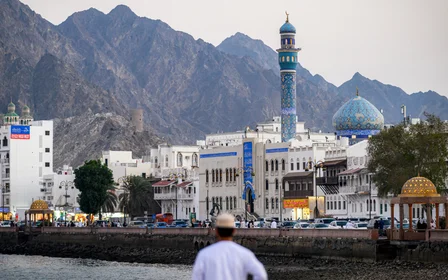
Oman hasn’t chased flashy developments like Dubai's, but in recent years has pitched itself to a more laid-back, wealthy crowd. Some Gulf diplomats noted that Trump’s threat to “blow up” Oman would have put a golf resort his family licensed their name to in the crossfire.
But Oman’s strategic advantage moving forward rests with its ports providing Arabian Sea access, analysts and officials say.
Omani ports set for post-war boom
“Oman has become even more strategically significant in the region because of this war,” Anna Jacobs, a non-resident fellow at the Arab Gulf States Institute, told MEE.
Oman’s two main ports experienced an unprecedented surge in traffic during the war. Sohar port saw a 1,766 percent surge in ship destination change requests in March, while Salalah saw an 800 percent increase, according to maritime intelligence firm Windward.
'The easiest southern outlet to the Arabian Sea for Saudi or Kuwaiti crude is Oman'
- Bernard Haykel, professor at Princeton University
Regardless of whether Iran is able to extract a toll in the Strait of Hormuz, current and former Arab and US diplomats say that Iran has demonstrated its veto power over the waterway. As a result, the Gulf states are exploring pipelines, highways and railways to bypass the chokepoint.
Despite the UAE’s uneasiness over Oman’s approach to Iran, the two neighbours are powering ahead with a railroad connecting the Emirates to Oman’s port of Sohar. Oman said in April the project was 40 percent complete.
A senior official at Kuwait’s Petroleum Corp said this month that the company was in talks with Oman about building oil storage facilities. Back in 2021, Saudi Arabia even considered building a pipeline through Oman.
“The Gulf countries are all going to think of infrastructure projects to circumvent Hormuz. The easiest southern outlet to the Arabian Sea for Saudi or Kuwaiti crude is Oman,” Haykel said.
The Trump administration still appears sour at Oman, the one Gulf state that thoroughly rebuffed the US-Israeli war on Iran. On Monday, a US official speaking to members of the press characterised Oman as “very duplicitous and almost like employees of the Iranians”.
The remarks came as members of the Trump administration mobilised to characterise the ceasefire extension as a win. Oman led efforts to mediate between the US and Iran before the US and Israel attacked in February. Qatar and Pakistan took the lead negotiating this time. “We kind of threw them, [Oman], out of this process,” the US official added.
“I imagine even if Iran appreciates working with Qatar when it comes to mediating with the US, it's hard to have that much trust when Qatar hosts such extensive US military infrastructure,” Jacobs, at the Arab Gulf States Institute, told MEE.
“Washington can be angry with them all they want for now, but they will need Muscat again sooner or later,” she said.
Middle East Eye delivers independent and unrivalled coverage and analysis of the Middle East, North Africa and beyond. To learn more about republishing this content and the associated fees, please fill out this form. More about MEE can be found here.