Albania’s revolt: How Rama’s Kushner resort deal became a threat to his leadership

Shortly after Donald Trump’s election victory in 2024, Albania’s Prime Minister Edi Rama gave preliminary approval to a luxury resort project linked to the incoming US president’s son-in-law, Jared Kushner.
The project formed part of wider plans to develop the strategic island of Sazan and the nearby Zvernec coast, around the protected Narta wetlands.
On 30 December 2024, Rama’s Strategic Investments Committee granted Atlantic Incubation Partners LLC, the Kushner-linked company, strategic investor status for the €1.4bn Sazan resort.
The investment offered Rama access to the incoming Trump administration. Yet Rama’s pursuit of powerful international partners to hold on to power at home has become a focal point for demands that he leave office.
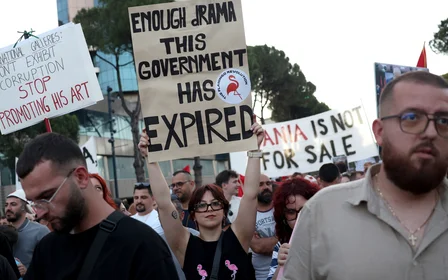
Opposition to the deal became emblematic of years of development deals that enriched the powerful while ordinary Albanians struggled with low wages, unemployment and pressure to emigrate. That anger has now found a target in both the ruling government and the opposition.
New MEE newsletter: Jerusalem Dispatch
Sign up to get the latest insights and analysis on Israel-Palestine, alongside Turkey Unpacked and other MEE newsletters
Ervin Salianji, a former Democratic Party MP, is scathing about his own party’s longstanding leader, Sali Berisha.
“These protests are aimed at not only the government but at the opposition Democratic Party leader Sali Berisha who has entered into a tacit alliance with Rama. These two now control who can run for elections in their respective parties, not the voters, while a handful of people get spectacularly rich,” says Salianji.
More than 600,000 people emigrated from Albania between 2011 and 2023. Low wages, rising living costs and limited job opportunities have left many struggling to build a future in the country.
Albania’s population now teeters at around 2.3 million, declining by roughly one percent a year.
As emigration drains the workforce, the government has increasingly relied on immigration from poorer countries to fill the gaps.
By June 2026, more than 22,000 foreigners mainly from India and the Philippines had been granted work permits in Albania, while the government does little to address voter concerns.
“People want to be involved in the decision-making of how the state is run,” says Salianji.
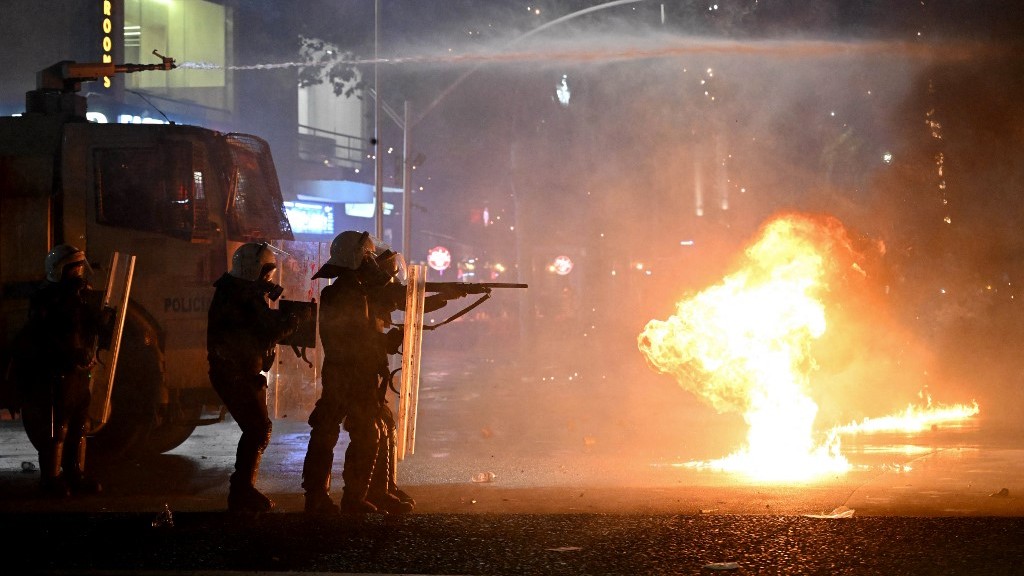

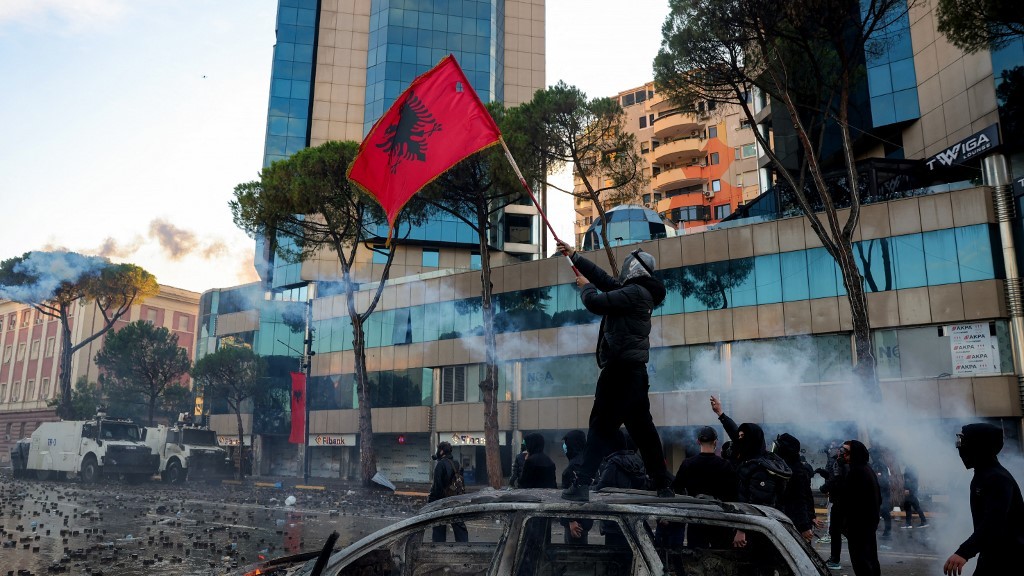
Local protests against the coastal development spread to daily demonstrations in Tirana at the end of May, drawing international attention, in no small part due to the corrupt deals around the world emanating from the White House.
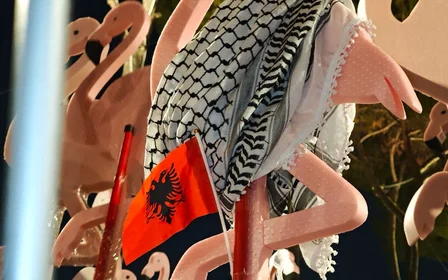
The movement became known as the “Flamingo Revolution”, referencing the birds inhabiting the wetlands threatened by the proposed development.
In October, students joined in force, protesting education costs, poor university conditions and limited opportunities. The movement has largely resisted organising around a single leader.
'The lack of leadership figures amongst the protesters is a good thing - the government doesn’t have a chance to buy someone off or threaten their family'
- Ervin Salianji, former MP
“The lack of leadership figures amongst the protesters is a good thing," Salianji says, adding: "The government doesn’t have a chance to buy someone off or threaten their family.
“If we had a leader to the movement they might be in jail now. This is an advantage at the moment. Rama now realises that he has few options to respond to the protest now.
"He has threatened students, teachers, and public officials who participate in the protests while offering police officer more than euro 2,000 bonus for their violence against the protests,” added Salianji.
For Fatos Lubonja, an Albanian writer and critic of both Rama and the opposition, the protests expose a deeper institutional collapse.
“There is a crisis of institutions and democracy,” he says.
“We don't have a healthy economy but a criminal economy and crime has captured the state,” Lubonja tells Middle East Eye from Tirana.
Lubonja spent 17 years as a political prisoner under Albania’s communist regime. He has remained an outspoken critic of the country’s authoritarian turn under Rama’s 13-year rule.
'Another Epstein island'
The resort controversy has unfolded alongside Rama’s increasingly public embrace of Israel and Kushner’s close friend, Prime Minister Benjamin Netanyahu, to leverage Israel’s hold over the Trump administration to secure Rama's position in Albania.
In April 2025, Israeli President Isaac Herzog awarded Rama the Presidential Medal of Honour in recognition of his support for Israel.
That month, Albania’s state-owned arms company Kayo signed a memorandum with Israeli arms manufacturer Elbit Systems to establish an aviation academy in Vlore. During a January 2026 visit to Israel, Rama promised even deeper cooperation in defence.
His government has also promoted the building of three Jewish museums in a country with little historic Jewish population, helping spur a growth in visitors from Israel.
Tourism links have expanded rapidly. Speaking in Tirana on 12 October, Israeli Foreign Minister Gideon Sa’ar said the number of Israeli visitors had reached around 100,000, a more than 500 percent increase over the same period in 2025.
The Kushner development has been likened to his vision of forcing redevelopment of Gaza irrespective of what the indigenous people of the land want.
Some protestors have called the development “another Epstein island” as a shorthand for the abuse of power by an elite that cares little about the impact they have on ordinary people.
“Unlike the communist regime which, by the end, was ready to give up power, and the West was ready to back Albania’s decision to become a democratic country, under Rama today, we are dealing with someone that wants to hold on to power and doesn't want to step down,” says Lubonja.
The European Commission has condemned arson, attacks on state institutions and the destruction of property, while welcoming the authorities’ commitment to protect the right to protest and praising Albania’s progress towards EU membership.
It has also demanded a lawful, proportionate response. The EU delegation earlier called for investigations into reports of excessive police violence against protesters and journalists.
The US embassy has urged peaceful demonstrations and restraint on all sides.
'The protests stand at a crossroads: either Edi Rama creates a police state or, with courage, a different Albania can emerge. The situation is frightening'
- Fatos Lubonja, writer
For protesters demanding Rama’s resignation, the escalation of protests in October follows months of peaceful mobilisation that failed to secure their demands: action against corruption, a transitional government and an end to Rama's rule.
Meanwhile, an ever increasing list of corruption investigations have reached senior figures in Albania’s political establishment.
Tirana Mayor Erion Veliaj has remained in detention since February 2025 in a case involving corruption and money-laundering charges, which he denies.
Former deputy prime minister Belinda Balluku faces corruption charges relating to public contracts worth more than €200m. She denies wrongdoing.
In September, a court placed intelligence chief Vlora Hyseni under house arrest and suspended her from office, following a request from the Special Prosecution Against Corruption and Organised Crime, known as SPAK.
Investigators suspect her of disclosing classified information with organised crime groups. Rama has denied that all the corruption cases against his allies have anything to do with him.
“The protests stand at a crossroads: either Edi Rama creates a police state, or with courage, a different Albania can emerge. The situation is frightening - democracies are also defended through blood,” says Lubonja.
Middle East Eye delivers independent and unrivalled coverage and analysis of the Middle East, North Africa and beyond. To learn more about republishing this content and the associated fees, please fill out this form. More about MEE can be found here.