Rubio says US will only provide sanctions relief to Iran in exchange for nuclear concessions

US Secretary of State Marco Rubio said on Tuesday that Iran would only receive sanctions relief if it surrenders its nuclear programme, brushing aside Tehran’s demands to obtain economic relief as part of a phased ceasefire.
"Iran is being sanctioned because they've highly enriched uranium. Iran is being sanctioned because of their nuclear activities; if they agree to give up those things, there will be sanctions relief,” Rubio told the Senate Foreign Relations Committee on Tuesday.
“They have to agree on negotiating severe and long-term limitations and/or cancellation of enrichment activity,” he said.
Rubio said that Iran was now negotiating over aspects of its nuclear programme that it had previously not considered, but did not provide any details. Iran said on Friday that “no negotiations" were taking place over its nuclear programme.
Rubio’s comments suggest the US is not close to releasing billions of dollars in frozen funds, which Tehran has requested to seal a ceasefire extension.
New MEE newsletter: Jerusalem Dispatch
Sign up to get the latest insights and analysis on Israel-Palestine, alongside Turkey Unpacked and other MEE newsletters
Ali Bagheri Kani, the deputy secretary of Iran’s Supreme National Security Council, insisted last week that the release of the funds was a “legal right” of the Iranian people. Iranian media reports have said that any ceasefire must include economic relief.
In his comments to US senators, Rubio also rejected Iranian efforts to enact a toll in the Strait of Hormuz.
Rubio rejects toll in Hormuz
"They have to announce very clearly, 'The straits are now open, we're not charging a toll’,” Rubio said. “We will help remove the mines that they put in there, and they will not fire on ships.”
He added that Iran has mined a large portion of the strait.
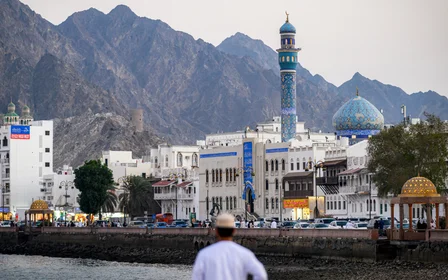
According to the United Nations Convention on the Law of the Sea, countries can stake a claim up to 12 nautical miles for their territorial waters. The Strait of Hormuz is just 21 nautical miles wide at its narrowest point and is shared by Oman and Iran.
Countries whose coasts border international straits are prohibited from restricting transit through their territorial waters or charging tolls.
But legal experts tell Middle East Eye there are plenty of examples Iran could use, from “piloting fees” to “fees for service”, in order to charge vessels if Oman cooperates.
Trump said at the beginning of the war that negotiations with Tehran were hamstrung because Washington did not know who was running the country.
Israel assassinated Supreme Leader Ayatollah Ali Khamenei in the opening salvos of the war and then killed senior officials who previously led talks with the West, like national security advisor Ali Larijani.
Iran's new supreme leader, Ayatollah Mojtaba Khamenei, was reported to have been severely wounded in an Israeli strike that killed most of his family. He has reportedly been communicating with Iranian negotiators by a circuitous messaging system.
He has not been seen in public since the war started and has communicated with Iranians through press statements.
Rubio said that the US believed the supreme leader was playing an increasing role in talks. "I think there are indications out there that he is increasingly engaging at some level,” he said.
Middle East Eye delivers independent and unrivalled coverage and analysis of the Middle East, North Africa and beyond. To learn more about republishing this content and the associated fees, please fill out this form. More about MEE can be found here.