In the shadow of Minab: Inside the US testing of 'new missiles' on Iran’s Lamerd

In Lamerd, in Iran’s southern Fars province, the threat of war gave way to reality when previously untested missiles struck a school, sports grounds and nearby neighbourhoods.
The attack came just six hours after the double-tap strikes on the Shajareh Tayyebeh school in Minab on 28 February, over 400km away in Hormozgan province, where 120 children, 24 staff, seven parents, a school bus driver and a pharmacist were killed.
Four missiles from a new weapon system, the Lockheed Martin Precision Strike Missile (PrSM), which had never before been seen or deployed, would be field-tested on the town of 30,000 people.
At 5.11pm (1.41pm GMT), the missiles struck a residential area where a row of homes adjoined a few neighbourhood shops.
Rounia Fakori, 12, was at volleyball practice when the first explosion shook the school building.
New MEE newsletter: Jerusalem Dispatch
Sign up to get the latest insights and analysis on Israel-Palestine, alongside Turkey Unpacked and other MEE newsletters
"We were in our practice when we heard the first impact. We rushed to the door," she recalled.
Then another missile struck, plunging the girls and their coaches into darkness as smoke and heat filled the sports hall. The force of the blast slammed the doors shut.
"We couldn't see anything," the girls’ volleyball coach, Rahimeh Shehabi, told Middle East Eye. "We could only hear the screams of the children."
As the missiles struck the school and sports hall, a football game was underway outside.
Eleven-year-old Mahdiar was playing with his friends, including 12-year-olds Ilya Khatami and Abdulmosavar Rahmani, when explosive shrapnel tore through the area.
According to Mahdiar, he and one of his friends ran towards the canopy, where their football coach, Mahmoud Najafi, called out: "Come here quickly, it's dangerous there."
Ilya and his coach then rushed towards the building to help open the door for the girls and women trapped inside as a fourth missile struck, rattling the sports hall.
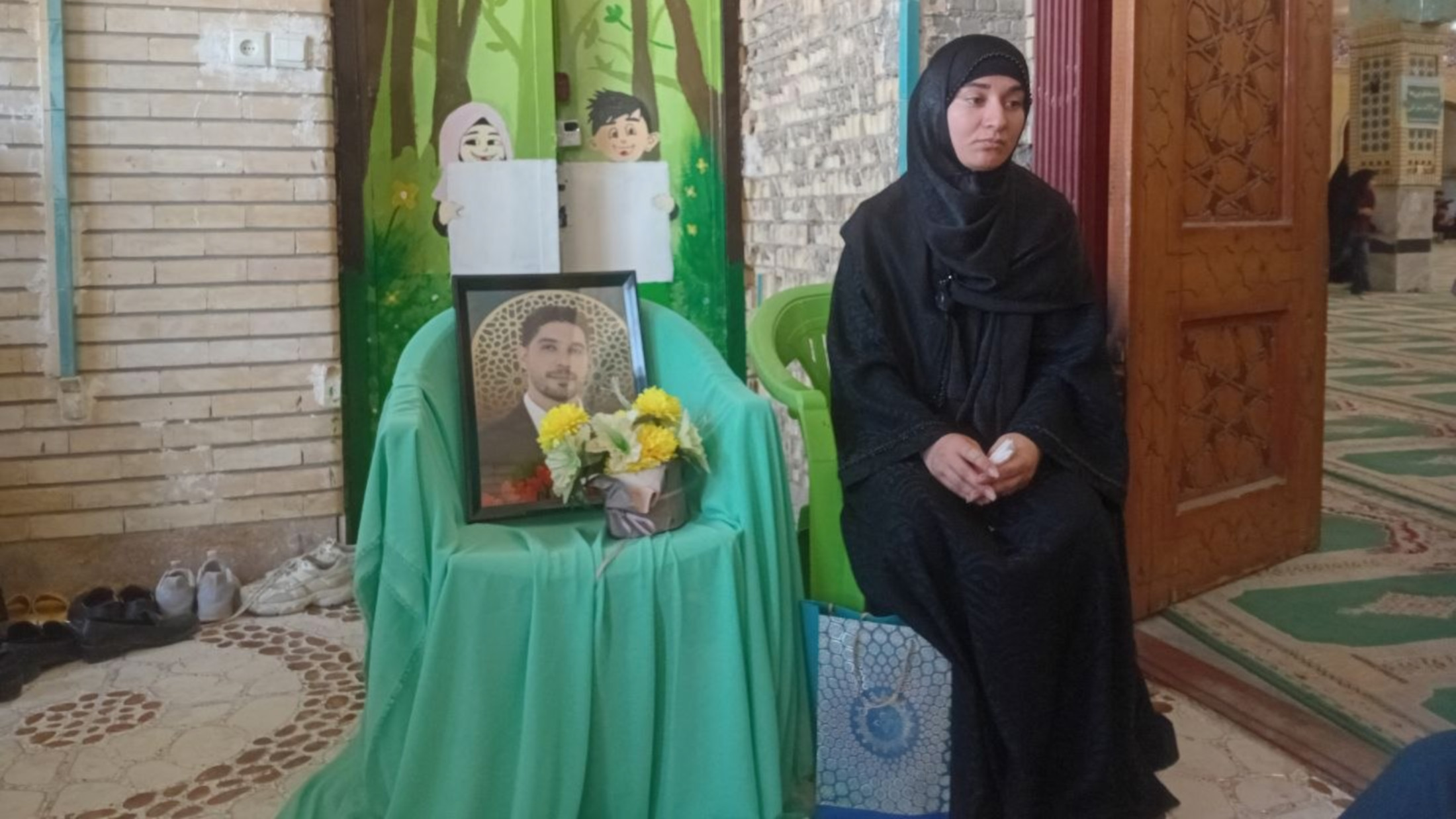

"The fourth missile hit here," Ilya's father, Mohammad Khatami, gesturing towards the collapsed corner of the gym, told MEE. "The force of the blast struck Ilya in the back of the head."
For Khatami, returning to the scene was emotionally difficult, though he took some solace in knowing that his son died while rushing to help those trapped inside. His coach was also killed.
"It is really painful for me," he said, "But I'm happy that my son was so responsible that he was with his coach, helping open the door for the girls."
Pulverised bones
Dr Moussa Mousavi, a local parliamentarian and practising surgeon, was among the doctors who operated on wounded children at the local hospital.
Mousavi described the US attack on Lamerd as a deliberate crime against children, pointing to self-congratulatory remarks posted by US Central Command (Centcom) days after the tragedy.
In a statement on social media, Centcom said: "In a historic first, long-range Precision Strike Missiles (PrSMs) were used in combat during Operation Epic Fury, providing an unrivalled deep strike capability."
Mousavi said that in all his years working as a surgeon through successive conflicts, including the 1980-88Iran-Iraq war, he had never encountered weapons like those used in the attack.
"These pellets are like bullets fired from a rifle," he said.
Emphasising their "high penetration rate", he said the shrapnel did not simply lodge in victims' bodies but tore through entire body parts - sometimes exploding inside organs or leaving patients paralysed.
One 15-year-old girl was left blind by the explosion. Another, known for her eloquence, survived the attack but can no longer speak. A third suffered catastrophic abdominal injuries, while another was left paralysed and bedridden after shrapnel tore through her body and into her spine.
Like the "butterfly bullets" used by the Israeli army against Palestinians, the pellets are designed not only to kill but to inflict mass, life-changing injuries. Several of the boys playing football suffered such devastating leg injuries that their muscles and bones were "completely pulverised", stripping them within seconds not only of their ability to play, but also to walk.
The attacks on Lamerd killed 21 people, including six children, and wounded more than 150.
The school sustained extensive damage just hours after classes had ended and, with the war having begun during Ramadan, less than an hour before iftar. Had the missiles struck earlier, the death toll could have been far higher.
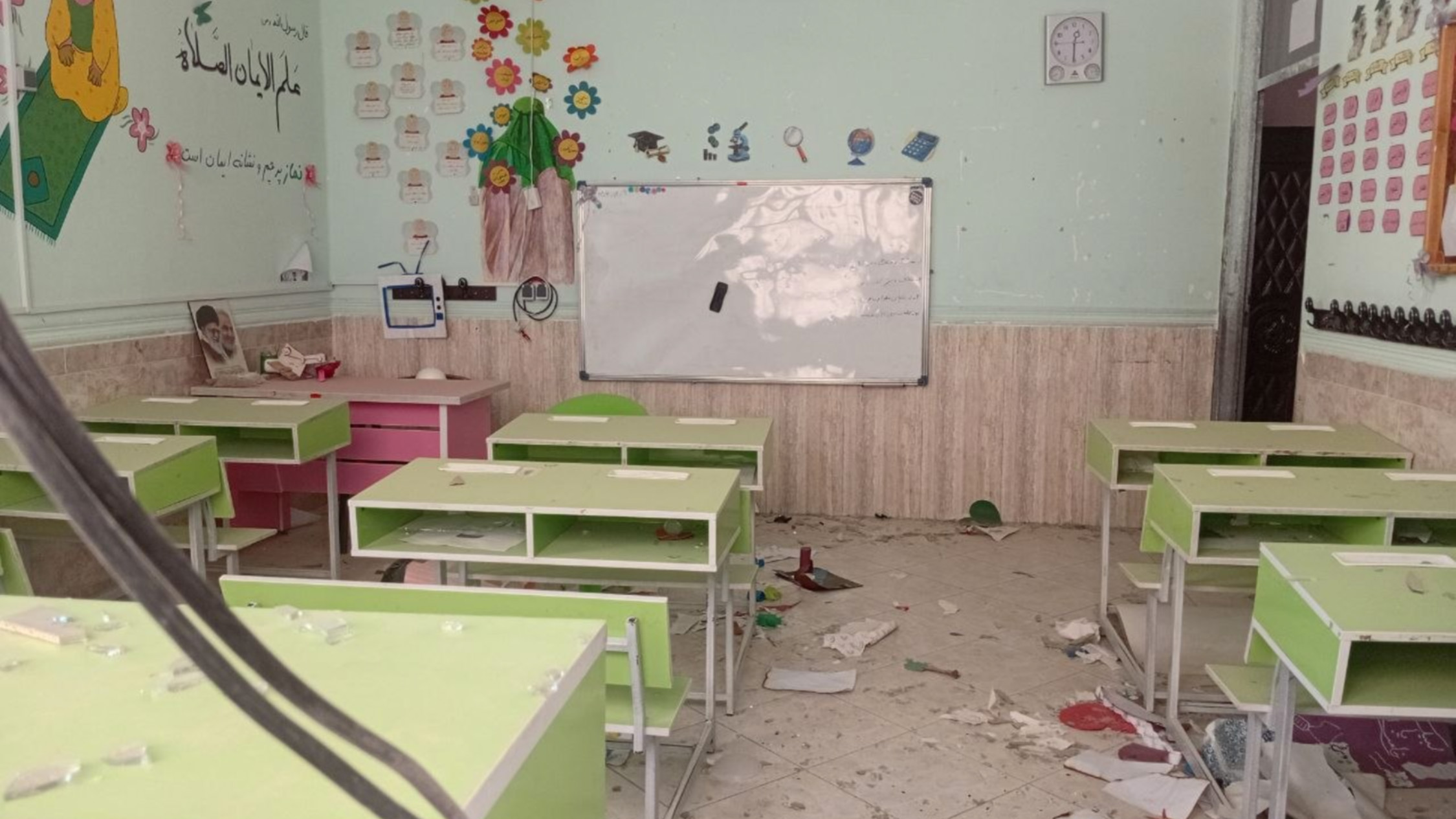
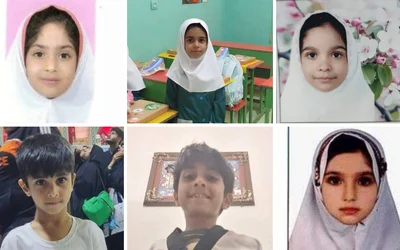
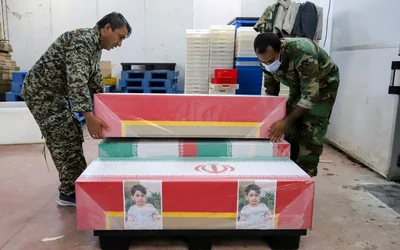
Four children were killed in the strike on the school: 10-year-old Helma Ahmadizadeh and 11-year-old Elham Zaeri, Rounia's teammates on the volleyball court; and Ilya Khatami and Abdulmosavar Rahmani, both 12, Mahdiar's teammates on the football pitch.
A 16-year-old girl, Zahra Gholami, was also killed by shrapnel elsewhere in the town.
The youngest victim was two-year-old Avina Bazingar, who was hit by shrapnel while playing in her yard. Mousavi operated on her for three hours as she lay with her pacifier still in her mouth.
She later died from her wounds.
"My daughter, a nurse, was praying and reciting the Quran in her yard, distressed by the massacre of children in Minab, when shrapnel from the PrSM missile explosions struck and killed her," the mother of one victim said.
Months after the attack, she said an "orange powder" still lingered in the home, "no matter how much we try to wash it off".
The weapon itself
On 31 March, Centcom issued an official denial of involvement in the attack, blaming the incident on a misfired Iranian Hoveyzeh cruise missile. It later said the US Army did not hit within a 48km radius of Lamerd.
Yet weeks earlier, on 4 March, Centcom had released a statement applauding the deployment of the same missile, just four days after the attack.
The statement also quoted Admiral Brad Cooper, the head of Centcom: "I just could not be prouder of our men and women in uniform leveraging innovation to create dilemmas for the enemy."
'We couldn't see anything. We could only hear the screams of the children'
- Rahimeh Shehabi, volleyball coach
The US also blamed Iran for the strikes on the Minab school, but later said it had launched an investigation into the attack.
Weeks later, the Trump administration said: "Several media outlets recently reported accusations of US forces striking a sports hall and residential area in the city of Lamerd, Iran, on Feb 28. After looking into the reports, US Central Command has confirmed the accusations are false."
MEE was among the first foreign media outlets to visit Lamerd after the attack and observed no apparent military targets at the sites that were struck.
Multiple witnesses and MEE’s own observations indicated that there was no Islamic Revolutionary Guard Corps base or other military site in the area.
No military casualties were reported among the dead and wounded, all of whom were civilians.
The US has described its strike capability as "surgical". However, in Lamerd, the impact was concentrated on civilian infrastructure, including the school and surrounding homes.
The PrSM, fielded in 2023, was designed to replace the Army Tactical Missile System, partly because of its more compact size. It has a similar range, at roughly 300 to 500km, though the US is developing variants that can exceed 1,000km.
The US depleted its stock of PrSM missiles in the early weeks of the war and is now investing heavily in expanding production of the system.
Each missile carries an estimated 180,000 tungsten pellets designed to disperse at high speed on detonation. Across the four missiles, around 720,000 tungsten pellets were dispersed over two neighbourhoods as the warheads detonated just above their targets.
For Lamerd’s total population, this would amount to an average of around 24 pellets per person.
'A football player'
A New York Times investigation, citing weapons experts, found that the pellet-like shrapnel and mid-air detonation pattern were more consistent with the PrSM than with the Hoveyzeh missile.
The impacts left concrete intersections peppered with holes, walls pierced and entire blocks marked by shrapnel damage.
Weapon systems such as the PrSM are designed to deliver high-impact strikes and cause extensive damage across wide target areas.
The sites of the heaviest damage included a storage unit on the school grounds, a classroom, the school gym, a hair salon and a travel agency opposite a shrapnel-ridden residential building. The pattern of destruction corresponded to ground-level structures beneath the airburst impacts, with no ground craters typically associated with conventional missile strikes.
Cars in the area were left riddled with shrapnel, twisted and burned out. One charred vehicle remains on display in the town. Near the damaged travel agency and salon, a wrecked truck still sits in the street, another marker of the scale of the destruction that day.
In Lamerd, despite the deep shock and pain of the tragedy, residents appear to have responded with collective resolve, coming together in acts of mutual support in its aftermath.
"Everyone was volunteering, asking: ‘What can we do to help others?’" one nurse told MEE, describing how people came to help clean the hospital, queue to donate blood and support those affected.
"This unity the Iranian people have doesn’t exist anywhere else," she said.
Rounia and Mahdiar were not deterred from returning to their favourite sports, with each expressing a desire to go back to the volleyball court and football pitch.
When asked what he hopes to be in the future, Mahdiar answered simply and enthusiastically: "A football player."
Middle East Eye delivers independent and unrivalled coverage and analysis of the Middle East, North Africa and beyond. To learn more about republishing this content and the associated fees, please fill out this form. More about MEE can be found here.