
Spain bans Israeli ministers Ben Gvir and Smotrich from country

Spain is barring Israeli National Security Minister Itamar Ben Gvir and Finance Minister Bezalel Smotrich from entering the country, Foreign Minister Jose Manuel Albares announced on Tuesday.
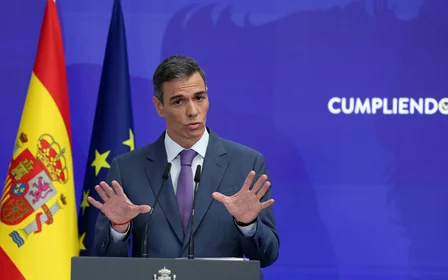
The decision comes a day after Spanish Prime Minister Pedro Sanchez declared nine measures which he said aimed at preventing Israel's genocide in Gaza.
The measures included a full arms embargo on Israel and the banning of the entry of Israeli officials suspected of involvement in the genocide.
Albares said that Ben Gvir and Smotrich will be added to the list of sanctioned Israelis, which already includes 13 Israeli settlers, and “will not be allowed to enter Spanish territory.”
They will also be included in the Schengen Information System, a large-scale European security and border management database.
New MEE newsletter: Jerusalem Dispatch
Sign up to get the latest insights and analysis on Israel-Palestine, alongside Turkey Unpacked and other MEE newsletters
"It is an open list in which we will add all those persons who demonstrate with their conduct or their statements that they want to make the two-state solution completely unfeasible," Albares said.
In response to the nine measures announced by Spain on Monday, the government of Israeli Prime Minister Benjamin Netanyahu decided to bar two Spanish ministers from Israel.
Subsequently, Spain said it recalled its ambassador in Israel, Ana Maria Salomon, for consultations.
On 10 June, the UK, Australia, Canada, New Zealand and Norway sanctioned Smotrich and Ben Gvir over "their repeated incitement of violence against Palestinian communities".
Middle East Eye has recently revealed that the chief prosecutor of the International Criminal Court in The Hague has prepared arrest warrant applications for Ben Gvir and Smotrich on charges of apartheid.
Nine measures
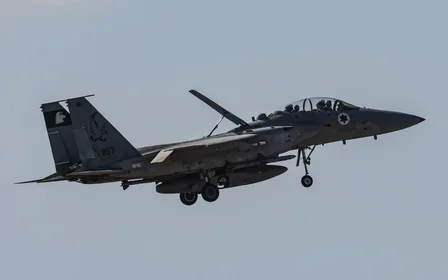
On Monday, Sanchez announced that his government will formalise and make permanent Spain’s embargo on the purchase and sale of weapons, ammunition and military equipment to Israel.
Although the embargo had been applied de facto since October 2023, Sanchez said the decree would remove any ambiguity after months of controversy and doubt.
Additional measures include banning ships carrying fuel for the Israeli army from docking in Spanish ports, and denying access to Spanish airspace for state aircraft transporting defence material bound for Israel.

He added that Spain would bar entry to individuals “directly involved in genocide, human rights violations and war crimes” in Gaza.
Madrid has also prohibited imports from Israeli settlements in the occupied West Bank and Gaza, while restricting consular services to Spanish citizens living in those settlements to a bare minimum.
On the humanitarian front, Sanchez pledged enhanced support for the Palestinian Authority, including a larger Spanish presence in the EU mission in Rafah and new cooperative projects.
As part of the nine measures, Spain will also contribute an additional €10 million to Unrwa, the UN agency for Palestinian refugees, and increase its overall humanitarian aid to Gaza to €150 million by 2026.
In response to Spain's announcement, Israel's Foreign Minister Gideon Saar criticised the measures as "antisemitic", while his government said it would bar left-wing Spanish Labour Minister Yolanda Diaz and Youth Minister Sira Rego from entering Israel.
The Spanish government immediately hit back at Saar's comments, rejecting the antisemitism accusations as "false and slanderous."
"The measures relating to the inhumane situation in Gaza and the West Bank, announced today by the President of the Spanish Government, reflect the majority opinion of Spanish society and are adopted within the framework of its sovereignty and in line with its defence of peace, human rights and international law," the government said in a statement.
Israel's genocide in Gaza since October 2023 has killed more than 64,500 Palestinians and wounded over 160,000, according to health authorities in Gaza.
Israeli military data shows that more than 80 percent of those killed are civilians.
Middle East Eye delivers independent and unrivalled coverage and analysis of the Middle East, North Africa and beyond. To learn more about republishing this content and the associated fees, please fill out this form. More about MEE can be found here.