Sudan's Rapid Support Forces: What to know about the paramilitary group

Sudan has been at war since April 2023.
This war, between the Sudanese Armed Forces (SAF) and the paramilitary Rapid Support Forces (RSF), has displaced about 14 million of the country's population of 51 million.
There are no official mortality figures, but aid agencies have told Middle East Eye that the death toll could be over 200,000.
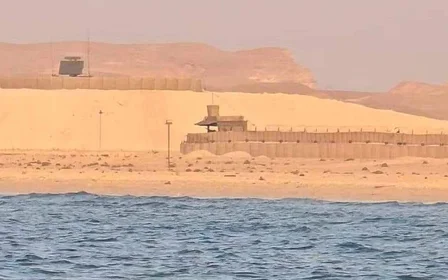
Before the war began, the RSF was part of the same military as the SAF. But the two entities had different sources of wealth and power - during the war, the RSF has relied on the support of the United Arab Emirates, which supplies the Sudanese paramilitary through routes that run through Somalia's Bosaso, Libya and Chad.
The army and the RSF also have different commanders.
New MEE newsletter: Jerusalem Dispatch
Sign up to get the latest insights and analysis on Israel-Palestine, alongside Turkey Unpacked and other MEE newsletters
The SAF is led by General Abdel Fattah al-Burhan, a veteran soldier who has become, since the war began, head of the army-backed Sudanese government, which is based in Port Sudan.
The head of the RSF is General Mohamed Hamdan Dagalo, known as Hemedti, whose family was originally from Chad but who came of age in Darfur, the vast western region of Sudan that has been beset by violence for most of the 21st century.
Hemedti received little formal education and as a young man in the 1990s was described as a "highwayman", though he has said he was a camel trader.
Omar al-Bashir and the Janjaweed
In 2003, the government of Omar al-Bashir, an autocrat who ruled Sudan from 1989 to 2019 with the backing of the country's military and its Muslim Brotherhood-affiliated Islamist movement, faced rebellions in Darfur from local people who felt excluded by Khartoum.
To quell these uprisings, Bashir deployed the Janjaweed, a collection of mostly Arab militias that were accused of committing war crimes such as extrajudicial killings, torture and rape, in a conflict that saw an estimated 2.5 million people displaced and 200,000 killed.
Hemedti, a Janjaweed commander, became important to Bashir, who would pronounce his name so that it translated as "my protection".

In 2013, faced with countrywide protests over the price of bread and government austerity measures, Bashir turned the Janjaweed into the Rapid Support Forces (RSF), placing the outfit under the control of the intelligence services.
Bashir used the RSF as his own personal militia, and to clamp down on dissent.
With the increasing prominence of the RSF and its involvement in Sudan's security affairs, Hemedti's business interests began to flourish with support from Bashir - the Dagalo family expanded into gold mining, livestock and infrastructure.
In addition to its military activities, the RSF also became involved in civilian affairs, including border control, law enforcement, and the collection of taxes and customs duties.
The RSF, the UAE and a revolution
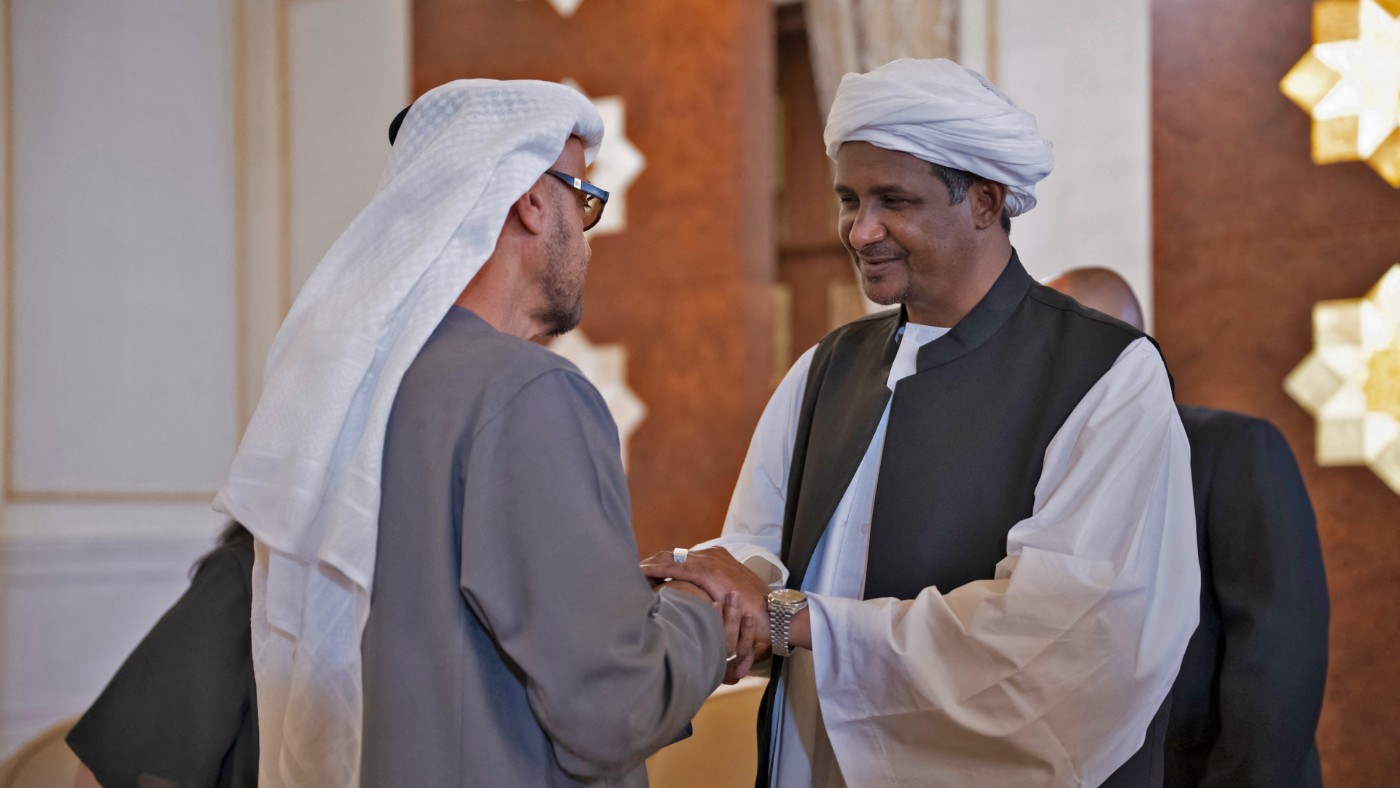
In 2016, when the United Arab Emirates needed fighters for the coalition it led alongside Saudi Arabia in Yemen's war, Hemedti and the RSF stepped up.
As many as 40,000 RSF fighters went to Yemen and Hemedti strengthened his own relationship with the UAE's ruling al-Nahyan family.
At the end of 2018, a democratic uprising began to sweep across Sudan. By April 2019, Bashir's time was up. Burhan and Hemedti told Bashir, who they had served for many years, that he needed to step down.
Burhan and Hemedti were then both part of a civilian-military transitional government that was supposed to lead Sudan back to democracy. In October 2021, both military commanders reneged on this deal, enacting a coup of their own.
But while the army's power and wealth came from Sudan's military industrial complex and its ties to other old institutions, including Egypt and its army, the RSF had sponsorship from the UAE, gold mines in Darfur, a network of companies - some of which are based in Dubai and Abu Dhabi - and at least 100,000 fighters.
By 2023, the US and Saudi Arabia were looking to wind up the military government in Sudan.
The future of the RSF was a crucial sticking point in negotiations. The paramilitary needed to be integrated into the military or dissolved completely. There was no agreement on how this would happen or how long it would take.
The Dagalo family, led by Hemedti and his brother Abdul-Rahim, saw no advantage in the elimination of their paramilitary force. They prepared to take on the army they had worked alongside.
War in Sudan
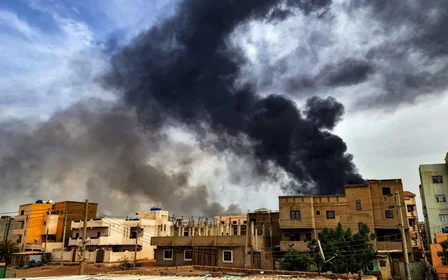
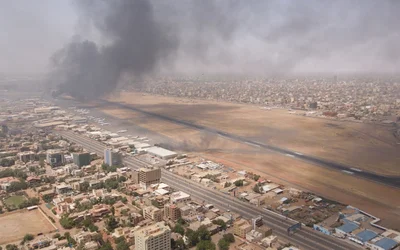
Since April 2023, the war that erupted between the RSF and the Sudanese army has seen the RSF take and lose the capital Khartoum and its twin cities, as well as other tracts of central and southern Sudan.
In el-Geneina, in West Darfur, dead bodies were left piling up on the streets because of a campaign of targeted killings carried out by the RSF. Aid workers in the city described collecting hundreds of dead bodies, and told MEE that the RSF had killed more than a thousand women and children.

The same thing happened in Nyala, South Darfur, where local civilians told MEE about mass killings, sexual violence, looting of homes, attacks on health facilities, destruction of telecommunication towers, and the suspension of water and electricity services by the RSF.
A later UN inquiry, published in October 2024, found that the RSF had been responsible for large-scale attacks involving sexual violence and gang rapes.
Months earlier, the Raoul Wallenberg Centre found that there was "clear and convincing evidence" that the RSF was committing genocide "against non-Arab groups" in Darfur.
At the beginning of 2025, the US government determined that the "members of the RSF and allied militias have committed genocide in Sudan", a conclusion that has been reached by many human rights groups.
While the UAE continues to deny that it supports the RSF, flight tracking data, satellite imagery, multiple diplomatic and Sudanese sources, and imagery of military cargo shows that its support has continued and even intensified in recent months.
In October, after more than 500 days of siege, el-Fasher, the capital of North Darfur, fell to the RSF. In the wake of this capture, civilians have been executed, sexually assaulted, detained and humiliated by RSF fighters, with reports of 2,000 killed in the first two days.
Middle East Eye delivers independent and unrivalled coverage and analysis of the Middle East, North Africa and beyond. To learn more about republishing this content and the associated fees, please fill out this form. More about MEE can be found here.