Syria's government begins to return Alawi lands, while maintaining its hold over others

Ahmed Ali says he was fired from his job as a Syrian civil servant in 2019 for refusing to do his mandatory military service.
“I refused to join the army and kill people,” Ali, who is using a pseudonym, told Middle East Eye.
After his dismissal, he decided to dedicate himself to his pistachio farm – 150 dunums (15 hectares) of trees in the northern Hama countryside that has been in the family for more than 50 years.
Before the 2011-2024 civil war broke out, Syria’s multimillion-dollar pistachio industry ranked fourth in the world.
During the conflict, northern Hama - the pistachio heartland - became the front line between the Syrian army and rebel factions.
New MEE newsletter: Jerusalem Dispatch
Sign up to get the latest insights and analysis on Israel-Palestine, alongside Turkey Unpacked and other MEE newsletters
Picturesque villages became hotspots for sectarian violence between Sunnis, the community that most rebels were drawn from, and Alawis, the sect that the former president, Bashar al-Assad, belongs to.
Thousands of Sunnis were displaced from their lands and cut off from their livelihoods by fighting and arbitrary arrests.
When a lightning rebel offensive removed Assad’s government in late 2024, many of those Sunnis were able to flock back to their villages.
'Our goal is to restore civil peace, and our thinking is that of a state and its institutions, not that of a faction'
- Hassan al-Hassan, deputy governor of Hama
Alawis, meanwhile, fled their land, fearing rebel factions would identify them with Assad and stage reprisal attacks.
When many Sunni pistachio farmers returned, they found their homes in ruins, land scarred, and trees uprooted.
As a result, they settled in the homes of their erstwhile Alawi neighbours.
“It took four or five months
“I couldn’t do anything about it, so I said he could stay in the hopes he would provide me with a share of my pistachio harvest.”
Instead, Ali discovered that his lands had been seized by the state, and his harvest taken by his neighbour and a company he had never heard of before: Iktifaa.
“When I went to Iktifaa to get my lands back, they claimed there were security studies saying I was a shabih [Assadist thug] who had committed crimes, without specifying what they were,” he says.
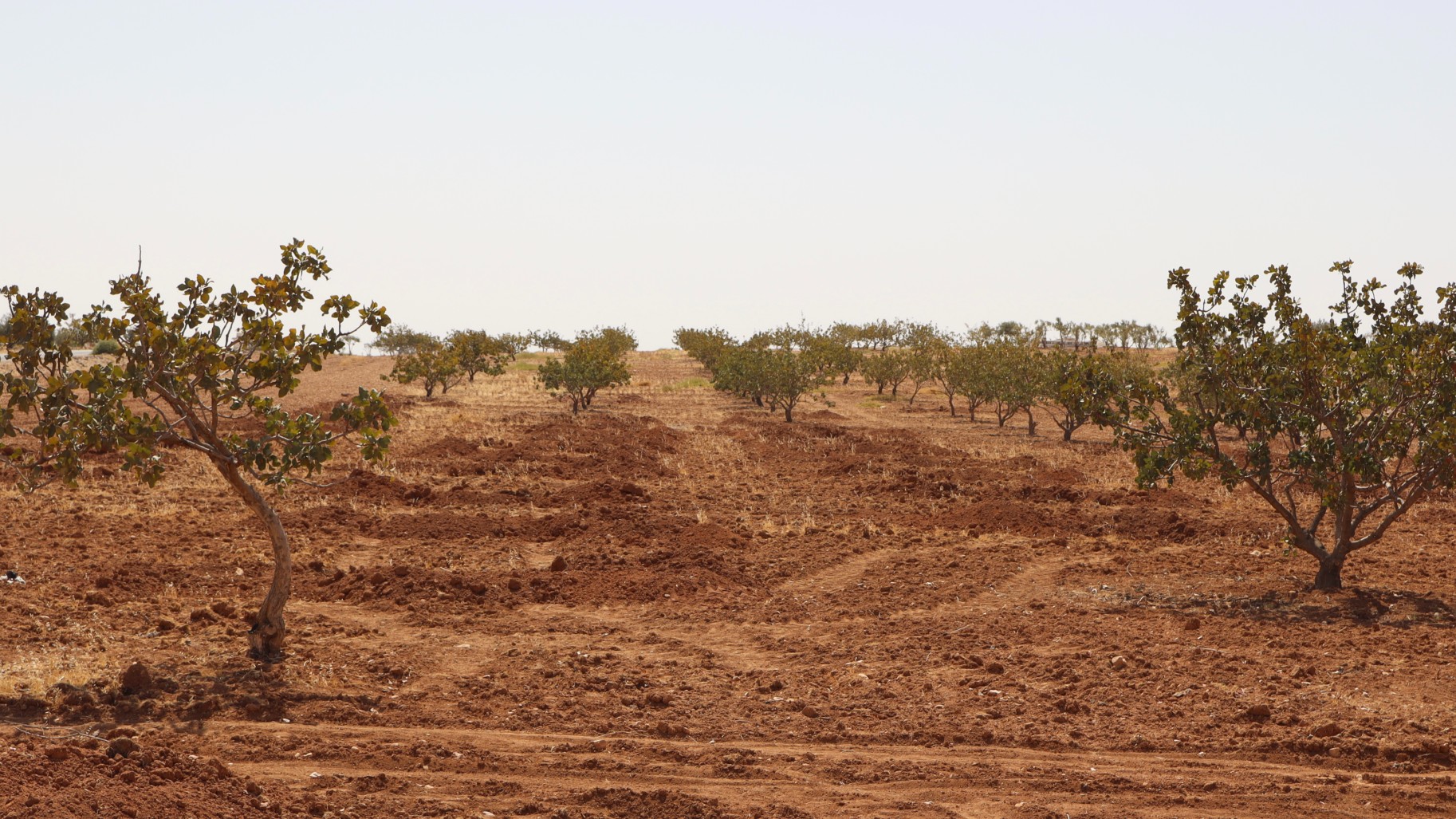

Iktifaa is a state-owned agricultural investment company headquartered in northwestern Idlib province with roughly 500 employees, Monzer Khattab, the head of the Hama and Homs branch, told Middle East Eye.
During the war, it managed land in opposition-held areas that was owned by Syrians who had been displaced, including Druze and Christians.
Today, Iktifaa is employing a similar strategy towards displaced Alawis.
While the state has restored property rights to many Alawis this year, thousands remain without access to their lands.
And with the pistachio harvest set to start in mid-June, many fear they will lose their livelihoods for the second year in a row.
The Idlib model
Founded in 2021, Iktifaa is a merger of two Idlib-based companies - Ghiras and al-Khadera - that operated in areas controlled by the Syrian Salvation Government (SSG).
The SSG was the governance body founded in 2017 to administer areas controlled by Hay’at Tahrir al-Sham (HTS), the rebel coalition that toppled Assad and was led by Ahmed al-Sharaa, who is now president.
Previously, Basel al-Suwaidan, Sharaa’s newly appointed agriculture minister, managed Iktifaa.
Today, the company is headed by Mohammed Hanouf, who, like Khattab, worked for previous iterations of the company in Idlib. It operates across all provinces with the exception of al-Hasakeh and Sweida.
In Idlib, Ghiras and al-Khadera, then Iktifaa, coordinated with the SSG’s economic committee to manage absentee lands.
These included the lands of displaced Druze and Christians, which were returned between 2020 and 2023 as HTS sought to repair its image among minority communities.
However, these landowners say they never received compensation for the prior use of their homes and lands, the revenues of which went to the SSG.

Today, the SSG’s economic committee has been replaced by the Illicit Gains Committee, a government body tasked with determining people’s affiliation with the Assad government and seizing their assets accordingly.
In recent months, the committee has concluded multimillion-dollar settlements with prominent businessmen affiliated with Assad.
The Illicit Gains Committee is overseen by Abraham Succarieh, a dual Lebanese-Australian national who is under western sanctions for terrorism financing.
Revenues from the committee’s work go to the state’s sovereign wealth fund. Independent of the court system, the committee’s legal basis remains in question, especially as pathways to appeal decisions remain opaque.
“There should be evidence - the previous regime was oppressive, we don’t want oppression again,” Ali says.
As time runs out, he is afraid he will lose this year’s harvest. Ali is neither able to cultivate his crop nor is he able to sell. When he tried to sell some of his lands in Hama in 2025, he found out he couldn’t because Iktifaa had blocked the property transfer.
Karim al-Khattib, the neighbour currently occupying Ali’s home and land, told MEE that last year’s harvest was worth around $4,000, 60 percent of which he received, with the rest going to Iktifaa.
Last year’s harvest was “weak due to the drought”, Khattib, also using a pseudonym, told MEE. In 2025, Syria witnessed its worst drought in decades.
Ali, however, estimates his losses from last year to be at least $50,000.
The neighbour has renewed the contract with Iktifaa for this year and says he will vacate Ali’s home and lands once he saves enough to rebuild and replant his pistachio trees.
‘Protective hand of the state’
Iktifaa claims it is merely protecting lands until they can be restored to their rightful owners.
“It was necessary for a governing authority to take over the absentee lands so that there wouldn’t be chaos, and everyone would claim the lands were theirs,” Khattab says.
However, he says Iktifaa didn’t have the capacity to supervise the previous harvest in Homs and Hama and so much of it was “stolen”, describing last year as “chaos”.
At the same time, he says profits for Iktifaa in Homs and Hama in 2025 reached $1.5m-$2m, roughly 90 percent from absentee lands.
But Khattab says this year will be different: Iktifaa employees will be deployed across Syria’s provinces to oversee the harvest and prevent it from being stolen, if Alawis are unable to do so themselves.
According to Ahmed Saleh Habib, another senior Iktifaa employee, the company has also seized thousands of dunams of land in the Alawi-majority coastal regions of Latakia and Tartous, including those belonging to former Assadist officers.
'We have seen nothing but good from our Sunni neighbours, the problem is with the Bedouins. However, their houses are destroyed and full of mines'
- Ammar al-Aassad, Alawi farmer
The company has started delivering documents to absentee landowners - nearly half, according to Khattab - who have been cleared of charges against them by the Illicit Gains Committee.
Ammar al-Aassad, an Alawi farmer from Maraiwid, a village in northern Hama, is one such person to have received a document last month for his four dunams of olive trees and 25 dunams of pistachio trees.
The document, viewed by MEE, says he is cleared of all “criminal restrictions" or "suspicions of illicit property gains”.
Last autumn, Aassad asked a Sunni neighbour to check on his harvest and collect it in exchange for compensation.
However, his neighbour became afraid when he found that Bedouins were occupying Aassad's lands and didn’t end up going, he says.
Then, Aassad says, he tried to draft a contract with another of his neighbours to cultivate his harvest, but Iktifaa had already drafted an agreement with one of the Bedouins, and he never saw his harvest.
“We have seen nothing but good from our Sunni neighbours, the problem is with the Bedouins. However, their houses are destroyed and full of mines,” Aassad notes.
When he went to Iktifaa to inquire about his lands, he was told a “security check” was being conducted about him.
“Last year, some displaced Alawis from the village received money from Iktifaa. However, I didn’t get anything - not a single cent,” Aassad says.
He estimates his losses to be around $40,000. “The question I keep asking myself is whether there will be compensation for last year’s harvest,” he adds.
Khattab maintains that absentee landowners will be retroactively compensated if their names are cleared by the Illicit Gains Committee.
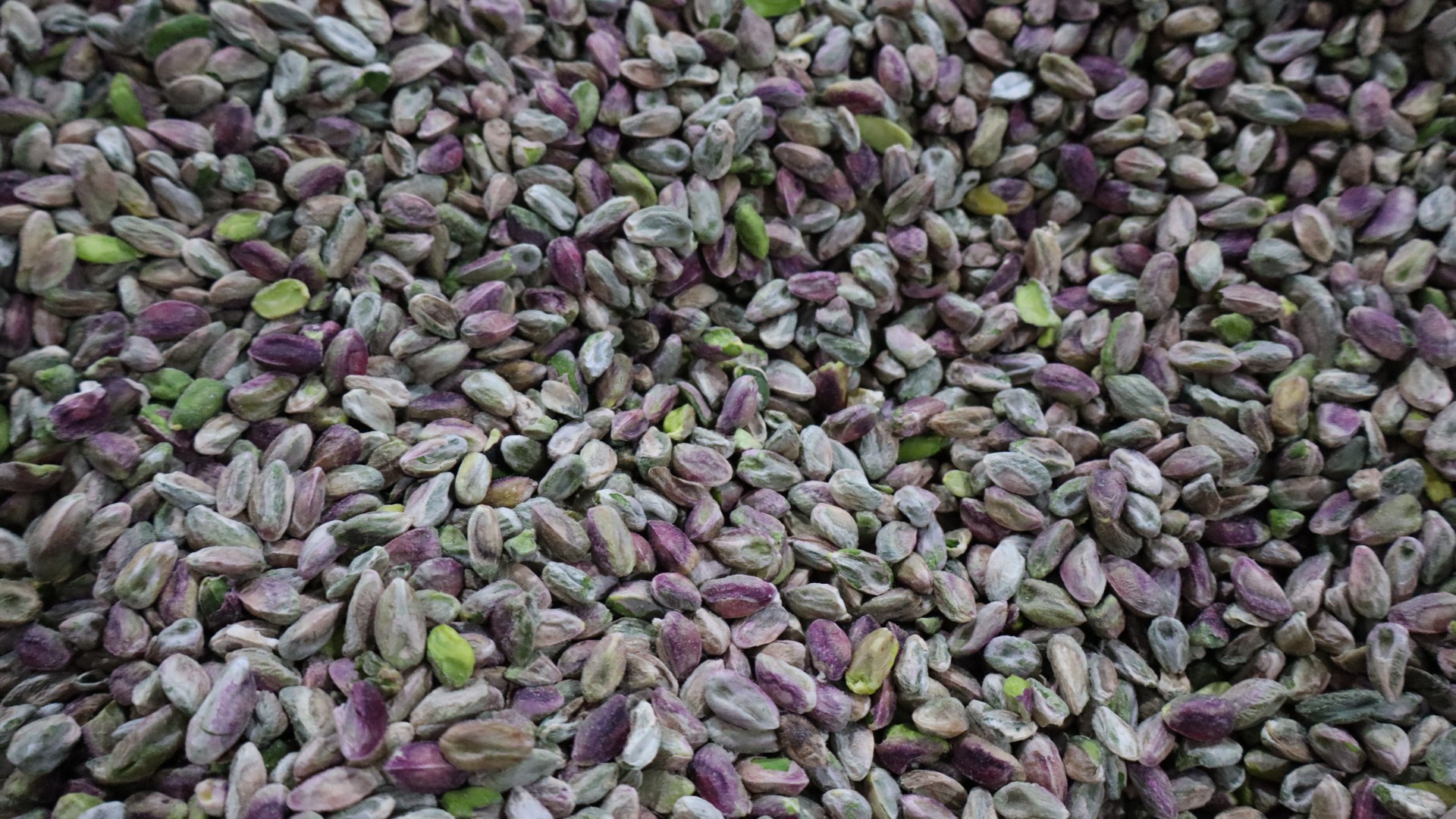
While Aassad’s property rights are now restored, his home is still occupied. As a result, Hama’s provincial council says it is working on rehabilitating Sunni homes and potentially building caravans as a temporary solution so that Alawis can return to their lands.
“We are striving to support the return of displaced people from camps as well as those displaced from their villages in northern Hama amid the chaos following the liberation and the absence of the state,” Hassan al-Hassan, deputy governor of Hama, tells MEE.
However, he says returns would not happen “all at once” and gave no clear timeline as to how long it would take before Alawis could return to their homes.
“Our goal is to restore civil peace, and our thinking is that of a state and its institutions, not that of an [armed] faction. The state’s vision is that people return to their regions,” Hassan says.
“However, we have to also give priority to those who returned from Idlib and found their trees chopped down and their homes destroyed.”
The Syrian government has taken steps in recent months to encourage the return of minority communities in other parts of the country, namely Kurds to the region of Afrin in northwestern Syria.
According to Hassan, directives for Alawis to also return to their lands have come from the presidency itself.
Hassan says people will be able to challenge land seizures through offices in each province linked to the Illicit Gains Committee within “a matter of weeks”. Until then, “their lands will remain under the protective hand of the state through Iktifaa”.
No returns without security
Though Aassad has been cleared of all charges, he fears returning to his lands.
“If the state doesn’t assure security for the region, we won’t dare go back,” he says.
Three days after Assad’s ouster, one of Aassad’s Alawi neighbours tried to return to
After that, none of the village’s former Alawi residents took the risk of going back, even if it meant abandoning their livelihoods.
'My dealings with Iktifaa have been positive. However, not everyone has gotten their lands back'
- Ammar al-Aassad, Alawi farmer from Hama
The provincial authorities have established a police station in the village of Maan, but no other village in the northern Hama countryside has one, says Hassan.
Until Aassad can return himself, a Sunni neighbour has agreed to work his land, taking 60 percent of the harvest.
The one-year contract, subject to potential renewal, has been certified by a lawyer and validated in court. “However, we can’t go to our lands and supervise the harvest to ensure I get my full share,” Aassad says.
Iktifaa took a picture of the contract and assured him they would protect the trees from being cut down, Aassad says.
“My dealings with Iktifaa have been positive. However, not everyone has gotten their lands back,” he adds.
But establishing police stations is not the only thing required to provide security.
“The first step is to resolve blood disputes through reconciliation committees that will be established in every village,” says Hassan.
Reconciliation committees already exist in many Sunni villages in the Hama countryside.
Alaa Ibrahim, whose family owns 138 dunams of land in Maan, is part of a community-appointed reconciliation committee that meets regularly with the governor of Hama.
Also Alawi, Ibrahim struck a deal with a Sunni investor to harvest his crop last year. But that agreement fell through when the investor was accused of stealing harvests during the war. When he approached Iktifaa, he was told that his harvest had been “looted”.
Until now, his lands are under the control of the state because his brother worked for the defence ministry.
However, Ibrahim claims his brother was merely working in a shoe factory owned by the army.
When Ibrahim approached Iktifaa earlier this month, he was told that only his brother’s share would be seized - if found guilty by the Committee for Illicit Gains - and that the remaining lands could be harvested by him and the 12 others that make up his family.
As the harvest season approaches, however, time is running out for the committee to issue its ruling.
If Ibrahim and the other Alawis from Maan are unable to collect his harvest, he says the financial repercussions will be “catastrophic”.
Some from Maan and other surrounding villages have resorted to selling at “dirt-cheap prices”, he notes.
Ibrahim and the other members of the reconciliation committee are working to draft contracts directly with their Sunni neighbours to cultivate the harvest and settle blood disputes.
“If we succeed, this will have a big role in easing tensions and it will represent a prelude to the return of Alawis,” he says.
“If not, tensions will continue to build and undermine civil peace efforts.”
Middle East Eye delivers independent and unrivalled coverage and analysis of the Middle East, North Africa and beyond. To learn more about republishing this content and the associated fees, please fill out this form. More about MEE can be found here.