Truce deal 'an important step towards political settlement': Assad

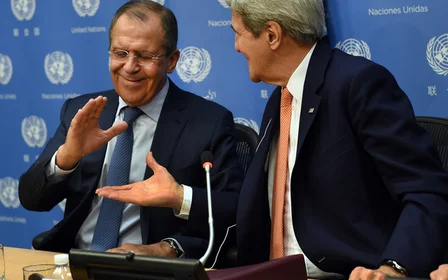
Syria's government has agreed to a ceasefire deal announced by the United States and Russia after the opposition conditionally accepted it, but major doubts remain as to whether the cessation of hostilities will hold when it is due to come into effect at the weekend.
Russia's foreign ministry said on Wednesday that Syrian President Bashar al-Assad had assured Russian counterpart Vladimir Putin of his government's readiness to respect the deal in a telephone conversation.
Assad said the proposals laid out in the agreement were "an important step in the direction of a political settlement", the statement said.
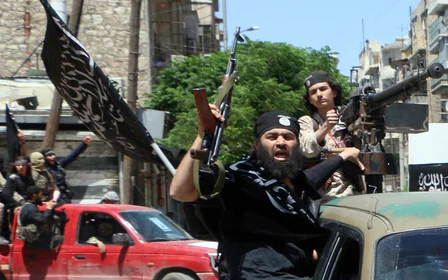
But both Russia, which is supporting the Syrian government with air strikes, and Syria stressed the "importance of continuing an uncompromising fight" against the Islamic State (IS) group and the Nusra Front, which are both excluded from the truce deal and recognised as terrorist groups by the United Nations.
A foreign ministry statement said the Syrian government would continue to fight both those groups as well as other "terrorists"," while agreeing to stop other military operations "in accordance with the Russian-American announcement".
New MEE newsletter: Jerusalem Dispatch
Sign up to get the latest insights and analysis on Israel-Palestine, alongside Turkey Unpacked and other MEE newsletters
The deal calls for a "cessation of hostilities" between forces loyal to Assad and opposition groups that would take effect at midnight on Friday Damascus time.
The High Negotiations Committee (HNC) - the leading Syrian opposition group - gave its conditional acceptance to the deal late on Monday.
But after several previous failed attempts, few had serious expectations for a lasting ceasefire.
In an interview with Al Jazeera, Turkey’s Prime Minister Ahmet Davutoglu expressed doubt about whether the ceasefire will hold.
“Of course we want a ceasefire and peace in Syria. There is no other country in this crisis more affected than Turkey. But if you ask how optimistic I am, we have to be realistic. We are not very optimistic because until now, all these diplomatic negotiations are being misused by the regime, by Russia, by Iran on the ground to kill more people,” he said.
“I have to be very frank: Syria and its allies are responsible for not having a resolution in the latest round of talks; therefore if they continue to have the same attitude ...talking on one side to gain time and attacking Syrians and civilians on the other side, this initiative cannot be successful. But if they are serious, we will see. For example, whether they will be no air bombardment against Aleppo, that will be a litmus test for them,” he added.
Turkish President Recep Tayyip Erdogan on Wednesday also criticised the ceasefire, saying that the pro-Kurdish People's Protection Units (YPG) should also be excluded from the deal along with Nusra.
"They [US] support YPG against ISIS," he told reporters. "Nusra fights ISIS too, why are they called bad?"
Analysts said the deal may be simply unworkable, while rebels on the ground doubted the government's goodwill and many civilians expected their hopes to once again be dashed.
"It's a waste of time and it's difficult to implement on the ground," said Abu Ibrahim, a commander in the 10th Brigade opposition force in the northwestern Latakia province.
He expected "numerous rebel groups" to reject the agreement, which he said was formed "without consulting any factions on the ground".
French President Francois Hollande said on Tuesday that the ceasefire must be implemented, after discussing it with Britain, Germany and the United States.
The truce "must be fully respected and the sooner, the better," Hollande told reporters during a visit to Peru.
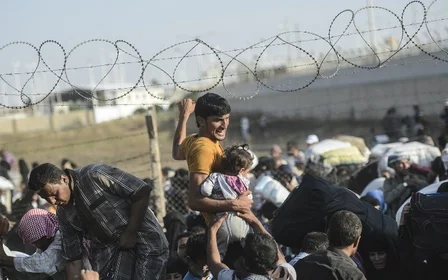
But in Damascus, residents are tired after nearly five years of war and were sceptical over the deal.
"It's a fragile deal," said Rana, a 54-year old pharmacist in the capital.
"Ceasefires have been announced repeatedly in the past and we didn't see any results on the ground because they were violated," she said.
Middle East Eye delivers independent and unrivalled coverage and analysis of the Middle East, North Africa and beyond. To learn more about republishing this content and the associated fees, please fill out this form. More about MEE can be found here.