Tunisian opposition leader Rached Ghannouchi begins hunger strike

Jailed Tunisian opposition figure Rached Ghannouchi, 84, has begun a hunger strike, his lawyers said on Saturday, joining two other detained prominent politicians who are protesting what they describe as their "unjust imprisonment".
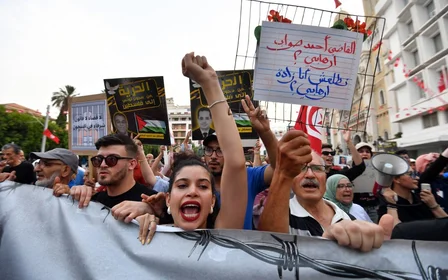
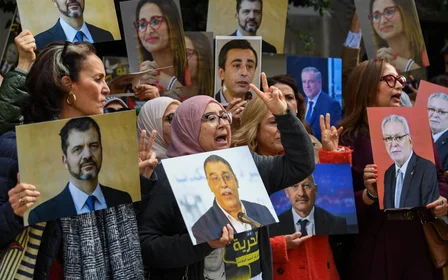
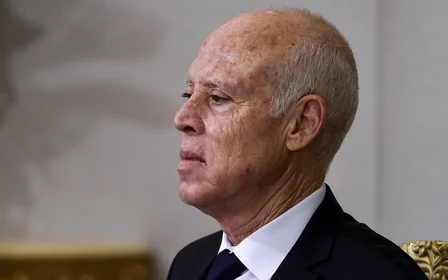
Much of Tunisia's opposition is now behind bars, and several parties have accused President Kais Saied of turning the country into an "open-air prison" while using the judiciary to entrench his rule.
Ghannouchi's protest follows that of opposition politician Jawhar Ben Mbarek, who launched a hunger strike last week, and Issam Chebbi, leader of the Republican Party, who began his strike on Friday to demand his release.
In April, Ben Mbarek was sentenced to 18 years behind bars on charges of "conspiracy against state security" and "belonging to a terrorist group" in a mass trial criticised by rights groups.
Ghannouchi, the leader of the Ennahda party and a fierce opponent of Saied, said his hunger strike sought to support Ben Mbarek, but also to "defend freedoms in the country".
New MEE newsletter: Jerusalem Dispatch
Sign up to get the latest insights and analysis on Israel-Palestine, alongside Turkey Unpacked and other MEE newsletters
Ghanouchi has been in detention since 2023. He received a total of 37 years in prison from several cases, including charges of unlawful foreign funding and plotting against the state.
He has refused to attend court sessions, claiming that the judges act under Saied's direction.
Lawyers, family and rights groups say Ben Mbarek's health has sharply deteriorated, he is refusing treatment and is at risk of dying.
The Tunisian Prisons Authority denied that the prisoners' conditions had declined because of hunger strikes, stating that medical checks showed their health was "normal and stable", without elaborating further.
Earlier this year, courts sentenced several opposition leaders - among them Ben Mbarek and Chebbi - to prison terms ranging from five to 66 years on charges of "conspiracy against state security".
Rights groups say these cases are politically motivated and intended to silence government critics.
Middle East Eye delivers independent and unrivalled coverage and analysis of the Middle East, North Africa and beyond. To learn more about republishing this content and the associated fees, please fill out this form. More about MEE can be found here.