
Labour minister: British Muslims haven't always been heard but Burnham will change that

Not too long ago, British Muslim civil society barely engaged with the government. This was less because of British Muslims than because of the government itself.
The Conservative Party, who were ousted in 2024, made no particular attempt - especially after 2020 - to even appear to engage with mainstream Muslim organisations.
Fast forward to today and the situation has fundamentally transformed.
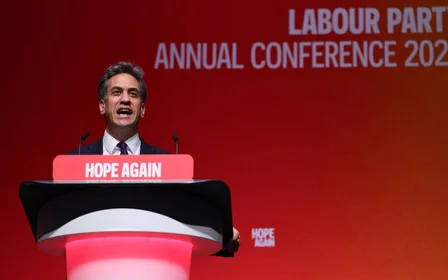
At the Labour Party conference, the widespread feeling among Muslims - both MPs and party members - was that things are looking up. "A new hope," as one parliamentary advisor called it, referencing Star Wars.
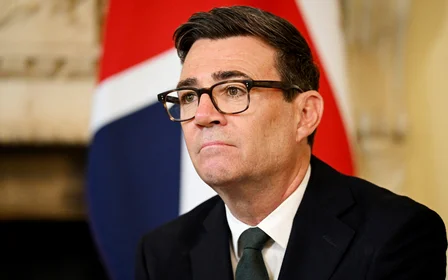
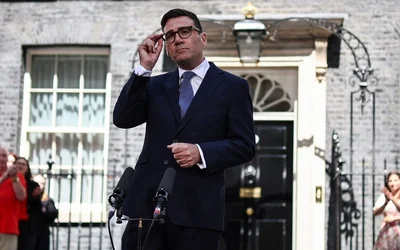
The reason: Andy Burnham.
New MEE newsletter: Jerusalem Dispatch
Sign up to get the latest insights and analysis on Israel-Palestine, alongside Turkey Unpacked and other MEE newsletters
Engagement with Muslims did improve under Keir Starmer's Labour government, but the relationship remained fraught: large numbers of Muslim voters abandoned Labour over its support for Israel during the Gaza genocide.
Under new Prime Minister Burnham, however, relations are better than they have been for decades.
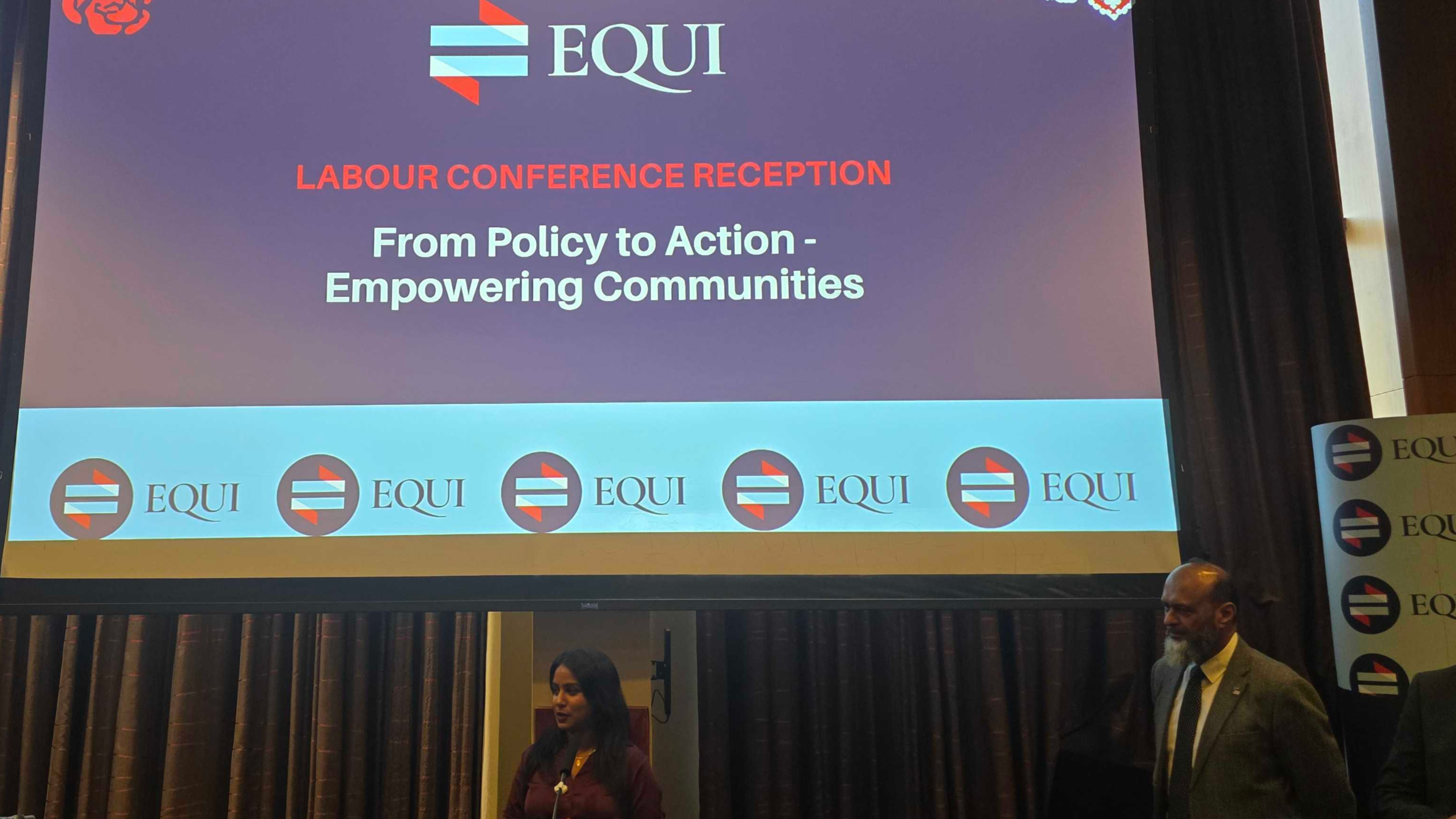
This was in clear evidence at an event at the Hilton hotel at the Labour Party conference in Liverpool on Sunday evening.
Equi, a Muslim think tank, was celebrating its two-year anniversary.
The room was packed with representatives of Muslim civil society organisations, Labour members and several MPs.
"I had the privilege of being invited to the Foreign Office by the foreign secretary the day before he made the announcement on sanctions, on the Middle East," said Professor Javed Khan, Equi's director.
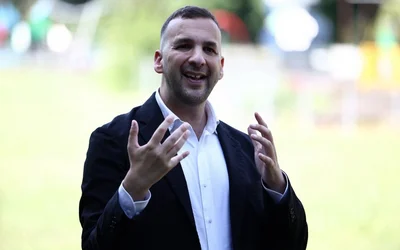
"We were invited because the Foreign Office recognizes that every action it takes internationally has a ripple effect in the country.
"And I must say," Khan added, "I came out quite enthused."
He praised the government's sanctions on illegal Israeli settlements, saying "there's a journey to travel still, but it's far better than any government has done in the past.
"And meeting the foreign secretary and listening to him directly explain the logic and the purpose of what he was doing was specifically and particularly impressive."
Uma Kumaran, a minister in the Foreign Office, gave a speech at the event.
"I know that over the past two years," she said, "there have been moments when British Muslim voices and the community have felt like they haven't been heard.
"And it's true, and I'm not going to stand here and pretend otherwise. It's something that I have spoken about and our Foreign Secretary Ed Miliband has acknowledged must change."
Kumaran continued: "I hope you've seen some of the first shoots of that in the past few weeks."
'A divided Britain suits them'
Amid the revelry and self-congratulation, however, there was still a widespread sense of danger - namely, from a rising far right.
"They want to divide us because a divided Britain suits them, and it suits their agenda and it suits their politics," Kumaran said.
"What we can't do is fall victims to that division and instead we have to join this fight together."

Yasmin Qureshi, the Labour MP for Bolton South and Walkden in northern England, also gave a speech.
She lamented that Muslims are often discussed in relation to problems, "not as a part of the society who contribute so much" to Britain.
Afterwards Lord Wajid Khan, until recently Britain's faith minister, was introduced.
As a minister, "he broke all land speed records for all the meetings that he had", Javed Khan joked. "The civil servants are still recovering."
The Labour peer thanked Equi's director "very much for enhancing the reputation of the Khan family", to laughter from the crowd.
On a serious note, he described faith in Britain as an "emergency service", arguing that the government "can sometimes not get where" faith communities, faith leaders and interfaith organisations" can.
Khan cited the example of work by religious institutions during the coronavirus pandemic, the vaccine rollout and the 2024 race riots.
The Turkish ambassador to Britain, Osman Koray Ertas, also addressed the room.
"I think we are all living in a world where divisive politics and rhetoric is rampant, not only here, but in all corners of the world, all the way from Asia to Europe and then the Americas."
Equi, he said, was doing work which was "not only valuable for this country, but globally."
'Migration central to success'
Equi was launching a new report on migration to Britain, copies of which were distributed at the event.
The report shows that while two-thirds of Britons think migration is still rising, in reality it has "fallen sharply".
It contains extensive data on migrant communities in the country, including that "migrant-owned businesses sustain more than 400,000 jobs" and that "migrant nurses and doctors pay £166,000 more in tax over their lifetimes than they take out, according to the Government’s own Migration Advisory Committee."
The report recommends migration history "being embedded in the national curriculum as part of the Department for Education’s reforms to bring people from different backgrounds together".
In a foreword for the report, Fraser Nelson, the former editor of the Spectator, said Equi "does not pretend that migration is simple, nor does it shy away from the pressures that immigration creates.
"But any serious discussion must begin with facts. And the facts are striking. Migrants have been central to Britain’s economic success, from pre-war Britain to sustaining the NHS today."
Nelson argued: "Immigration works when those who arrive can find jobs, homes and schools and play their parts as citizens. It fails when the pace of change outruns the ability of communities and public services to absorb it."
Other MPs including Sarah Owen, Zubir Ahmed and Afzal Khan addressed the Equi event.
Afterwards an enormous cake - to celebrate the think tank's second birthday - was cut and distributed.
Conventionally, the British government is expected to engage with different parts of society, including faith groups and the organisations that claim to represent them. This is central to the functioning of British multiculturalism.
But it has not been the case where British Muslims are concerned, a legacy of the Tory Party. And remnants of that legacy remain.
Limits to engagement
The Labour government's engagement with Muslim organisation is still limited in some key ways.
Most significantly, the Muslim Council of Britain remains out in the cold, for reasons that - as Middle East Eye has recently reported - no relevant government department is able to explain.
This is crucial since the MCB is by far the largest umbrella organisation seeking to represent Muslim civil society. It has more than 500 affiliates and a democratically elected leadership.
Equi may be influential - and it evidently has a high degree of credibility among British Muslim civil society organisations - but it does not fill that gap. Nor can the British Muslim Trust, which monitors anti-Muslim hate.
The government boycott of the MCB began under the Conservatives, although it does not appear to be an official policy, and it was inherited by Labour.
One Labour MP privately insisted that the situation will soon change and ministers will engage with the MCB.
That remains to be seen. It is nonetheless clear, however, that Andy Burnham's government has decisively turned a new page on Labour's relationship with British Muslims.
Middle East Eye delivers independent and unrivalled coverage and analysis of the Middle East, North Africa and beyond. To learn more about republishing this content and the associated fees, please fill out this form. More about MEE can be found here.