Is the UN headed for financial collapse without US support?

At the Munich Security Conference over the weekend, US Secretary of State Marco Rubio said the United Nations, while having "potential" to do good in the world, "has no answers and has played virtually no role" in resolving the conflicts that ultimately President Donald Trump claims to have ended himself.
"It could not solve the war in Gaza. Instead, it was American leadership that freed captives from barbarians and brought about a fragile truce," Rubio said.
As of Monday, according to the Gaza health ministry, 602 Palestinians have been killed by Israeli fire since the Trump administration announced a ceasefire on 10 October.
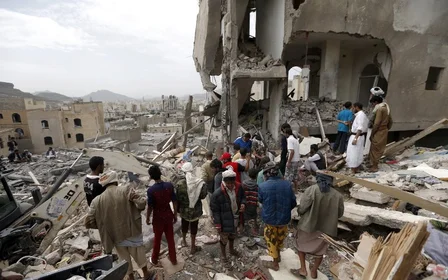
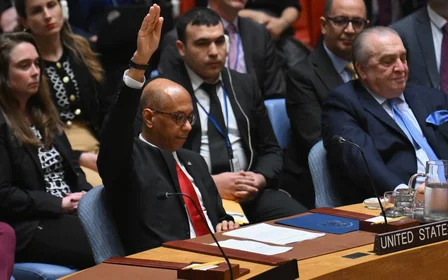
Before that, six UN resolutions from October 2023 onwards calling for a humanitarian pause in Israel's assault on Gaza were vetoed by the US ambassador, relegating the international body to the sidelines of what scholars and the UN have called a genocide. Over 72,000 Palestinians have been killed in Gaza.
Yet Rubio insisted that other UN member nations "openly threaten our citizens and endanger our global stability to shield themselves behind abstractions of international law".
New MEE newsletter: Jerusalem Dispatch
Sign up to get the latest insights and analysis on Israel-Palestine, alongside Turkey Unpacked and other MEE newsletters
He did not name names, but none of this was just rhetoric.
Washington stopped paying its bills to the UN when Trump took office 13 months ago. It now owes close to $4bn, though it will reportedly begin making payments within a few weeks. The Biden administration made payments to the international body but also accrued significant arrears during its term.
So what happens when a founding member of the UN, who also happens to fund the biggest share and host its headquarters, hobbles an organisation the rest of the world relies on for human rights monitoring, food aid, and peacekeeping missions?
Possible "financial collapse", UN secretary general Antonio Guterres said in a letter sent to the ambassadors of all 196 member states last month.

"I cannot overstate the urgency of the situation we now face," he wrote, largely owing to the US not paying its dues on time.
It hasn't even paid its 2025 bills, despite carrying more than a third of the UN's entire operating budget on its shoulders at 22 percent, figures collected by the Council on Foreign Relations show.
And because the US is assessed a fixed percentage to pay, if the UN budget sees a hike year after year, so must the US contribution.
For 2026, the UN needs $3.5bn for its agencies, and another $5.7bn for its peacekeeping operations around the world.
Congress has capped US contributions to UN peacekeeping at 25 percent of the total requirement.
Senior UN officials told The New York Times that money could run out by July, forcing not only the cancellation of the annual General Assembly meetings in September, but also a potential shutdown of its iconic Manhattan headquarters.
Privilege
Last month, Trump signed an executive order withdrawing the US from 66 multilateral organisations, about half of which are UN initiatives. They deal with everything from the climate crisis to democratic nation-building and even counterterrorism strategy.
Among them are the UN register of conventional arms; the office of the special representative of the secretary general for children in armed conflict; and the Global Counterterrorism Forum - issues that have generally been important across all US administrations, regardless of political leaning.
'The situation is dire'
- Daniel Forti, International Crisis Group
During his first term in office from 2017-2021, Trump withdrew from the UN cultural agency, Unesco.
This term, he withdrew from the UN human rights council and ended all US funding to the UN agency for Palestinian refugees, Unrwa. Washington was its biggest donor.
The Trump administration cited a bias against Israel as well as the inclusion of the State of Palestine in these agencies, which it does not recognise. The State of Palestine is recognised as a sovereign nation by more than 150 UN member states.
In a stunning speech at September's General Assembly, the US president told member states that "your countries are going to hell".
The US, he said, was now in a "golden age". Trump imparted lessons to what he called "the free world": close your borders, and return to traditional energy sources.
Some of the UN's most impactful work has been to mitigate the impacts of the climate crises and provide aid to migrants forced out of their homes by war.
"The US financial obligation to the UN is not a penalty, but a reflection of its privilege," Daniel Forti, the head of UN affairs at the International Crisis Group, told Middle East Eye.
"The US, like other countries that have a veto on the Security Council, pay the most because they are veto members. That is part of the architecture of the system. And because it is also the largest economy... that's why the US has the single largest obligation," he added.
"It's actually a reflection of its institutional privilege... that a lot of other countries would want if they're given the chance."
Forti said Guterres' warning is hardly overblown.
"The situation is dire," he told MEE.
"I think lots of other colleagues will debate whether the [UN] secretary general could have taken more action, taken it earlier, whether other member states could have rallied around solutions to alleviate the dynamic we find ourselves in right now, but the conclusion that the root cause of this financial crisis lies at the feet of Washington is unmistakable," he said.
MEE has reached out to the UN secretary general's office, but did not receive a response in time for publication.
Alternatives
Should the US indeed walk away from a big portion of its financial commitment to the UN, the institution would need to be restructured entirely, Guterres said in his letter.
That suggestion is not new. Nations across the Global South have been calling for the inclusion of voices from Africa and Latin America in the permanent veto-wielding membership of the UN Security Council.
"The UN's funding modalities are unnecessarily opaque and lopsided. They need to be simplified and brought into the 21st century to ensure equity and joint ownership of the UN," Mandeep Tiwana, secretary general of the Johannesburg-based civil society monitor Civicus, told MEE in a written statement.
"Current practices that allow a few giant states to contribute large amounts and skew the UN's work in return are untenable," he added.
'Current practices that allow a few giant states to contribute large amounts and skew the UN's work in return are untenable'
An easier way to fund the UN could be to ensure that each country contributes a small percentage of its gross national income to the UN's core budget, he explained.
"The US's failure to pay its dues on time and still demand a veto on the Security Council is a symptom of the current broken system," Tiwana said.
To the Trump administration, an alternative path is already in the works.
The US president's "Board of Peace", initially set up for Gaza, appears to now be his preferred tool for resolving conflicts.
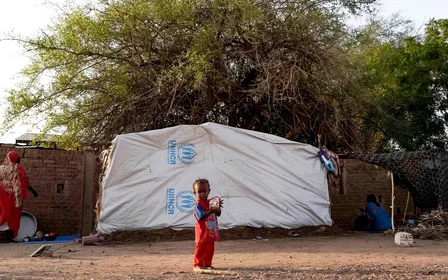
Trump's African and Arab affairs envoy, Massad Boulos, suggested as much earlier this month about an impending peace plan for the civil war in Sudan.
Once agreed to by the warring parties, Boulos said the plan will be taken to the UN Security Council for an international mandate, but after that, it will go to the Board of Peace for approval.
He was asked whether this means the Board of Peace is intended to rival the UN and perhaps supersede it.
"Let's say they're equal. Let's put it this way. They're complementary," Boulos responded.
"The Board of Peace is a smaller group that is quite enthusiastic. Of course, their current focus is on Gaza. But why not? I know that the Board is interested in looking at Sudan and helping with Sudan. So as soon as we ready, from a housekeeping point of view, we will present to them this plan and seek support from them.... It doesn't in any way affect the UN or the UN Security Council."
But the entire concept of the Board of Peace has "yet to be proven out", Allison Lombardo, a former State Department official who led the US return to the UN Human Rights Council under the Biden administration, told MEE.
"Until the Board of Peace can figure out how to contribute money and implement some of the ideas and provide enough political leverage to settle conflicts," it cannot compete with the UN's mandate and buy-in from the international community, she said.
Regardless of the avenue, Forti said the US "wants cooperation on its own terms".
"This is not comparable to how the US has approached Nato, where every country has a threshold that they've agreed to, and some are just not meeting that financial threshold," he said of the UN's funding woes.
"The formula for how the UN is funded is baked into the structure, and changes to the funding formula beyond marginal adjustments would lead other countries to think about what structural changes should happen as a result. Of course, the US would never entertain those conversations," he told MEE.
Lombardo said the US could set the example.
"It's important that each country do their part" to fund the UN, she said.
"The first step to getting others to pay is to making your own contribution."
Middle East Eye delivers independent and unrivalled coverage and analysis of the Middle East, North Africa and beyond. To learn more about republishing this content and the associated fees, please fill out this form. More about MEE can be found here.