UN plans 'major' medical evacuation of besieged Syrian towns

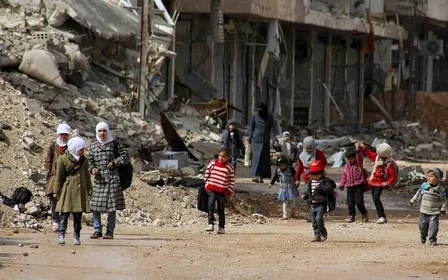
The UN is planning a large-scale evacuation within the next week of wounded and sick people from four besieged towns in war-ravaged Syria.
Jan Egeland, head of the UN humanitarian taskforce for Syria, said on Thursday that "a very major" evacuation was planned for Madaya and Zabadani, two towns near Damascus blockaded by the government and its allies, and Fuaa and Kafraya, which are besieged by rebels in Syria's northwest.
"All together it could be up to 500 people," he said in Geneva, adding that three boys recently bled to death in Madaya because Hezbollah, which is besieging the town, ignored "desperate pleas for them to be evacuated" after they touched an undetonated explosive that went off.
They "died totally unnecessarily", he said, adding that a young man who "could have been saved" had also starved to death in the besieged town in recent days.
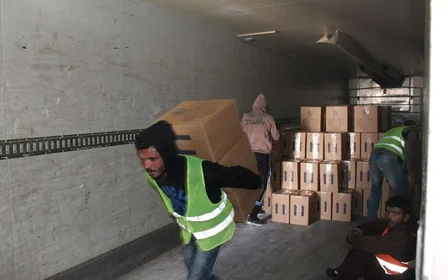
An agreement on aid and evacuations from the four towns was based on a "tit-for-tat" system, he said, where the same numbers of aid convoys must enter the towns simultaneously and the same numbers of people removed.
New MEE newsletter: Jerusalem Dispatch
Sign up to get the latest insights and analysis on Israel-Palestine, alongside Turkey Unpacked and other MEE newsletters
"This is killing people," Egeland said.
Access 'slowing down'
He also said he was "disappointed" and "disheartened" by the lack of progress in bringing aid to more of the nearly half a million people trapped in towns besieged by the Syrian army, armed groups or Islamic State militants.
The UN began increasing deliveries of aid in Syria after the start of a ceasefire in February, hoping the supplies would shore up a fragile peace process that began that same month.
But while a new round of peace talks is scheduled to begin next week, Egeland said access was "slowing down".
Five convoys had been blocked for four days from entering several areas including Kfar Batna in the Eastern Ghouta region, he said, adding that 287,000 people had not received the aid they needed as a result.
The government was particularly to blame for the obstacles, he said, "but not exclusively".
Egeland said the members of the humanitarian taskforce had been given "homework" to press the different sides to allow in more aid.
He also urged all sides to help a major push to vaccinate millions of Syrian children against polio, measles and other diseases.
He warned though that a shortage of funds was jeopardising the vaccination efforts, hinting that not all funding pledges made at a London conference earlier this year were materialising.
"Donors have to step up funding," he said.
Middle East Eye delivers independent and unrivalled coverage and analysis of the Middle East, North Africa and beyond. To learn more about republishing this content and the associated fees, please fill out this form. More about MEE can be found here.