

US annual defence budget seeks to bolster Israeli defences, remove Syria sanctions

The end of the calendar year means it's time for Congress to pass the annual US defence budget, known as the National Defence Authorisation Act (NDAA), now reportedly coming up for a Wednesday vote.
The bill's more than 3,000 pages spell out next year's discretionary spending for the Pentagon: a whopping $900.6bn for everything from military operations and pay increases for the troops to recruitment, tech innovation, and modernising the nuclear stockpile.
The last budget was approximately $883.7bn.
Middle East Eye takes a look at the provisions impacting the Middle East and North Africa region.
Israel
New MEE newsletter: Jerusalem Dispatch
Sign up to get the latest insights and analysis on Israel-Palestine, alongside Turkey Unpacked and other MEE newsletters
The House Armed Services Committee, which examines the NDAA before it moves to a vote in the full House of Representatives, described the budget as having "unprecedented levels of support for the security of Israel".
The exact amount for all of the named projects combined, however, is not disclosed.
But we know that to the tune of $200m, the US will continue to provide substantial funding for the Iron Dome, David's Sling, and Arrow systems in Israel.
The Department of War is set to continue the US-Israel Anti-Tunnel Cooperation Program at a cost of $80m. The joint venture is aimed at boosting research and development towards detecting, locating, and dismantling underground pathways, the NDAA stipulates.
Another $70m will go towards helping Israel counter drone attacks and other aerial "emerging threats".
For $35m, the US is establishing a new emerging-technology cooperative programme with Israel and G7 allies such as Canada, the UK, Australia, and Japan to develop and test cutting-edge technologies, including AI, quantum, cybersecurity, robotics, and automation.
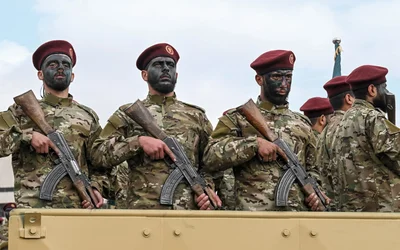
With countries like Spain and Canada curbing direct weapons sales to Israel because of its genocide in Gaza, the US plans to also fill in the "gaps" by carrying out an assessment of the arms embargoes, and ensuring there are no "vulnerabilities in Israel’s security posture".
Israel should always be ready to deter threats from Hamas, Hezbollah, the Islamic State (IS), and other groups, the NDAA says.
The bill further establishes the US-Israel Defense Industrial Base Working Group as a means of deepening technological integration between the two sides, and looking at potentially bringing Israel into the fold of the US National Technology and Industrial Base (NTIB).
The NTIB currently only includes three countries that are considered trusted enough to be part of the same defence ecosystem as the US, meaning they share things like manufacturing, and supply chains: Canada, the UK, and Australia.
"Supporting further defense cooperation with Israel is the policy of the United States," the House Armed Services Committee declared.
Per the NDAA, the Department of War will not be allowed to attend international events where Israel is banned because of the Palestinian-led Boycott, Divestment, and Sanctions movement (BDS).
Iran
The Pentagon is told to report to Congress on the kinds of evolving threats coming from Iran, which is seen as the central US foe in the region, and the "key driver of regional insecurity".
The report must include details on Iran's purchases of conventional weapons from Russia, the status of its proxy forces, such as the Houthis in Yemen and Hezbollah in Iran, its drone supply chain, and its ballistic missile and nuclear research advancements.
The NDAA also mandates the US intelligence apparatus to step up its monitoring of Iran's nuclear development, and to notify Congress if Iran specifically produces or possesses uranium enriched above 60 percent; engages in "significant enrichment activity"; or
decides to produce a nuclear weapon.
Iraq
The NDAA extends US support for the Iraqi military through the end of 2026, but with an added stipulation.
No more than 75 percent of the allotted funds will be provided until there is a certification from the Pentagon "that the Government of Iraq has taken credible steps… to reduce the operational capacity of Iran-aligned militia groups not integrated into the Iraqi security forces through a publicly verifiable disarmament, demobilization, and reintegration process".
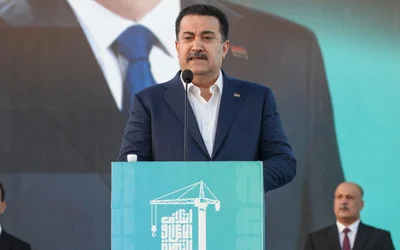
If it is deemed necessary for the national security interests of the US, Secretary of War Pete Hegseth may waive the limitation on the funds.
The Badr Organisation, which the US calls "an Iranian terrorist proxy" that has been operating in Iraq since 1982, is barred from receiving any US funds.
According to the NDAA, the amount allocated to the Counter-ISIS Train and Equip Fund (CTEF) in Iraq is $212.5m, referring to the militant group Islamic State in Iraq.
The text further calls on Hegseth to confirm that Iraq is strengthening "the authority and operational control of the Prime Minister of Iraq as Commander-in-Chief", and that it is also investigating and disciplining "members of Iran-aligned militia groups or members of the Iraqi security forces operating outside the formal chain of command of the Iraqi security forces".
While the exact amount is not disclosed, the NDAA says funding will be maintained for Peshmerga forces in the Iraqi Kurdistan Region, and no restrictions will apply there.
Syria
The NDAA includes the repeal of the landmark 2019 Caesar Act sanctions.
The sanctions were levelled at any individual or entity that provided support to the Syrian government. They also devastated the lives of ordinary Syrians trying to survive and rebuild.
Syria's president, Ahmed al-Sharaa, has been pushing for the repeal of the Caesar Act since he was ushered into power one year ago. He has since had at least two face-to-face meetings with US President Donald Trump, who took a liking to the former al-Qaeda fighter.
The NDAA also says the Pentagon must provide to Congress reports on the status of IS detention camps, US force posture, and the viability of reopening the US embassy in Damascus.
The text frames Iran and its Quds Force as the primary threat to US interests in Syria.
Finally, as part of the countering Islamic State training and equipment programme (CTEF), Syrian government forces are set to receive $130m.
Afghanistan
There are no funding provisions for any Afghanistan-related projects.
But that's exactly what has concerned refugee advocates, especially after the Trump administration stopped processing all Afghan citizens for US admission and legal status, following the shooting of two members of the National Guard in Washington by an Afghan who is a former CIA asset.

In a statement, the non-profit #AfghanEvac, which helps bring Afghan allies and their families to the US, said money for the Enduring Welcome Act was removed from the NDAA draft by House Republican leadership on Friday.
The advocacy group called it an "abdication of responsibility and a serious setback for the thousands of Afghan allies who are still waiting for the United States to finish what it started".
"This decision undercuts years of bipartisan work and weakens a relocation system that is already strained," it added.
"What was lost matters. The Act would have restored and authorized the Coordinator for Afghan Relocation Efforts, which is now functionally dead, through 2029. It would also have required basic reporting so Congress and the public could understand how the United States is meeting its commitments. These are not controversial ideas," #AfghanEvac said.
US warmaking authority
The NDAA for 2026 finally repeals the Authorisation for the Use of Military Force (AUMF) of 1991, which was the Congressional approval for US intervention in the Gulf War, and the AUMF of 2002, which greenlit the US invasion of Iraq.
The AUMFs were effectively used as cover for US military operations both in Iraq and beyond, long after those wars officially ended.
The 2001 AUMF, which opened up the "war on terror" and gave cover for US drone attacks from Afghanistan to Somalia, is still in effect.
As for one of its key byproducts, the Guantanamo Bay prison, the NDAA prohibits shutting down the widely criticised facility that Amnesty International has called "a symbol of torture, rendition and indefinite detention without charge or trial".
According to the Center for Constitutional Rights, 15 men remain in the notorious prison, all of whom have been held for more than 15 years.
At its peak, Guantanamo held more than 700 Muslim men and boys.
Middle East Eye delivers independent and unrivalled coverage and analysis of the Middle East, North Africa and beyond. To learn more about republishing this content and the associated fees, please fill out this form. More about MEE can be found here.


