US envoy to anti-Islamic State coalition says fight against group continues

The US special envoy to the coalition fighting the Islamic State (IS) group has said the battle against the militants is far from over, only days after US President Donald Trump once again declared IS defeated in Syria.
In a US State Department briefing on Monday, Ambassador Jim Jeffrey said that while IS lost its last bit of territory in Syria over the weekend, the US plans to keep forces in the war-torn country.
"This is not the end of the fight against ISIS. That will go on, but it will be a different kind of fight," Jeffrey said, using a different acronym for IS.
"ISIS has lost much of its capability to project terrorist power and to have a recruiting base in an area that it controls. So it's a very, very important development," he added.
He did not specify how many US troops will remain in Syria, nor did he explain how the US plans to continue supporting Kurdish armed groups who have been credited with leading the fight against IS.
New MEE newsletter: Jerusalem Dispatch
Sign up to get the latest insights and analysis on Israel-Palestine, alongside Turkey Unpacked and other MEE newsletters
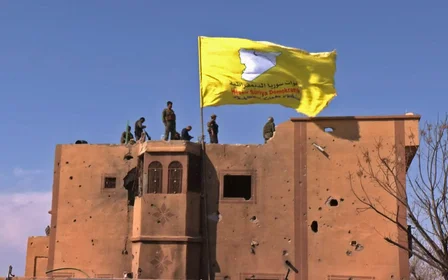
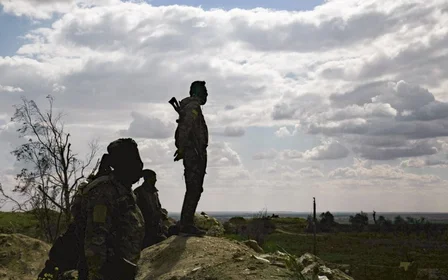
The US-backed Syrian Democratic Forces militia - a Kurdish-majority group - said that it had captured the last small patch of territory controlled by IS in eastern Syria on Saturday after weeks of fighting.

SDF fighters were seen raising victory flags over buildings in Baghouz as they declared IS had been defeated across Syria and Iraq.
"Baghouz had been liberated. The military victory against Daesh (IS) has been accomplished," Mustafa Bali, an SDF spokesperson wrote on Twitter, declaring the "total elimination of [the] so-called caliphate".
At its height, IS controlled 88,000 sq km of land in Syria and Iraq, but since then it has lost one territory after another, culminating in the fall of Baghouz.
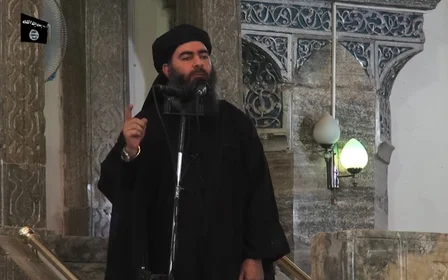
The US believes the group's leader, Abu Bakr al-Baghdadi, is in Iraq, an SDF spokesperson told AFP news agency.
Mixed messages
In mid-March, the Wall Street Journal (WSJ) said the US military was making plans to keep almost 1,000 troops in Syria, a shift that comes three months after President Donald Trump ordered a complete withdrawal.
Trump’s original decision to pull more than 2,000 US troops from Syria triggered the resignation of Pentagon chief Jim Mattis and drew widespread concern that America was leaving the fight against IS before it was finished.
Trump initially stood by his decision, but then changed course after members of his national security team urged him to reconsider.
Since that time, senior members of the Trump administration have appeared to contradict each other as journalists and other observers pressed them on Washington's long-term plans in Syria.
Last month, a White House official said the US planned to leave about 200 troops in Syria.
About a week later, an unnamed official in the Trump administration doubled that figure.
The official said about 400 US soldiers would remain in the country - split between a safe zone being negotiated for northeastern Syria and the US military base at Tanf, near the border with Iraq and Jordan.
It largely remains unclear where and in what capacity the US troops now expected to stay in Syria will be deployed.
Middle East Eye delivers independent and unrivalled coverage and analysis of the Middle East, North Africa and beyond. To learn more about republishing this content and the associated fees, please fill out this form. More about MEE can be found here.