Iran strikes Israel, UAE, Qatar, Bahrain, and Kuwait following US-Israel attack

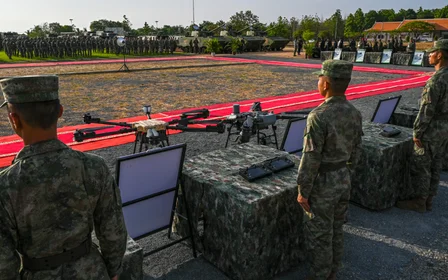
Iran's Islamic Revolutionary Guard Corps (IRGC) said on Saturday that it had launched missiles and drones towards Israel following the joint US and Israeli strikes on the country.
It has also launched strikes on the UAE, Qatar, Bahrain and Kuwait, targeting US forces.
The four Gulf countries later announced the closure of their airspace.
Meanwhile, AFP reported that loud explosions have been heard in Riyadh.
Earlier on Saturday, US security officials said that it and Israel had attacked Iran.
New MEE newsletter: Jerusalem Dispatch
Sign up to get the latest insights and analysis on Israel-Palestine, alongside Turkey Unpacked and other MEE newsletters
Multiple explosions were heard across Tehran in the early hours, tipping the Middle East into renewed turmoil.
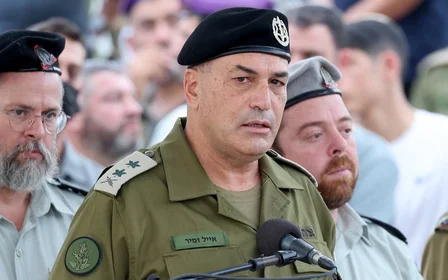
Israel's defence minister Israel Katz said that it had launched strikes on multiple sites in Tehran.
Iran responds to attacks
An Iranian official told news agency Reuters that several ministries were targeted in southern Tehran. Iran's Fars news agency reported explosions in Qom, Karaj, and Kermanshah.
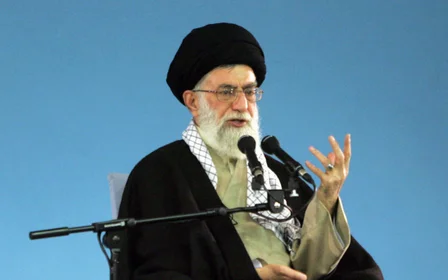
“In response to the aggression of the hostile and criminal enemy against the Islamic Republic of Iran, the first wave of extensive missile and drone attacks by the Islamic Republic of Iran towards the occupied territories has begun,” the IRGC said.
Iran’s ministry of interior said that the “criminal enemy, once again, in violation of all international laws and during negotiations, has attacked our dear homeland again”.
The ministry said it had issued orders to regional governors to deliver “prompt” reports on the situation in the provinces and “the mobilisation of all facilities to address the urgent needs of the people”.
The foreign ministry said the attacks have targeted the country’s “territorial integrity and national sovereignty, including defensive infrastructure and non-military locations in various cities across the country".
The ministry said in a statement: “The renewed military aggression by the United States and the Zionist regime against Iran constitutes a violation of international law and the principles of the United Nations Charter. The Islamic Republic of Iran considers this aggression a clear breach of international peace and security and emphasises that it reserves its legitimate right to respond decisively.
“The Iranian nation has always demonstrated patience and restraint to prevent escalation and preserve regional stability,” it read, adding that the armed forces stand “fully prepared to defend the country and will make aggressors regret their actions.”
The statement added that the attacks by the US and Israel were a “clear example of armed aggression” and cited Article 51 of the UN Charter in relation to Iran’s right to self-defence.
“History shows that Iranians have never surrendered to aggression. This time as well, Iran’s response will be decisive, and aggressors will regret their hostile actions,” it added.
Risk of prolonged war
The US military last struck Iran in June 2025, joining Israel in a 12-day conflict that culminated in Washington bombing three Iranian nuclear facilities.
At the time President Donald Trump described those strikes as limited and decisive. But attacking Tehran again sets the stage for potentially prolonged US military engagement in the region.
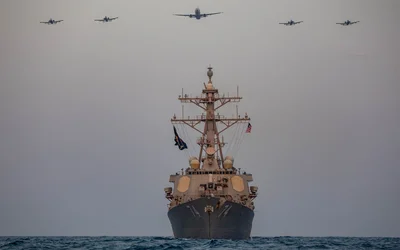
The US sent warplanes, air defence systems, and an aircraft carrier to the Middle East in January in preparation for the attack, but Trump kept Tehran, Gulf allies, and even US officials guessing until the last minute.
In an interview with Axios news site, Trump had said he had dispatched “a big armada next to Iran. Bigger than Venezuela”, referring to the Latin American country he attacked in early January.
Still, he kept the path to negotiations with Tehran open.
The Trump administration has toyed with attacking Iran for nearly a month on the pretext of the brutal crackdown on demonstrators that has seen thousands killed by government security forces.
After calling on demonstrators to "take over" state institutions, Trump backed down and said the “killing has stopped”.
While some reports framed Trump's remarks as drawing a curtain on US intervention, former US officials and analysts told Middle East Eye they appeared to signal a pause.
A former US intelligence official told MEE that their understanding of conversations within the administration is that Trump has not given up on pushing for “regime change” in Tehran.
Meanwhile, Trump was lobbied by Gulf states, including Saudi Arabia, Qatar and Oman, against attacking the Islamic Republic. They, along with Turkey, are all home to US or Nato military bases in the region and could be exposed to Iranian retaliation.
The countries have said they would not allow the US to use their territory or airspace as a launch pad to attack Iran.
Iran responded to the US bombing of its nuclear facilities in June 2025 by launching an attack on the al-Udeid air base in Qatar. The Iranians gave the Americans advance notice, and the damage was limited.
But this time, experts say, with Tehran facing massive protests, a US attack could be seen as an existential threat to the Islamic Republic. Iran may respond more forcefully by targeting US bases across the region or shutting down the Strait of Hormuz, through which 20 percent of global oil flows.
Trump’s latest military gambit is similar to his approach to Venezuela. In both countries, Trump moved up and down the escalation ladder before finally ordering an attack.
In the Latin American country’s case, it resulted in President Nicolas Maduro's abduction and detention in the US.
Middle East Eye delivers independent and unrivalled coverage and analysis of the Middle East, North Africa and beyond. To learn more about republishing this content and the associated fees, please fill out this form. More about MEE can be found here.