US mulls shrinking military footprint in Gulf as a result of war on Iran: Report

The Trump administration is examining whether to pull troops out of the Gulf as a result of the US-Israeli war on Iran, with the Pentagon weighing the risks facing large US bases in the region that have come under Iranian drone and missile attack.
The evaluation is being led by the Department of War’s policy office, The Washington Post reported on Tuesday, saying the war was viewed as “a once-in-a-generation chance for the Pentagon to reconsider its presence in the region”.
The report said that the US has already signalled that it might not rebuild its bases attacked by Iran to pre-war status.
The Washington Post corroborates Middle East Eye’s June report that cited current and former US officials as saying that a reckoning with the US’s old basing framework was expected as a result of the war.
Former senior US officials have raised the prospect of a drawdown for months.
New MEE newsletter: Jerusalem Dispatch
Sign up to get the latest insights and analysis on Israel-Palestine, alongside Turkey Unpacked and other MEE newsletters
“The truth is that we are not as inclined to occupy these bases now that we have seen what the Iranians can throw at them,” David Petraeus, a former director of the CIA and head of Centcom, which oversees all military forces in the Middle East, told Bloomberg in May.
“This is much more than when I was commander at Central Command,” he added.
Another former head of Centcom, General Frank McKenzie, said in July that the US needs to relocate its bases in the Gulf to Israel and neighbouring countries to better protect its assets from Iran’s missiles and drones.
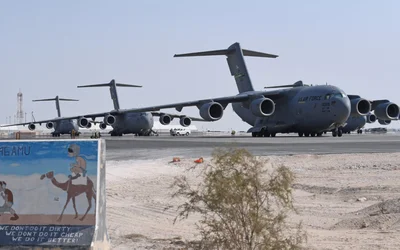
“No one in their right mind would ever put the Centcom forward headquarters, you know, 100 miles away from Iran, [in Qatar], yet that’s where it is,” he told the Jewish Institute for National Security of America, referring to al-Udeid military base.
McKenzie said that the current US basing system in the Middle East has become an “artefact”, describing it as a legacy of the Cold War, when the US was concerned about a potential Soviet invasion of the oil-rich Arab Gulf states and later, the counter-insurgencies the US waged in Iraq and Afghanistan.
“[The US] strategy does not match the reality on the ground,” he added.
The Washington Post reported that US Admiral Bradley Cooper, the current head of Centcom, has supported discussions about potentially moving US troops westward from the Gulf.
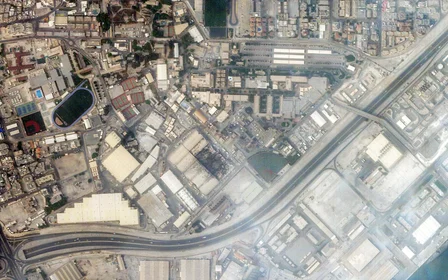
Iran has already effectively forced the US away from the Gulf coast. The Islamic Republic has targeted Bahrain, home to the US’s Fifth Fleet; Qatar, home to US Central Command’s headquarters; and air bases in Kuwait and the UAE.
The US’s presence in small Gulf states close to Iran, such as Kuwait and Bahrain, has been exposed as particularly vulnerable. The US already relocated west during the war.
MEE was the first to report that the US gained access to Taif Air Base in Saudi Arabia in March after Iran pummelled Prince Sultan Air Base, southeast of Riyadh.
Middle East Eye delivers independent and unrivalled coverage and analysis of the Middle East, North Africa and beyond. To learn more about republishing this content and the associated fees, please fill out this form. More about MEE can be found here.