US strikes degraded Iran nuclear programme by up to two years, Pentagon says

US strikes on Iran's nuclear sites last month have set the country's nuclear programme back by up to two years, the Pentagon said on Wednesday.
"We have degraded their program by one to two years, at least intel assessments inside the Department (of Defense) assess that," Sean Parnell, a Pentagon spokesman, told a news briefing, without providing evidence to support the conclusion.
Parnell said the assessment indicates that the official estimate is "probably closer to two years".
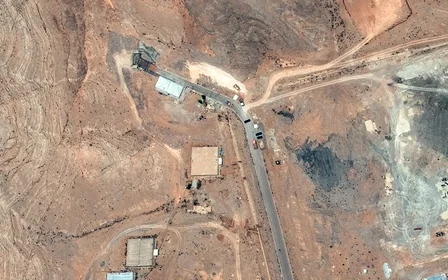
On 22 June, nine days into Israel's attack on Iran, the US military struck three Iranian nuclear facilities using more than a dozen 13,600-kg bunker-buster bombs and more than two dozen Tomahawk land attack cruise missiles.
Immediately after the strikes, President Donald Trump said they had "obliterated" Iran's nuclear programme "like nobody’s ever seen before". Parnell echoed that conclusion on Wednesday.
New MEE newsletter: Jerusalem Dispatch
Sign up to get the latest insights and analysis on Israel-Palestine, alongside Turkey Unpacked and other MEE newsletters
"All of the intelligence that we've seen (has) led us to believe that Iran's - those facilities especially, have been completely obliterated," he said.
The US intelligence community often takes weeks or more to determine such conclusions.
Rafael Grossi, the chief of the UN nuclear watchdog, said over the weekend that Iran might be able to produce enriched uranium within a few months, casting doubt on the effectiveness of the US strikes at dismantling Tehran's nuclear programme.
Tensions between Iran and the International Atomic Energy Agency sharply escalated during the 12-day war, as Iranian officials accused the nuclear watchdog of helping Israel justify its attacks.
On Wednesday, Tehran officially suspended its cooperation with the nuclear watchdog, barring international inspectors from accessing its nuclear sites. The US described the move as "unacceptable".
Enriched uranium largely intact
Several experts have said that Iran likely moved a stockpile of 408kg of near weapons-grade highly enriched uranium out of the deeply buried Fordow site before the strikes and could be hiding it.
Last week, two European officials told the Financial Times that the preliminary intelligence assessments provided to European governments indicate that Iran's highly enriched uranium stockpile remains largely intact following the US attack.
The assessment said the stockpile of highly enriched uranium had likely been distributed to various locations.
However, US Defense Secretary Pete Hegseth has said that he was unaware of intelligence suggesting Iran had moved that stockpile to shield it from US strikes.
A preliminary assessment from the US Defense Intelligence Agency last week indicated that the strikes may have delayed Iran's nuclear programme by only a few months. But the Trump administration dismissed the assessment as low-confidence, claiming that newer intelligence showed Iran’s nuclear programme had suffered significant damage.
According to Iranian Foreign Minister Abbas Aragchi, the strikes on the Fordow nuclear site caused severe damage.
"No one exactly knows what has transpired in Fordow. That being said, what we know so far is that the facilities have been seriously and heavily damaged," Araqchi said in an interview broadcast by CBS News.
Middle East Eye delivers independent and unrivalled coverage and analysis of the Middle East, North Africa and beyond. To learn more about republishing this content and the associated fees, please fill out this form. More about MEE can be found here.