US threatens to revoke Palestinian UN ambassador's visa, report says

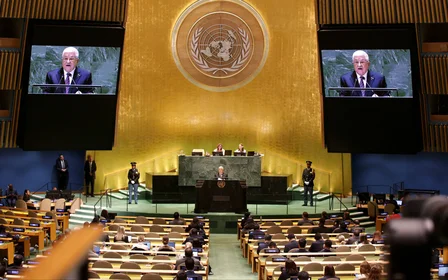
The US is threatening to revoke the visas of the Palestinian delegation to the United Nations unless the Palestinian ambassador to the UN, Riyad Mansour, withdraws his candidacy for vice-president of the UN General Assembly, NPR reported on Thursday.
A US State Department cable obtained by the publication instructed US diplomats in Jerusalem on Tuesday to pressure Palestinian officials to withdraw their bid ahead of the elections scheduled on 2 June for one of the assembly’s 21 vice-president posts.
The cable accused Riyad Mansour of having a history of "accusing Israel of genocide" and claimed that his candidacy "fuels tension" and undermines US President Donald Trump's plans for Gaza.
"A bully pulpit for Mansour would not improve the lives of Palestinians and would significantly damage U.S. relations with the PA [Palestinian Authority]. Congress will take it extremely seriously," the cable said.
In February, Mansour withdrew his candidacy for the presidency of the UN General Assembly after US lobbying, according to the US cable.
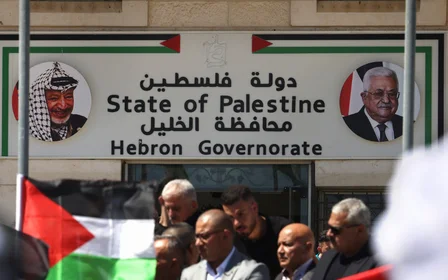
The US last year refused visas to PA President Mahmoud Abbas and 80 other senior Palestinian officials for the UN General Assembly in New York.
New MEE newsletter: Jerusalem Dispatch
Sign up to get the latest insights and analysis on Israel-Palestine, alongside Turkey Unpacked and other MEE newsletters
The decision came after several Western countries announced plans to recognise a Palestinian state during the annual gathering.
The US said its decision was based on the PA’s support for the war crimes and genocide cases against Israel and some of its leaders at the International Court of Justice and the International Criminal Court.
Abbas’ office said the decision violated the UN “headquarters agreement”, which requires the US, as host of the UN in New York, not to refuse visas for officials travelling to the world body for the General Assembly.
Middle East Eye delivers independent and unrivalled coverage and analysis of the Middle East, North Africa and beyond. To learn more about republishing this content and the associated fees, please fill out this form. More about MEE can be found here.