
‘We are stuck here’: In cramped shelters, Lebanon’s displaced dream of their villages

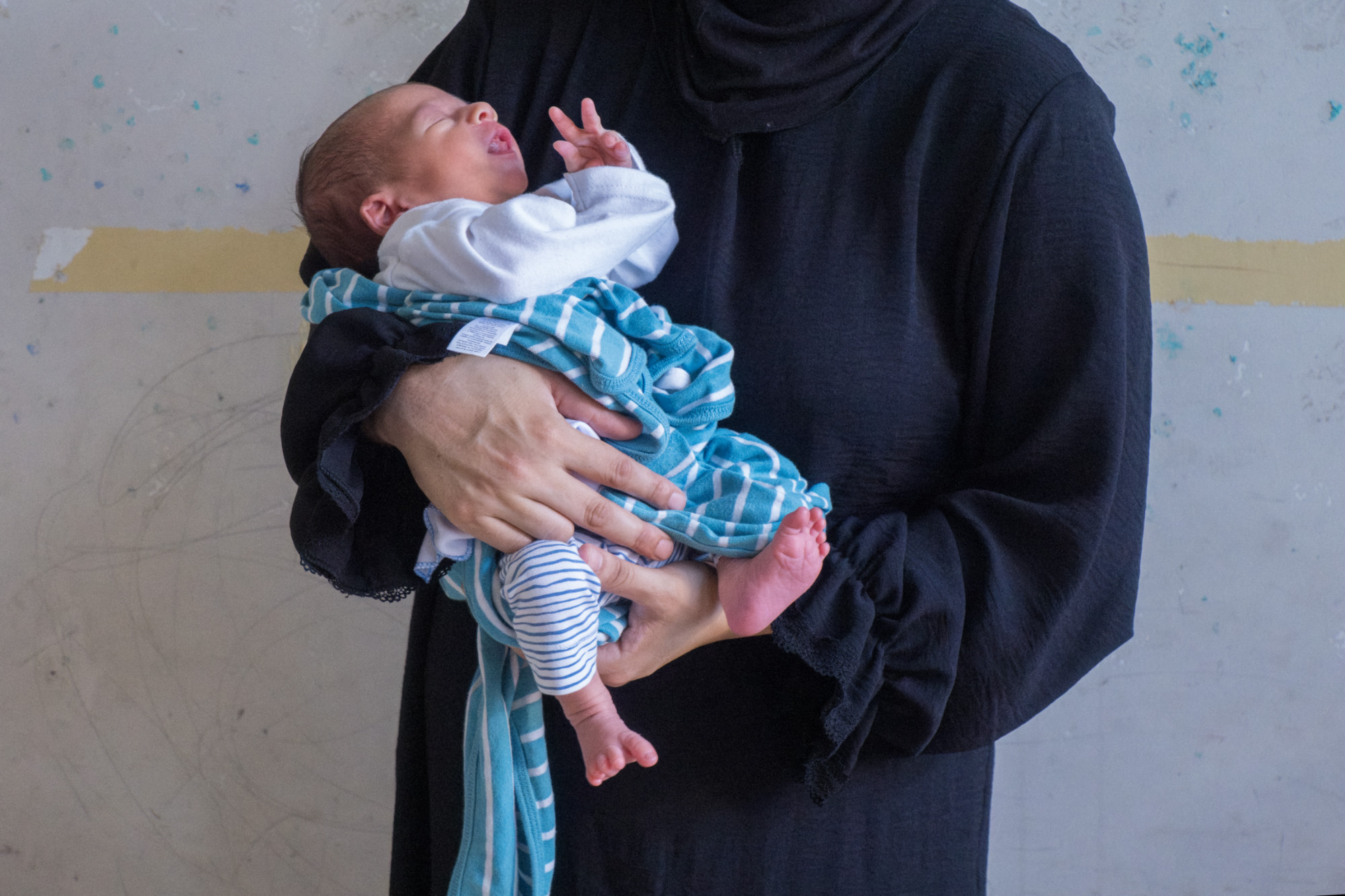
A 72-hour-old newborn is laid to sleep on a thin, worn-out mattress on the floor of a school in Sidon, south Lebanon, his first days unfolding in a classroom-turned-shelter.
His mother, Hala Loubany, 29, has just had a C-section. She watches over the baby boy, one hand resting protectively over the throbbing scar on her stomach.
Next to them, separated by a shelf crammed with canned food and clothes, an elderly man is preparing lunch for himself and his wife.
Three families live in this classroom, their few belongings packed into corners as they wait to return to Nabatieh’s southern district.
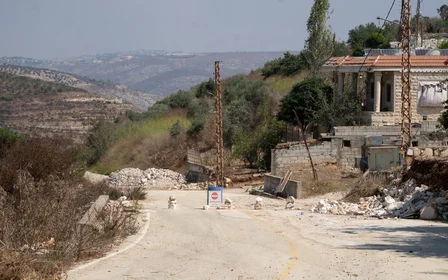
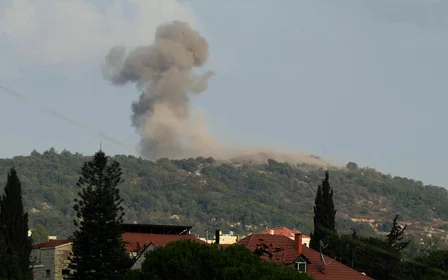
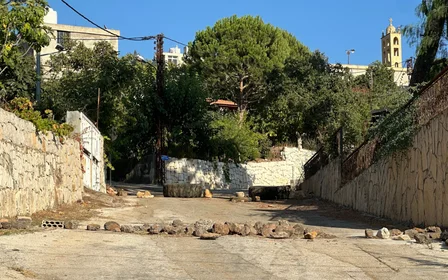
Israel's bombardment has destroyed infrastructure, including thousands of homes, across south Lebanon, with more than two dozen Lebanese border towns and villages razed. Tens of thousands of people have been displaced.
New MEE newsletter: Jerusalem Dispatch
Sign up to get the latest insights and analysis on Israel-Palestine, alongside Turkey Unpacked and other MEE newsletters
“Hala’s water broke here, in the school, so she was taken to the hospital at the last minute,” her father, Ali Mahmoud Loubany, told Middle East Eye. “It was an emergency so doctors performed a C-section.”
Hala was six months pregnant when she, her husband, their two sons, aged six and one, and her father fled Nabatieh. The school in Sidon is the second shelter they have been forced to seek refuge in.
Directly opposite the classroom is the only women’s bathroom on the floor. Families have to schedule showers in the three laminate stalls and wash their clothes in the shallow sinks.
For Hala, who is still recovering from surgery, poor sanitation is a major source of anxiety, as she worries about her wound becoming infected.
'No one by our side'
At 54, her father says he is “sick” of his family being displaced. Ali found out that his home in Zawtar, overlooking the Litani River, had been destroyed by looking at Google Maps.
“On the map, you don't know which pile of rubble is your house,” he said. “All the land, all the trees… the whole village has been flattened. We have gone back 100 years.”
Recalling the day that the Israeli military began bombing the area, Ali said he had wished for “the ground to just open up and swallow me”.
He said: “Israel just started bombing everywhere and everyone at random, people who I know very well are not affiliated with Hezbollah. I kept thinking, ‘Where do we go? Or do we stay and try and fight back?’
“I was scared as the Israelis were also targeting the cars as people were fleeing. It was terrible.”
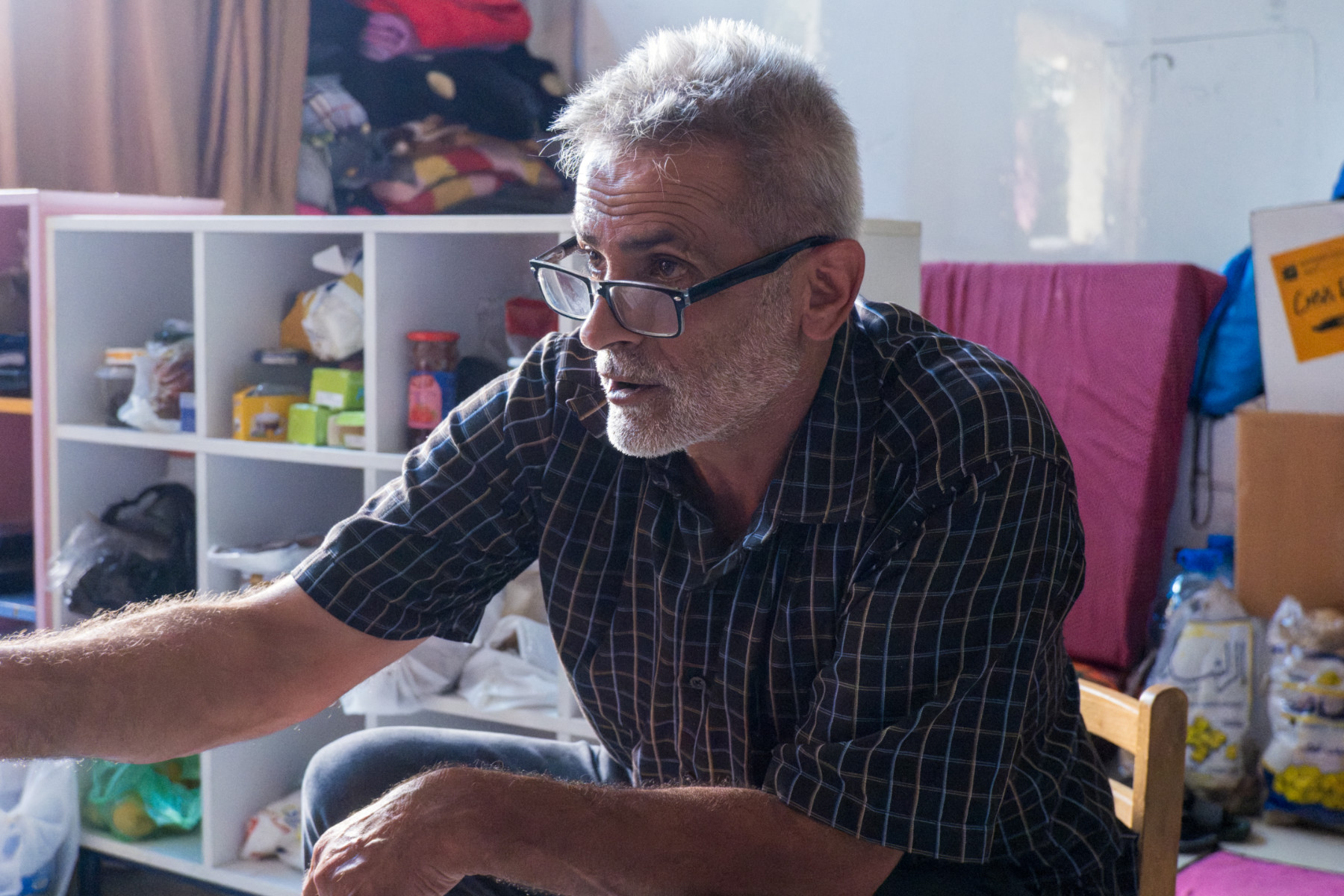

A day before sitting down with Middle East Eye, Ali said he had travelled from Sidon to Zawtar to check on his land, but the occupying forces fired a grenade at him and he was forced to retreat.
Following previous wars with Israel, he had rebuilt his home brick by brick and replanted the farm, where he grew tobacco and vegetables.
The area also suffered heavy contamination from cluster munitions, particularly during the 2006 Israel-Hezbollah war, and he took part in demining efforts.
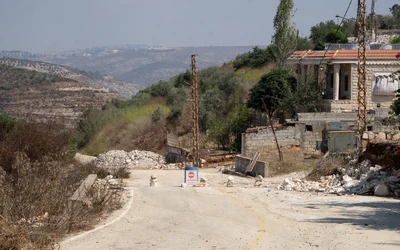
Now, after spending years reconstructing his life, he faces the same cataclysm. But for the first time in his life, Ali is weighing up leaving Lebanon for good.
Where to, he does not know.
“Israel still occupies our land,” he said. “Everything has been demolished and turned into rubble. I know many people are somehow affording to rent houses near their homes… but it is really expensive.
“If I had the money, I would spend it on medicine that the family needs but we cannot afford.
“We are stuck here but at least we are alive and safe. There are mattresses to sleep on and NGOs bring us food.”
But Ali does not see a future. “There is no one by our side, the Lebanese government does not care about us,” he added. “Lebanon is a country of war.”
Robbed childhood
Mina Jardali, from Action for Humanity (AFH), which funds ambulance services and medical appointments, as well as local community bakeries, nods her head.
She has witnessed many internally displaced people (IDPs) arrive at shelters with nothing more than a bag of clothes, only to leave weeks later in the hope of getting closer to their homes and eventually return again.
“Ali is not alone in looking elsewhere, like Europe, for an escape,” she said, recalling conversations with some of them.
Next door, Ali’s son-in-law, Hassan Bisher, a 33-year-old taxi driver in Nabatieh, is entertaining his two young sons, while Hala rests.
Jaffar, aged six, and Haydar, aged one, are taking turns riding a plastic bicycle toy across the room, weaving in between mattresses and chairs.
Growing up in a shelter is not the future their father had imagined for them, especially now with the new addition to the family.
“Their childhood memories are all gone,” Hassan said, referring to the family home in the town of Kfar Tebnit, which was hit during a wave of Israeli air strikes.
“What is even harder is that I depended on my job to look after my children, but now I am unable to provide for their needs.
“Every parent strives to provide for their children to see them as happy as possible, to help them excel in life. And I cannot do that now.”
This is the second time his home has been destroyed, the first in the 2006 war. It took his family a decade to rebuild.
If his father-in-law has reached the point of imagining a life outside Lebanon, Hassan is still looking in the opposite direction.
All he wants is to return to Kfar Tebnit once the bombardments are over and begin rebuilding again, even if it means living in a tent pitched on a pile of rubble in the meantime.
“I just want to pitch a tent on my land and smell the fresh air of the town once again… I prefer that than being anywhere else,” he added.
Unlike Ali, Hassan’s mood lifts when he talks about his dreams and the future.
'I am numb'
In a classroom further down the darkened school corridor, the Darwish family describes a different kind of loss. Their four-storey family home was destroyed, their relatives scattered across shelters, and one brother was killed in an Israeli strike on his motorbike in the Beqaa, two months after the 2024 ceasefire.
His mother, Sobheya, 71, sobs as she shows a picture of Samih.
“Samih was driving on the motorway and was martyred, just like that,” she said.
'On the map, you don't know which pile of rubble is your house. All the land, all the trees… the whole village has been flattened'
- Ali Mahmoud Loubany
“He left three children behind and we have no idea what is going to happen to them as he was the only provider.”
The Darwish family were first displaced from their home in Nabatieh at the beginning of the 66-day war of 2024, during which the family home was levelled by an Israeli bomb.
Sobheya and her husband Mahmoud, 72, had built an apartment for each of their three sons, while the elderly couple lived on the first floor.
Living with his whole family and eating dinner together every evening is what their son Hussein, 42, misses the most.
Losing his brother has caused him unbearable pain he cannot put into words, as has seeing his destroyed home, “the result of 18 years of his and his family’s hard work”.
“I have no feelings, I am numb,” Hussein said, his voice shaking with anger as his eyes filled with tears.
“We did not know the house was targeted until we went back. Other houses around it were still standing… So why us? We don’t do politics, we don’t know anyone from Hezbollah.”
The family hopes to return to Nabatieh one day. But after months of moving from one shelter to another, Hussein worries about the health of his elderly parents, who sleep on the floor with only sheets and a flattened mattress between them and the ground.
As of 1 September, an estimated 856,000 IDPs have returned, according to the International Organisation for Migration, but the humanitarian crisis is far from over.
Since the families were interviewed, the shelter in Sidon was shut down in September and its residents redirected to other facilities offering assistance – another uprooting that has deepened the hardship faced by more than 329,000 IDPs still living in limbo across Lebanon.
For Hala’s baby boy, displacement has become part of life even before he is old enough to remember a home. For his grandfather, it has become something he fears will define the rest of his life.
Middle East Eye delivers independent and unrivalled coverage and analysis of the Middle East, North Africa and beyond. To learn more about republishing this content and the associated fees, please fill out this form. More about MEE can be found here.