‘We got rid of a tyrant’: Syria’s tumultuous first year without Assad

It has been one year to the day since the Assad dynasty’s rule in Syria ended after more than half a century - vanishing, almost overnight, into thin air.
Gone are the men in leather jackets and blank stares stationed on street corners; Bashar al-Assad’s gaze no longer looms from school façades and motorway overpasses.
In their place are new flags, fresh murals to the “martyrs of the revolution”. Syria is finally breathing again.
Yet the last year has been marked by tumultuous lows as well as unprecedented highs as the country struggles through transition.
The date of 8 December 2024 - the day Assad’s rule cracked under a lightning rebel offensive - is now etched into the memory of every Syrian.
New MEE newsletter: Jerusalem Dispatch
Sign up to get the latest insights and analysis on Israel-Palestine, alongside Turkey Unpacked and other MEE newsletters
On the night he fled, Damascus did not fall the way many expected.
There was no epic last stand, no grinding siege. It was more like a curtain suddenly torn down. And, in an instant, the city was free.
What preceded were anxious nights of rumours: reports of rebels pushing through from the south, tanks slowly swivelling their turrets away from the city.
Then, in the early hours, the word spread: Assad’s convoy had left Damascus. The palace guards had melted away, heralding a new era for the country.
“People were firing guns into the air, dancing, taking photos and crying, I still have to pinch myself to remember it was a real day,” says Damascus resident Basel al-Khateeb.
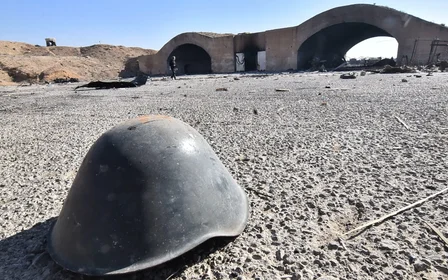
“I drove around and saw soldiers walking in civilian clothes along the road, not knowing where to go. Helmets, uniforms, officers’ badges, all types of weapons were just lying in the street,” the 27-year-old business graduate told Middle East Eye.
Prison gates were smashed open. Videos - still circulating on Syrian social media a year later - showed inmates stumbling out of jails and notorious detention centres, eyes blinded by sunlight, clutching plastic bags with the last trace of their old lives.
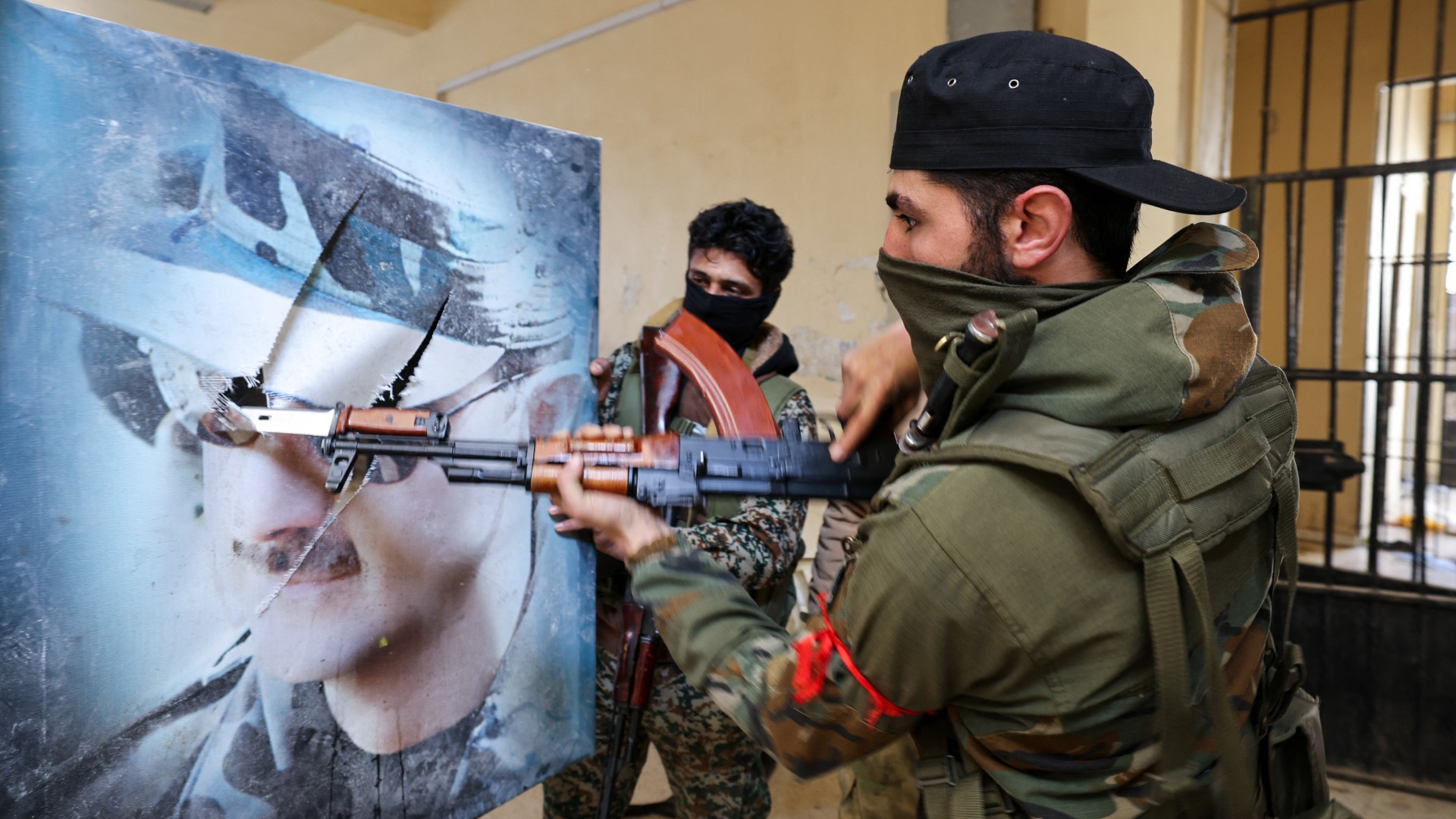

Yet even in those first hours of euphoria, many Syrians had their minds on their slain friends and family who would never emerge from Assad’s secret prisons, places whose horrors were now coming to the fore.
Others hoped to see their loved ones emerge from those dungeons only to remain in limbo as cell doors were swung open across the country.
One of them is 24-year-old content creator Abd al-Hadi Safi, from Bayt Sahm in the southern part of Damascus’ Ghouta suburbs.
“I didn’t hear that the regime fell; I saw it with my own eyes, and Bashar fled,” he told Middle East Eye, his voice quickening. “I was so happy I was crying - it’s hard to explain. We got rid of a tyrant, a criminal, an oppressor.”
Safi scrolled through his phone searching for a photo of his brother, Fadi. He found one, stopped, and tapped the picture on his screen.
'We have to bring Bashar back and try him as a war criminal'
- Abd al-Hadi Safi, content creator
Fadi’s brother was taken from him by Assad’s infamous intelligence services along with his 60-year-old uncle in front of his eyes.
Safi was ushered away while his family members were detained; it was the last time he saw both of them.
“My brother Fadi was 16 when they took him in 2012,” he said.
“Since then - nothing. No grave, no headstone, no closure, just a hope that we might find out. We spend endless nights mourning. My mother has lost a son and she doesn’t even know where to put her grief.”
For Safi, the fall of Assad is only half a victory. Assad escaped to Russia, where he lives with his family and other senior members of his government, and walks free.
“We have to bring Bashar back and try him as a war criminal,” Safi said. “For the families of the hundreds of thousands who lost their loved ones in his prisons and dungeons. Without justice, this story isn’t finished.”
A rough transition
The first weeks after Assad’s fall were a mix of jubilation and score-settling.
Hay'at Tahrir al-Sham (HTS), a coalition of rebel groups headed by Ahmad al-Sharaa, moved fast to seize ministries, co-opt local councils and sweep away the symbols of Baathist power.
Much of Assad’s authorities and security forces were drawn from the Alawi community, who make up roughly 10–15 percent of Syria’s population.
How the new authorities would treat a minority that many in Syria associated with Assad's rule became the first test for Sharaa’s new government.
In March, Alawi fears that resentments would be meted out on their community were realised when clashes between Assad loyalists and forces aligned with the new government spiralled into massacres of Alawi civilians on the coast and in parts of Homs and Hama.
Rights groups documented hundreds and potentially thousands of deaths in a matter of days - many of them non-combatants, their only “crime” being to share a sect with the former ruler.
A Reuters investigation found that nearly 1,500 Syrian Alawi were killed and dozens were missing.
In the Druze-majority province of Sweida, the new order’s failures were even more catastrophic.
On 15 July, under the banner of the newly formed “transitional administration”, Syrian government forces launched what they called a “security sweep” into Sweida city.
The presence of Assad loyalists hiding in the province, as well as sporadic clashes between Druze militias and Bedouin tribesmen on the outskirts of Sweida, prompted Damascus to move in.
The operation was also provoked by increasing anti-Druze sentiment after people in Sweida raised the Israeli flag and burned the green Syrian revolutionary flag that had replaced the red Baathist one.
Tanks and armoured vehicles rolled down the stone alleys towards the famous “Gallows Square”, named after an ancient arch. Tribal militias and fringe loyalist units flanked the vehicles.
By nightfall, the army seemed to have the upper hand.
The influential Men of Dignity faction and other Druze groups, outgunned, initially pulled back.
Then came the images that would ignite a firestorm: Druze detainees forced to sit in lines while soldiers shaved off their moustaches - a calculated act of humiliation in a community where facial hair is bound up with dignity and manhood. Some were just executed on the spot.
What followed was one of the bloodiest episodes since Assad’s fall.
Israel attacks Syria
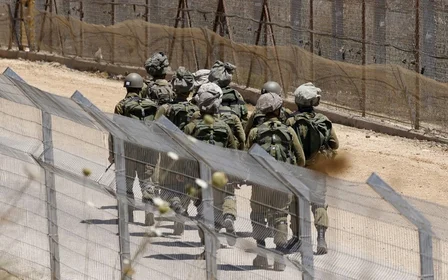
Israel occupied swathes of Syrian territory after Assad fled and had wiped out much of the Syrian military’s hardware in air strikes, claiming it wanted to protect both its borders and the Syrian Druze.
As violence in Sweida escalated, the Israelis pounded Syrian government targets again, including the defence ministry in Damascus.
With the army in retreat, Druze fighters poured back into Sweida’s urban heart, turning familiar streets into ambush sites and booby-trapped corridors.
Government pickups and troop carriers were blasted apart in alleyways that became death traps.
When the dust settled, the front lines had reversed - but at a terrible cost. Druze militias, enraged by the humiliation and egged on by hardline clerics, including the most prominent leader of the Syrian Druze, Hikmat al-Hijari, launched house-to-house raids in Bedouin neighbourhoods.
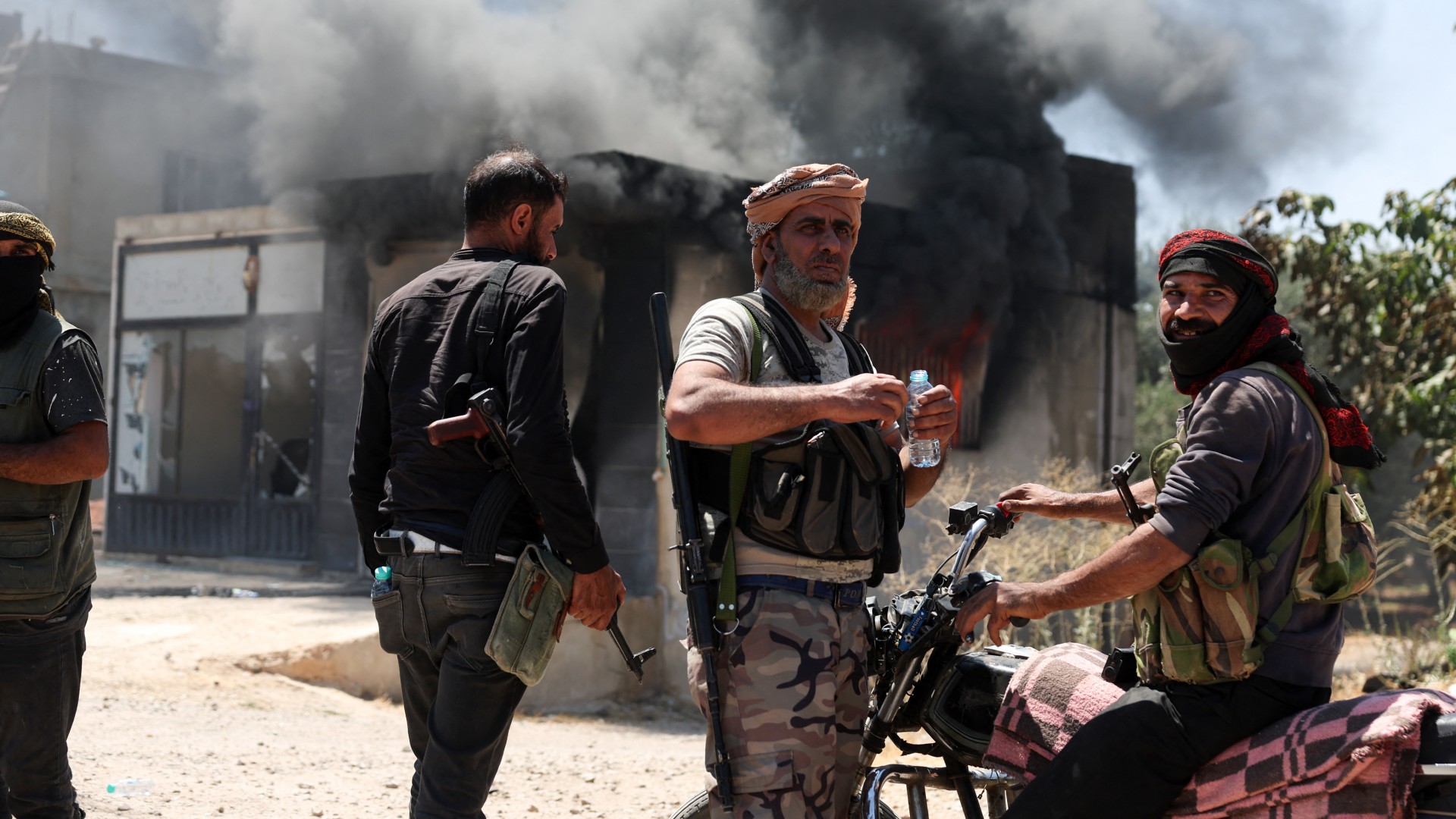
Entire families were executed in their homes. Bodies were mutilated.
The response was swift. From the deserts of eastern Syria to the banks of the Euphrates, elders called for vengeance. Bedouin tribes that had not spoken in years - often locked in their own feuds - put aside their disputes and sent fighters south.
Convoys of armed men arrived in Daraa and the Sweida countryside, some with rifles and pick-up trucks, others with little more than knives and resolve.
Weeks of skirmishes and revenge attacks between the Druze and the Bedouin tribes culminated in a loose ceasefire that has been lightly adhered to.
The province is still volatile, and kidnapping on the Damascus-Sweida Road is a regular occurrence, with the city remaining outside of Sharaa’s grasp.
Struggles with the northeast
Sweida and the Druze had largely stayed out of Syria’s civil war.
The July onslaught shattered Sweida's image as a neutral province, exposing another fault line in post-Assad Syria: between a central authority eager to assert itself, local armed actors used to autonomy, and tribal networks whose loyalties run deeper than any state.
It was also another example of Israeli interference.
If the Alawi and Druze violence illustrate the dangers of sectarian score-settling, the Kurdish-dominated northeast shows the limits of political compromise.
Sharaa has struggled to rein in the myriad rebel groups - many containing foreign fighters - into a regularised and disciplined army.

Convincing armed groups who were already not sympathetic to Sharaa or HTS, which were once al-Qaeda’s Syrian affiliate, to submit to his authority has been even harder.
Unlike the Alawi and Druze, it appeared in March that Sharaa had managed to succeed with US-backed Kurds in the northeast.
The new government struck a landmark deal with the Kurdish-led Syrian Democratic Forces (SDF) to formally reintegrate the region into state structures for the first time since 2012.
Oil fields, border crossings and airports were placed under nominal central control, Kurdish language and cultural rights were recognised in law, and joint security structures were created on paper.
It was hailed in Damascus as the end of a messy dual power system, and internationally as a sign that Sharaa could make hard deals and move beyond his militant past.
In reality, mistrust runs deep. SDF commanders fear an eventual rollback of their promised autonomy. Meanwhile, Arab communities in the region worry about both an empowered Kurdish elite and new security barons from the capital.
There is still no final deal to integrate the SDF into the new Syrian military or hand over power. Negotiations drag on.
Out of the mukhabarat’s shadow
In March, the interior ministry announced it was cancelling all travel bans issued by the former government - millions of “notices” that once allowed security branches to block Syrians at borders or airports without explanation.
Officials say they have reviewed more than eight million entries and lifted close to five million, part of an estimated 10 million Syrians who were at some point tagged in Assad-era databases run by the "mukhabarat", as the feared secret police were known.
Transitional justice committees have been formed, and some mid-level officers have been detained.
'We need real justice and accountability for all Syrians. Without that, we are just putting new paint on the same prison'
- Abd al-Hadi Safi, Damascus
But among victims’ families, the impression is that impunity remains the system’s default language.
Many of the men who signed off on torture and disappearances have slipped quietly into exile. For people like Safi, whose brother vanished into this machinery, the gap between rhetoric and reality is glaring.
“I see good things,” he told MEE, trying to balance his words. “The country was a prison. Now I can travel more freely, we don’t have military service anymore, the economic situation is better than before, there’s hope again.”
He paused before continuing.
“But we need closure and clarity on the file of the disappeared,” he said.
“It cannot be a trend or a media topic. We need real justice and accountability for all Syrians. Without that, we are just putting new paint on the same prison.”
International success
If justice has moved slowly, diplomacy has raced ahead.
Within weeks of Assad’s fall, Saudi-hosted talks forged a new regional consensus: Assad was gone, and the immediate priority was to prevent Syria’s complete collapse.
Sanctions relief and reconstruction funds became the carrot to keep the new authorities from spiralling into chaos and to give the country a second chance.
In Damascus, the interim leadership moved quickly to signal a break with the past, dismantling Assad’s captagon empire, moving against Palestinian armed groups operating on Syrian soil, and striking at Hezbollah supply lines.
The reward was swift and symbolic: last month, Ahmed al-Sharaa became the first Syrian president in history to visit the Oval Office, cultivating what officials now describe as a close working relationship with Donald Trump.
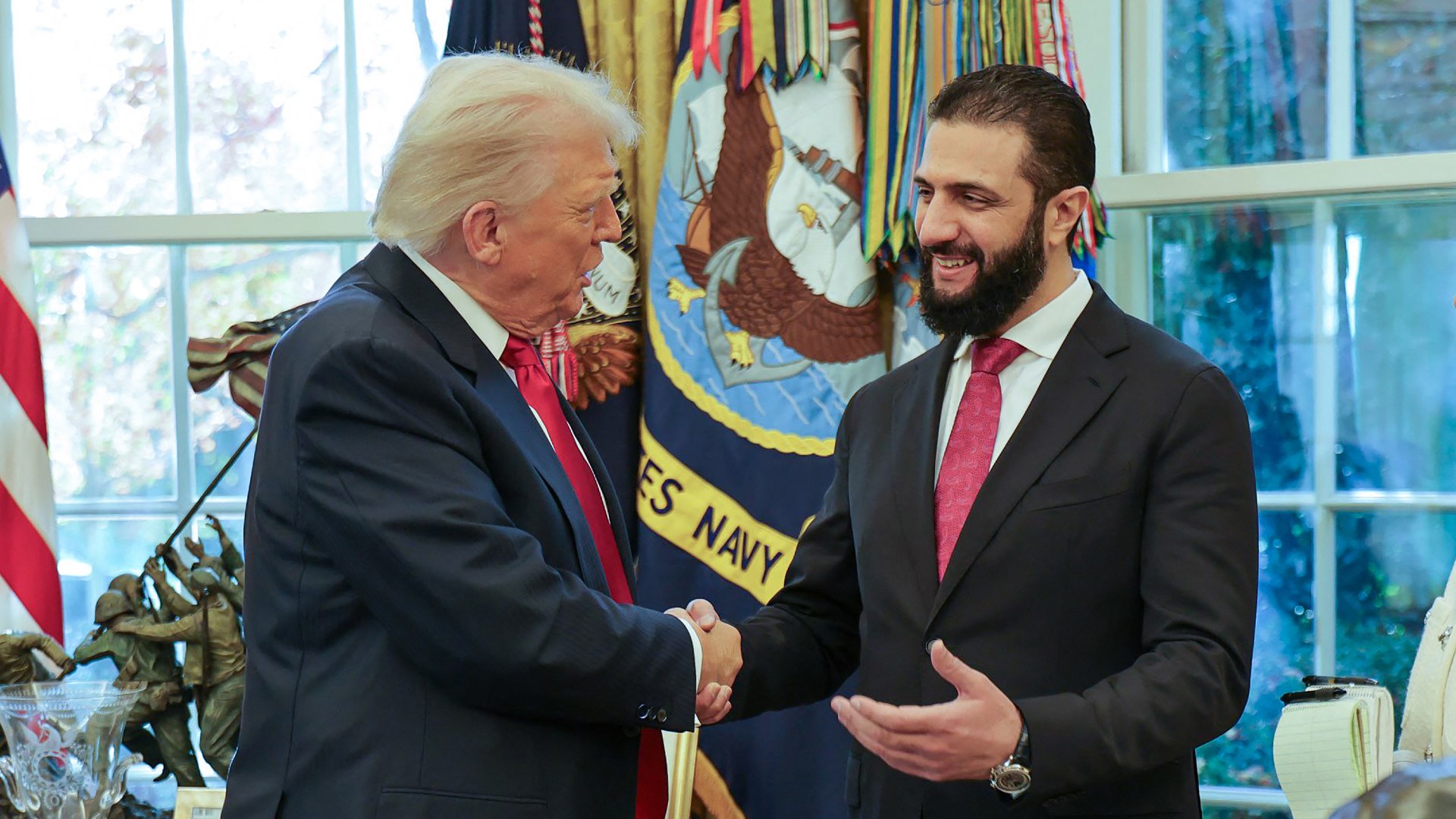
The European Union has eased most economic sanctions. The United States has begun lifting its own, tying waivers to cooperation on counterterrorism and border control.
International banks are cautiously returning; credit card companies speak openly about rebuilding Syria’s payments infrastructure.
At the centre of this whirlwind is Sharaa - a man whose rise from hardline commander to suit-and-tie head of state has baffled many outside observers, but feels less surprising when you talk to those who have watched him up close.
“The Syrian government’s international success is down to the fact it recognises it has to adapt to global standards extremely rapidly to gain acceptance,” said analyst Kamal Alam.
'[Sharaa] understood that the previous regime never bent, never compromised, and paid the price. So he has been the opposite of that - flexible, pragmatic'
- Kamal Alam, analyst
“Many of the false comparisons with the Taliban were blown out of the water when, within days of taking power, Sharaa told the BBC: ‘We are not like the Taliban.’”
Behind the scenes, Alam argues, Sharaa has had a team steeped in western policy circles. Figures like Qutaiba Idlibi, long active in Washington, and the British helped prepare the new president from the moment the regime fell with sound advice and western-oriented strategy perspectives.
“Sharaa himself, with a Saudi upbringing, Turkish and UK mentoring, and careful advisers from the heart of Capitol Hill, is no stranger to international affairs,” Alam said.
“He understood that the previous regime never bent, never compromised, and paid the price. So he has been the opposite of that - flexible, pragmatic, signalling that Syria wants to be a rational international actor.”
Last month, as Sharaa visited Washington to formalise Syria’s role in international efforts against the remnants of Islamic State, Damascus’s diplomatic calendar was more crowded than at any time since the early 2000s, as states rush to bring the new Syria on board.
One year on, the country still stands in the space between celebration and reckoning: it has toppled its dictator, but has yet to fully dismantle the system that sustained him.
In that year, Damascus has made real, if uneven, strides. But the hardest work, rebuilding a just state from the ruins of a police regime, still lies ahead.
Middle East Eye delivers independent and unrivalled coverage and analysis of the Middle East, North Africa and beyond. To learn more about republishing this content and the associated fees, please fill out this form. More about MEE can be found here.