
What Yemenis in Hadhramaut and al-Mahra think of the STC takeover

Since sweeping across southeast Yemen, the Southern Transitional Council (STC) and its supporters in its strongholds have been celebrating the separatists’ shock success.
In Hadhramaut and al-Mahra, Yemen’s two most eastern governorates now under STC control, residents have been rather more circumspect in their response to the sudden change in authority.
Like many spoken to by Middle East Eye, Ayman, a 43-year-old resident of Hadhramaut, believes the province should be managed by its own people rather than any outside authority.
“I’m not against the internationally recognised government and not against the STC if they are in Aden. But I’m against anyone who invades us to loot our oil and other wealth and leave us suffering,” he told MEE.
The Southern Transitional Council’s campaign began at the beginning of this month, as STC-aligned fighters known as the Hadrami Elite Forces seized towns, cities and oil infrastructure.
New MEE newsletter: Jerusalem Dispatch
Sign up to get the latest insights and analysis on Israel-Palestine, alongside Turkey Unpacked and other MEE newsletters
Their advance from Aden came after Hadhramaut's tribal leaders announced in late November that they were taking control of the oil fields and would manage their governorate themselves.
On 3 December, a Saudi delegation arrived in Hadhramaut to broker a truce, but it was unsuccessful.
Saudi-backed Dira al-Watan forces that held the governorate withdrew as the STC advance approached, with only tribal people and soldiers in a few military bases seen trying to confront the fighters.
Before long, STC-aligned forces were in control of al-Mahra, the province bordering Oman, as well.
Today, the STC, which is backed by the United Arab Emirates, controls all the southern governorates that formed the People's Democratic Republic of Yemen before the Yemeni unity in 1990.
Only two border crossings function in Yemen: one in Hadhramaut with Saudi Arabia, and another in al-Mahra with Oman. They are both now under STC control.
Thirst for independence
The Southern Transitional Council emerged in 2018 as a movement advocating for an independent state in southern Yemen, but in recent years has been part of the internationally recognised Yemeni government based in Aden.
Though it has a lot of support in Yemen’s southwest, the STC largely stayed out of Hadhramaut and al-Mahra, believing local communities there would not yet accept it.
'Hadhrami people are famous for being peaceful, but that doesn’t mean we will surrender to the invasion. Our dignity is a red line'
- Ayman, Hadhramaut resident
There are supporters of the STC in both governorates. But overall, their population remain unconvinced by the secessionists’ agenda, and people who have previously been vocal opponents of the STC fear they may be targeted in some way.
Ayman, the Hadhramaut resident, said the takeover by southern forces was something that hadn’t been seen in decades.
“Fighters from other governorates like al-Dhale and Lahj invaded our governorate and killed our brothers, not for any reason other than to loot us,” he said.
“Hadhrami people are famous for being peaceful, but that doesn’t mean we will surrender to the invasion. Our dignity is a red line, and we won’t accept anything other than managing our governorate ourselves.”
Ayman stressed that Hadhramis like himself are not xenophobic towards outsiders - they just don’t welcome invaders.
“Our governorate has been enjoying peace while other governorates were in conflict,” he said.
Hadhramaut holds most of Yemen’s modest oil reserves, and Ayman believes that should pay for local services and not be spent elsewhere.
“The oil is in our governorate, so it is normal that all services should be accessible in the governorate, as this is our wealth,” he said.
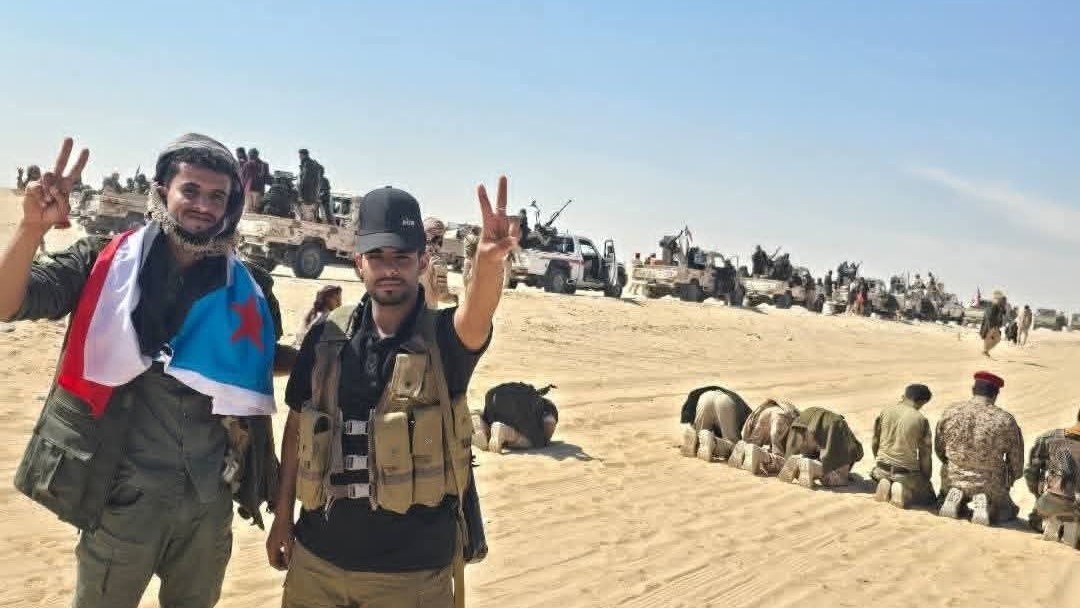

Saleh Omar, a 51-year-old supporter of the STC in Hadhramaut, believes the governorate should be fully under Aden’s control.
“Hadhramaut used to be managed by the regime in Sanaa, and many military leaders in Hadhramaut are from the north, and we didn’t hear any voice asking for their departure,” he told MEE.
“But today, when the STC is controlling it, we hear northern people and some of their supporters here asking for the self-rule of Hadhramaut.”
Omar believes that the STC must impose its power on all governorates that used to belong to the previous state of South Yemen and force northerners out of their military and civil institutions.
Video footage circulating online purportedly shows STC-aligned fighters in Hadhramaut looting or storming homes, provoking local criticism.
However, Omar claimed they were the homes of “military leaders who rebelled against the STC and killed some of its men”.
Rejecting foreign influence
The reaction of al-Mahra’s residents isn’t different from that of people in Hadhramaut.
Both governorates are used to having a lot of their political and security authorities run by Yemenis from the northwest, and are reticent about seeing those positions now filled by outsiders from the south.
'Now we, the STC, lead the south, and its forces need to spread in all governorates, not to fight residents but to keep all governorates safe'
- Mahmoud Taher, STC fighter
Al-Mahra resident Ammar, 38, is against any military intervention in his home governorate, either by Saudi Arabia or by fighters from other places like al-Dhale and Lahj.
He is a follower of Sheikh Ali Salem al-Huraizi, an influential local tribal leader who has long rejected foreign influence in al-Mahra.
While Huraizi rejected the presence of Saudi troops in the governorate, he has now spoken out against the Yemeni fighters from outside al-Mahra that have replaced them.
“Al-Mahra has men who can protect it and manage it, and we don’t need military forces to come from other governorates to lead us,” Ammar said.
Ammar said the new STC authorities have been questioning local residents about their work and movements, which has caused some friction and contributed to an atmosphere of distrust.
Ammar and two other people in al-Mahra told MEE that they won’t seek violent conflict with the STC, but will resist it nonetheless through peaceful means like protests.

Many people in al-Mahra have traditionally been opponents of the STC, Ammar said, and today they fear retaliation.
“The situation isn’t stable nowadays, and al-Mahra’s residents won’t be settled until all forces from other governorates leave it.”
Mahmoud Taher, an STC fighter in Aden governorate, told MEE that its forces went to al-Mahra not to create chaos, but to help its residents secure the border crossing between Yemen and Oman.
“Al-Mahra is a southern governorate, and we are brothers. But smuggling between Oman and Yemen was frequently reported, and this is an indication that they need our support to secure this crossing,” he told MEE.
Taher said the STC fighters respect the local forces and noted there were no battles as they moved in, after coordinating the advance with local authorities.
“Now we, the STC, lead the south, and its forces need to spread in all governorates, not to fight residents but to keep all governorates safe. We will stop those who try to create chaos.”
Middle East Eye delivers independent and unrivalled coverage and analysis of the Middle East, North Africa and beyond. To learn more about republishing this content and the associated fees, please fill out this form. More about MEE can be found here.